Search Articles


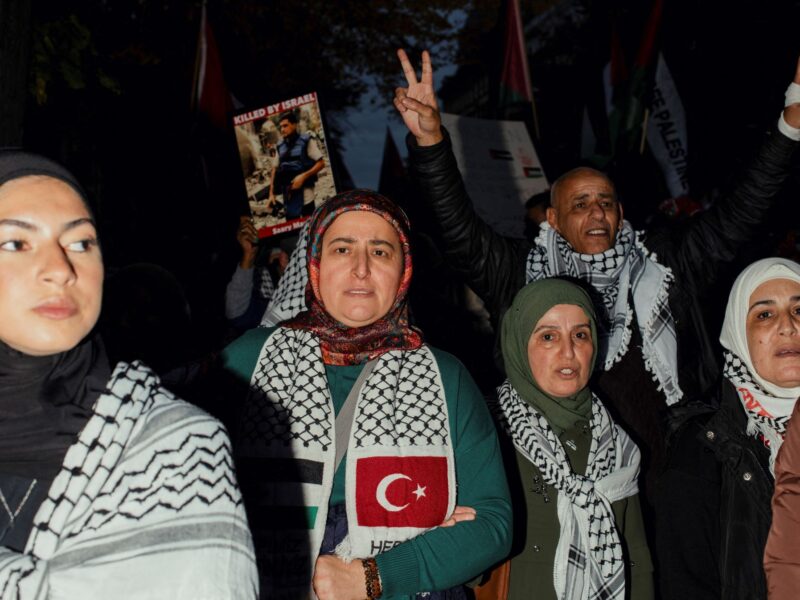
BERLIN (AFP) — Pro-Palestinian activists who planned a protest at the Buchenwald concentration camp memorial in Germany will instead rally in the nearby city of Weimar Sunday after a court upheld a police ban on the demonstration.
The planned vigil, called by a campaign dubbed “Kufiyas in Buchenwald,” had provoked a sharp debate in Germany, with a number of politicians denouncing the protest as inappropriate.
The court in Weimar has now upheld an early decision by officials to ban the vigil and instead move protesters to a square in the city, according to a decision seen Friday by AFP.
The Nazi concentration camp memorial is located on a hill just outside of the central German city.
The activists had called their demonstration to remember “the victims of genocide and fascism” and the struggle “against all genocides, particularly the genocide currently taking place in Palestine.”
But judges ruled that the protest would likely “violate the dignity of victims” of the Nazi regime who suffered in the camp, according to a court statement.
Last year, the Buchenwald concentration camp memorial refused to allow a woman to attend the anniversary event because she was wearing a Palestinian keffiyeh scarf, also spelled kufiya.
The woman took legal action to be allowed to return to the memorial for another event, but the court found that the memorial had been within its rights to deny her entry.
The keffiyeh is a political symbol and could also “endanger the sense of security” for Jews visiting the site, the court said.
Kufiyas in Buchenwald did not immediately respond to a request for comment from AFP on Friday.
But in previous statements, the campaign has accused those running the Buchenwald memorial of making it a place of “historical revisionism and genocide denial.”
For decades, Germany has viewed a close alliance with Israel as a way of atoning for the murder of 6 million Jews by Nazi Germany in the Holocaust.
German leaders, including Chancellor Friedrich Merz, have remained staunchly behind Israel despite mounting international condemnation of its conduct in Gaza.
Around 340,000 prisoners, including Jews, Roma, homosexuals and Soviet prisoners of war, passed through Buchenwald and its annexe Mittelbau-Dora.
Around 56,000 people died at Buchenwald — some executed, others starved or worked to death — and a further 20,000 died in Mittelbau-Dora, where inmates worked under terrible conditions to build V1 and V2 rockets.
—
By Agence France-Presse
Subscribe to our free newsletters
Our weekly newsletter Closing Arguments offers the latest about ongoing trials, major litigation and rulings in courthouses around the U.S. and the world, while the monthly Under the Lights dishes the legal dirt from Hollywood, sports, Big Tech and the arts.
Additional Reads
 Suffer the little children April 10, 2026