
 Search Articles


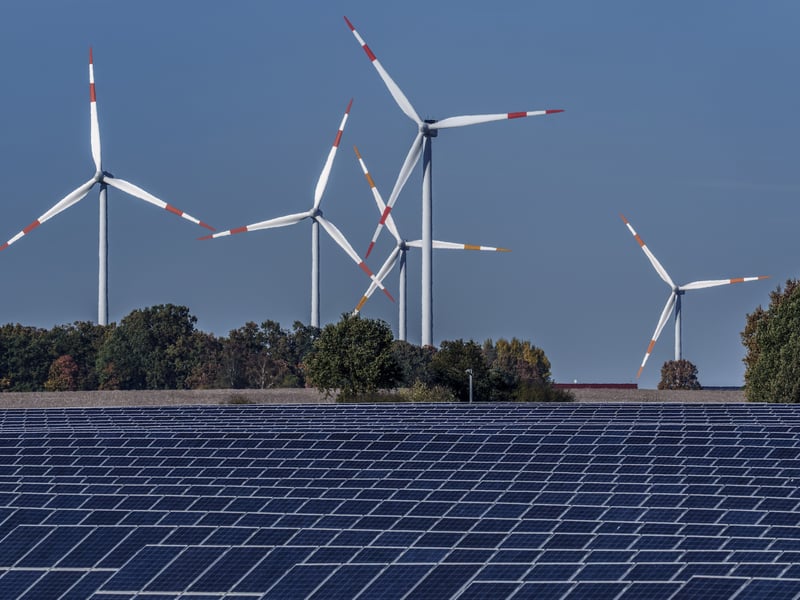
BERLIN (AFP) — German emissions were at their lowest point in around 70 years, as Europe’s largest economy managed to reduce its dependence on coal faster than expected, a study published Thursday showed.
Europe’s biggest economy emitted 673 million tons of the greenhouse gases last year, 73 million tons fewer than in 2022, according to the energy think tank Agora Energiewende.
The figure was at its lowest point “since the 1950s,” Agora said in a statement, while warning that Germany had work to do to further reduce its emissions.
The drop was “largely attributable to a strong decrease in coal power generation,” Agora said.
Germany resorted to the fuel in the wake of the Russian invasion of Ukraine, when Moscow cut off gas supplies to the European giant. But since then, Berlin has managed to pare back its use significantly.
Electricity generation from renewable sources was over 50% of the total in 2023 for the first time, while coal’s share dropped to 26% from 34%, according to figures published by the federal network agency on Wednesday.
The cut in coal use accounted for a reduction of 46 million tons in carbon dioxide emissions, the think tank estimated.
The renewables record brought Germany closer to its target to produce 80% of its electricity from wind and solar by 2030, Agora chief Simon Mueller said.
“When it comes to the generation of electricity, we are on a very good path,” Economy Minister Robert Habeck said in a statement.
The reduction in emissions however also reflected the frailty of German industry, while economic growth has hovered around zero.
Industrial emissions fell by 20 million tons, a,s production in energy-intensive industries dropped sharply.
The decrease was however “not a sustainable development” Mueller said.
“The crisis-related slump in production weakens the German economy. If emissions are subsequently relocated abroad, then nothing has been achieved for the climate,” he said.
In all, the think tank estimated that only 15% of the reduction in 2023 constituted a “permanent emissions savings.”
To hit its climate targets, Germany needs a “barrage of investments” to modernize industry and reduce the carbon footprint from heating, Mueller said.
—
by Agence France-Presse
Subscribe to our free newsletters
Our weekly newsletter Closing Arguments offers the latest about ongoing trials, major litigation and rulings in courthouses around the U.S. and the world, while the monthly Under the Lights dishes the legal dirt from Hollywood, sports, Big Tech and the arts.