
 Search Articles


(CN) — The next decade is key to combatting carbon emissions, and government mandates are the path forward, according to a new report.
Experts from around the world, including the United Kingdom, Brazil, China and India, worked collaboratively to produce the report, titled “A positive tipping cascade in power, transport and heating,” using data from over 70 countries.
The researchers identified regulatory mandates, carbon taxes and subsidies in those 70 countries and compared their effectiveness. Their goal was to see which would be the quickest path to positive tipping points, or lead to lower prices for consumers, allowing clean technologies to surpass fossil fuels.
What they found was that regulatory mandates with set timeframes are the key to ensuring clean technologies become the more affordable option, thereby reducing emissions. The researchers found that mandates were more effective than carbon prices or subsidies, particularly with the need for global emissions to be about halved in the next five years, as advised by the Intergovernmental Panel on Climate Change in 2018.
“We need a rapid transformation in our economies and society that dramatically cuts prices and carbon emissions,” Tim Lenton, co-author and professor at the University of Exeter, said in a statement. “Focusing on positive tipping points benefits consumers, taxpayers, businesses and people around the world facing the worst impacts of climate change.”
Specifically, the researchers looked at four sectors: power, heating, heavy road transport and light road transport.
In all four sectors, the researchers found regulatory mandates that require manufacturers to meet a rising proportion of sales from clean technologies, or phase out polluting fuels, were the most effective tactic to tip the scale and create positive feedback loops.
Using models to simulate the ways investors or consumers make choices between technologies based on cost, performance and availability, the researchers found that policies advancing low-carbon options in any one sector helped advance the tipping point in the other sectors, co-author Simon Sharpe, director of nonprofit research organization S-Curve Economics, said.
Christiania Figueres, climate change expert and key figure in the 2015 Paris Agreement, said the results are clear.
“It’s time for governments to take the training wheels off and mandate decarbonization,” Figueres said in a press briefing.
Figueres emphasized the advancements in decarbonizing the global economy that have been made since the Paris Agreement and urged governments to take action through mandates.
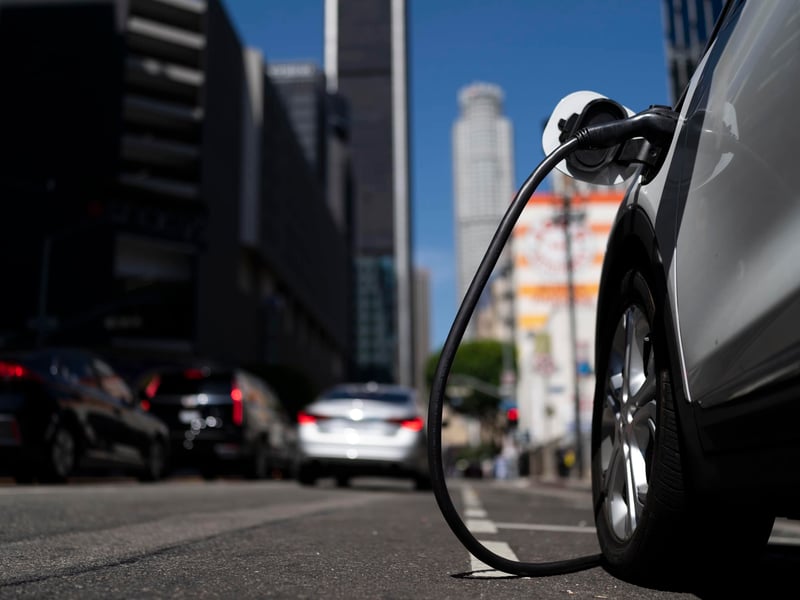
The report came with four recommendations: phase out coal power by 2035, require a rising number of car sales to be zero-emission vehicles with 100% by 2035, require a rising number of truck sales to be zero-emission vehicles with 100% by 2040 and require a rising number of heating appliance sales to be heat pumps next year reaching 100% by 2035.
“Mandates are clearly the most effective policy approach — and we call on policymakers worldwide to implement them at speed,” Lenton said in a statement. “Failure to do so will have high human and economic costs.”
The report also identified “super-leverage points,” or areas that have the highest potential to effect cascades of positive change, such as a zero-emission mandate for cars or coal power phaseout.
Lead author Femke Nijsse said it’s clear that major economies need to shift investments towards clean technologies to reach positive tipping faster.
“In the power sector, the first such tipping point has already been passed — solar and wind power are cheaper forms of electricity generation than burning coal or gas, in most of the world — and the rate of progress is dramatic,” Nijsse said in a statement.
The benefits of fast transitions to clean technologies have economic, social and environmental payoffs, Nijsse said.
Subscribe to our free newsletters
Our weekly newsletter Closing Arguments offers the latest about ongoing trials, major litigation and rulings in courthouses around the U.S. and the world, while the monthly Under the Lights dishes the legal dirt from Hollywood, sports, Big Tech and the arts.