
 Search Articles


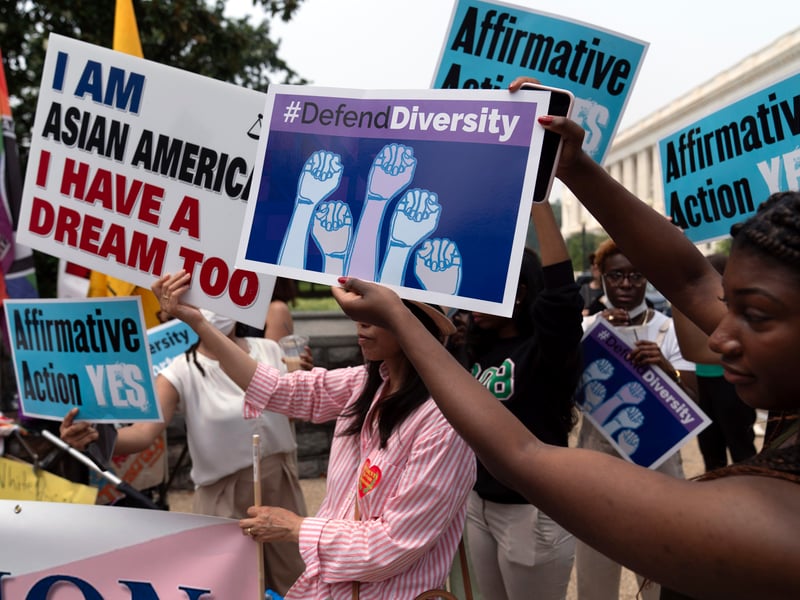
ATLANTA (CN) — A venture capital firm agreed Wednesday to end its small business grant contest for Black women, putting an end to a yearlong racial discrimination lawsuit led by a conservative group fighting against diversity, equity and inclusion initiatives nationwide.
The Fearless Fund, which is based in Atlanta and founded by Black women, filed a joint motion with conservative nonprofit American Alliance for Equal Rights to dismiss the case with prejudice, meaning the alliance cannot sue over the grant contest again.
Fearless Fund said the decision to close its grant contest was part of a settlement agreement with the alliance, but did not disclose the terms in full.
Fearless Fund CEO and co-founder Arian Simone and prominent civil rights attorney Ben Crump, who helped represent the Fearless Fund, said that the settlement is to ensure that the lawsuit ended without setting any national precedent.
“By strategically avoiding a Supreme Court ruling that could have eliminated race-based funding, we protected vital opportunities for the entire Black and brown community,” Crump said in a statement.
Simone added that she will continue with the firm’s mission of “helping and empowering women of color entrepreneurs in need.”
“Our overarching mission remains focused on helping and empowering entrepreneurs who have been historically overlooked in the venture capital marketplace," Simone said in a statement.
The settlement comes two months after an 11th Circuit panel temporarily blocked the venture capital firm from closing its application window and awarding grants for its Strivers Grant Contest, which provided $20,000 to small businesses that are majority owned by Black women.
In a 2-1 ruling, the appeals court ruled then that the alliance, led by conservative activist Edward Blum, was likely to prevail in its lawsuit claiming that the program illegally discriminated on the basis of race.
U.S. Circuit Judge Robin Rosenbaum, a Barack Obama appointee, had fervently dissented in a 22-page opinion. She wrote that none of the alliance’s members had even applied for or shown interest in such contests and compared their suit to a soccer player “flopping” on the field to get a foul called and a penalty kick in the box.
Blum previously successfully led the challenge against Harvard University that resulted in the Supreme Court overturning race-conscious college admission policies in June 2023, sparking a flurry of similar lawsuits targeting diversity programs across the country.
“Race-exclusive programs like the one the Fearless Fund promoted are divisive and illegal,” Blum said in a statement Wednesday. “Opening grant programs to all applicants, regardless of their race, is enshrined in our nation’s civil rights laws and supported by significant majorities of all Americans.”
Since suing Fearless, the alliance has filed at least nine other lawsuits against companies such as Southwest Airlines, law firms and the governors of Minnesota and Alabama over race-conscious requirements in a variety of programs. Some of the lawsuits have been dropped after defendants agreed to change program eligibility requirements, casting a chilling effect over corporate efforts to address workplace inequality.
An attorney for the Fearless Fund, Mylan Denerstein, said previously that the section of the 1866 Civil Rights Act cited by alliance in its suit was intended to ensure that Black people who were formerly enslaved would have the same rights as white people to enforce contracts after the Civil War.
Created in 2018, Fearless Fund strives to address barriers that exist in venture capital funding for businesses founded by women of color, who historically receive less than 1% of all venture capital funding each year.
In 2022, female business founders of color received just 0.39% of all venture capital investments, according to Fearless. Between 2009 and 2017, only 0.0006% of venture capital funding went to businesses started by Black women, according to nonprofit advocacy group Digitalundivided.
 Follow @Megwiththenews
Subscribe to our free newsletters
Our weekly newsletter Closing Arguments offers the latest about ongoing trials, major litigation and rulings in courthouses around the U.S. and the world, while the monthly Under the Lights dishes the legal dirt from Hollywood, sports, Big Tech and the arts.