Search Articles


(CN) — The North Dakota Supreme Court on Thursday ruled Greenpeace International can’t try to litigate the same issues against an oil pipeline operator in a Dutch court that a state court jury found the environmental organization liable for last year.
In a 4-1 decision, the state’s top court reversed a judge’s findings that the issues before the Dutch court weren’t the same as those decided by the jury last year. The court said Dallas-based Energy Transfer is entitled to an antisuit injunction insofar as Greenpeace is seeking to get a ruling in the Netherlands that undermines the North Dakota jury’s verdict.
“GPI’s Dutch complaint, as pleaded, seeks a declaration that the North Dakota action is ‘manifestly unfounded and abusive’ and requires the Dutch court to find that GPI did not engage in unlawful conduct, did not cause Energy Transfer’s losses, and did not act with malice,” Justice Jerod Tufte wrote for the majority. “Those are issues the jury resolved against GPI after a three-week trial.”
The North Dakota jury had found Netherlands-based Greenpeace International liable for defamation and other claims brought by Energy Partners and awarded the pipeline company and its local subsidiary hundreds of millions of dollars in damages.
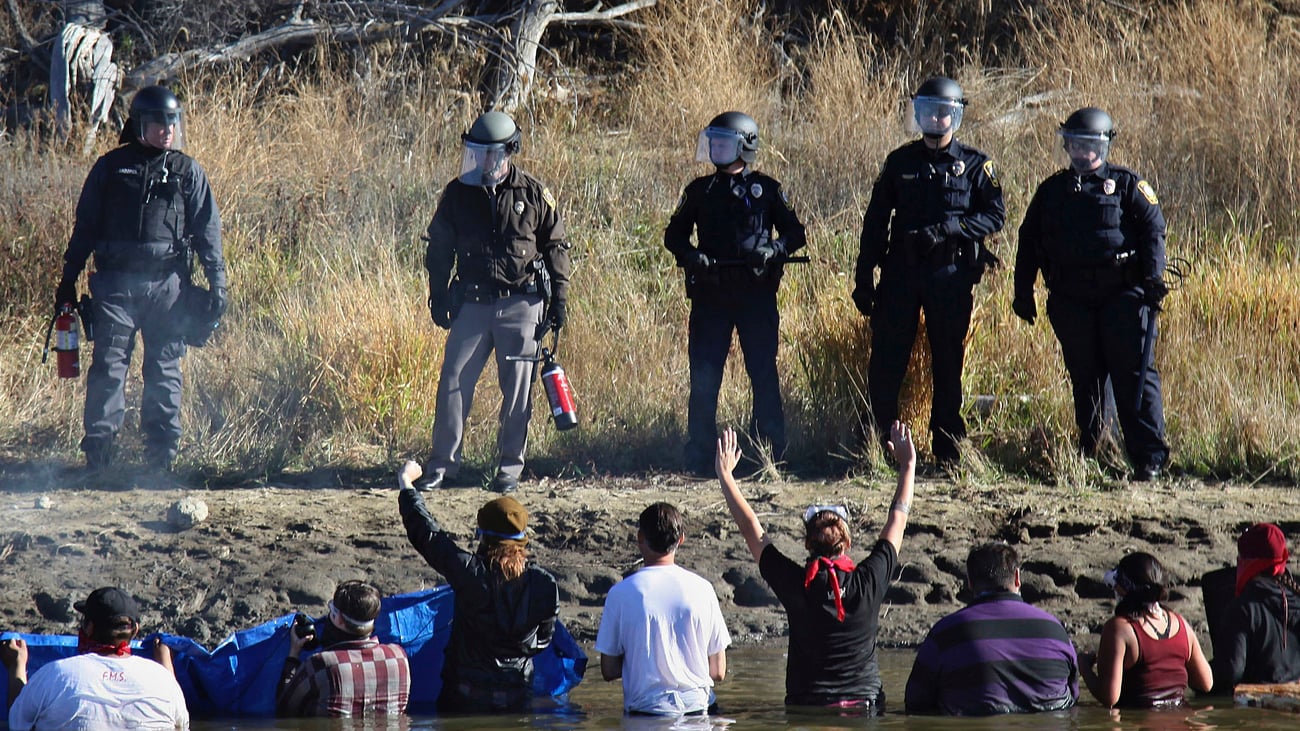
The state court case pertained to protests in 2016 and 2017 against the Dakota Access Pipeline and its Missouri River crossing upstream of the Standing Rock Sioux Tribe’s reservation. The 1,200-mile pipeline started operating in 2017 and can transport as much as 750,000 barrels of oil from North Dakota’s shale oil fields to an oil terminal in Illinois.
Shortly before the North Dakota case went to trial, Greenpeace filed an anti-SLAPP complaint in Amsterdam, arguing that Energy Transfer’s lawsuit sought to bury the organization in legal fees and prevent it from pursuing its environmental advocacy mission.
In Thursday’s decision, the North Dakota Supreme Court noted that the U.S. and European anti-SLAPP — short for strategic lawsuit against public participation — laws work differently and that the European Union’s 2024 anti-SLAPP directive, unlike its U.S. counterparts, authorizes an affirmative damages action that may proceed before the underlying case is resolved.
“Energy Transfer argues the district court elevated form over substance,” Tufte said. “We agree.”
“The pendency of a foreign proceeding designed to declare a domestic verdict ‘manifestly unfounded’ undermines confidence in the domestic judicial process,” he added. “And the risk of an inconsistent foreign judgment is real, not speculative.”
Energy Transfer’s lead attorney Trey Cox praised the ruling.
“Energy Transfer appreciates the North Dakota Supreme Court’s careful decision," Cox said in a statement. “We have always believed that North Dakota’s courts, laws, and juries cannot be collaterally attacked in a foreign forum. Today’s ruling protects the authority of the North Dakota judicial system and the jury’s unanimous verdict from an improper end-run abroad. Energy Transfer looks forward to bringing this legal process to a close and holding Greenpeace accountable for the harm it caused.”
However, the court’s ruling doesn’t foreclose all related litigation by Greenpeace in the Netherlands. The claims based on Energy Transfer’s dismissed federal racketeering lawsuit and on purported out-of-court defamatory statements, which weren’t before the North Dakota jury, won’t be barred by the antisuit injunction.
Chief Justice Lisa Fair McEvers wrote in dissent that the judge who had denied Energy Transfer’s request for an injunction didn’t act in an arbitrary, unreasonable or unconscionable manner and didn’t misapply the law.
“I do not view North Dakota’s policy reasons as compelling enough to justify issuing an antisuit injunction,” she said. “The court selected a legal framework and considered relevant factors in deciding whether to issue an antisuit injunction. In its order, the court provided explanations for its decision, which was reasoned and not arbitrary.”
An attorney for Greenpeace didn’t immediately respond to a request for comment on the ruling.
 Follow @edpettersson
Subscribe to our free newsletters
Our weekly newsletter Closing Arguments offers the latest about ongoing trials, major litigation and rulings in courthouses around the U.S. and the world, while the monthly Under the Lights dishes the legal dirt from Hollywood, sports, Big Tech and the arts.