
 Search Articles


BERLIN (CN) — With just over a week to go until national elections, many Germans are frustrated with the status quo and unsure where to turn.
Following last year’s collapse of Germany’s governing coalition, unyielding political bickering and a host of wide-ranging crises, the nation is shaking its reputation as being stuffily, reliably boring.
A polarized political landscape means the capacity for change is limited. But the far right’s rise to levels unseen since the end of World War II has added an ominous urgency, if not clear direction, to Feb. 23’s vote.
Chancellor Olaf Scholz, helming a lame-duck caretaker government while leading the center-left Social Democrats’ campaign, is deeply unpopular. But in Germany’s fractured and frustrated political landscape, few of his rivals are faring much better.
Scholz’s party is polling at about 16%, trailing Friedrich Merz’s Christian Democrats at 29% and the far-right Alternative for Germany at 21%. Scholz’s minority government partners, the Greens, are polling at roughly 13%, while a number of smaller parties are hovering at the 5% threshold required to enter parliament.
“Things aren’t well in Germany, both objectively but also in my subjective view,” said Michael, a 59-year-old working for a trade association in the auto industry. He plans to vote for the liberal Free Democrats. “We’ve got to admit we’re facing crises in the economy and in European security and have to take them on,” he continued.
“Lots of people are frustrated. I see that with my colleagues, many of whom say that everything is bad,” said Christian, a 37-year-old chef who’s backing the Greens. “And often they respond by punching down instead of looking up at where problems really lie.”
An ascendant far right
“Things are honestly going pretty terribly,” said Henrik, a 27-year-old university student who plans to vote for the Greens. “Politics seems to be drifting further to the right and the Alternative for Germany is gaining more influence and power, which I think is reflected in German society,” he continued.
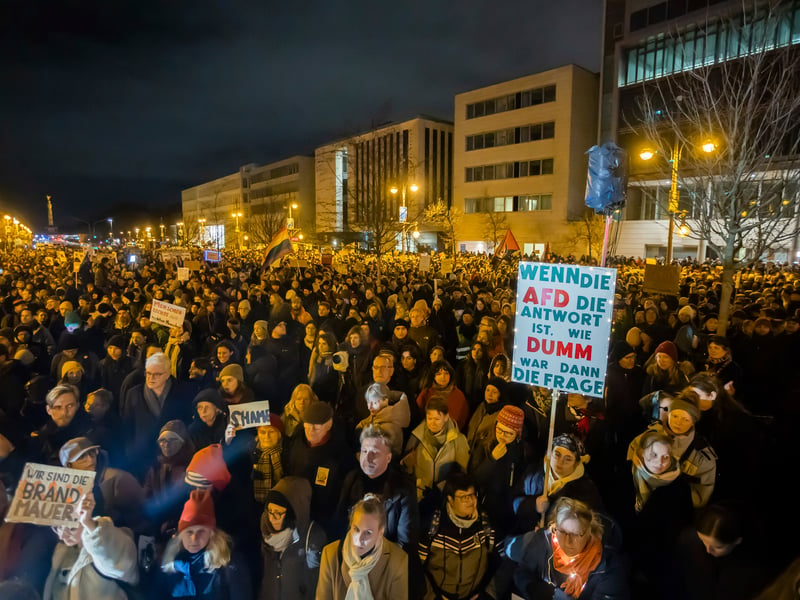
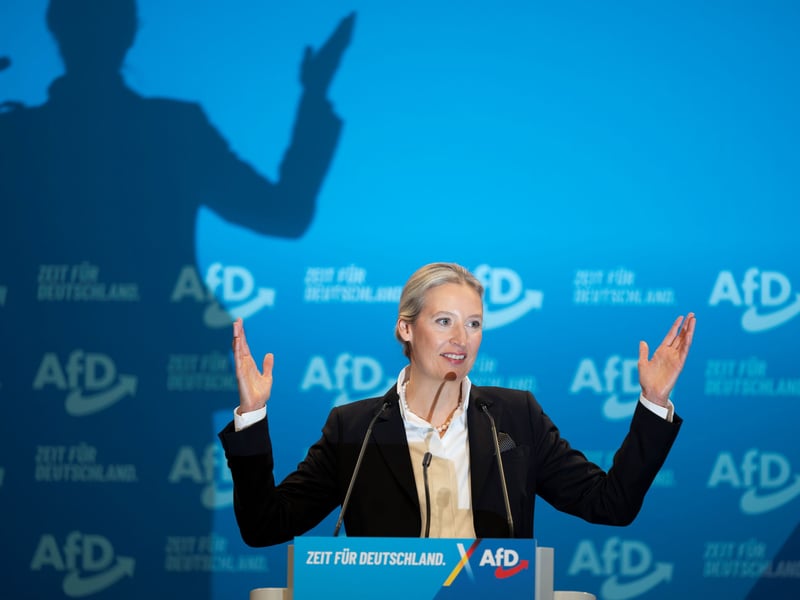
The Alternative for Germany, or AfD, has capitalized on Germany’s widespread discontent while centrist parties have failed to dampen its growth. Merz, likely to become Germany’s next chancellor, has moved his party closer to their policies on migration and asylum, drawing outrage for a failed attempt to pass immigration reform with the AfD’s help. Seeing an attack on Germany’s “firewall” against collaborating with the far right, hundreds of thousands have taken to the streets in protest.
“The most important thing to me is that this country somehow finds a way to stay in the middle of the political spectrum and not drift in this fear-mongering, populist direction,” Jürg, a 56-year-old HR director said. “I’m German-American, and seeing what’s going on back home, and seeing what’s going on here … yuck.” He is leaning toward voting for the Greens or Scholz’s Social Democrats.
The rise of the AfD has created an existential threat for many queer Germans. “Though it’s hard for me to pick one issue, it’s a big deal to see which parties have anti-queer politics or work with anti-queer parties,” said Lina, a 24-year-old university student. “I’m trans, so that’s an especially important issue to me. Trans people, especially trans women, are often targeted,” she continued.
The AfD has taken loud queer-phobic stances and inscribed “The family, consisting of father, mother and children, is the nucleus of society,” in its party platform.
While centrist party leaders — including Merz — have ruled out a coalition with the AfD, many of them have shifted to the right in a failed bid to win back former voters who deserted for the far right. Fueled by recent high-profile attacks, including the latest car-ramming in Munich Thursday, much of the electoral debate has revolved around immigration.
“Our refugee policies haven’t been handled correctly. Nothing against people who need it, and I’m not racist, I’ve got nothing against anyone who integrates here. But the totally uncontrolled and uncoordinated and therefore expensive wave of refugees — that I’m totally against,” said Mirella, 63, a bookkeeper who supports AfD.
Mathias, a 63-year-old banker, sees things differently and will back either the Social Democrats or Merz’s Christian Democrats. “The debate here about migration totally misses the point in my eyes,” he said. “We need migration here. We can’t afford to generalize and scare off potential immigrants. Not just because I think we benefit from diversity, but from an economic perspective we absolutely need it as well.”
Economic woes
Germany’s skilled labor shortage is just one of it’s numerous economic woes. Suffering some of the slowest growth in Europe and a crippled industrial base, the economy is at the foreground of many voters’ minds.
“The economy seems really bad. Personally I notice it the most when I see that things have just gotten way more expensive at many businesses,” said Olaf, a 72-year-old guitar teacher with eyes on the ruling Social Democrats or Greens.
From street food to rent, prices have exploded in recent years and show little sign of slowing.
“I’ve got three kids, so as a family the housing situation in Berlin is a catastrophe. You just can’t find anything remotely affordable,” said Marlene, a 32-year-old undecided teacher. “And infrastructure is crumbling everywhere you look. Because buses are always late now, if I’m taking my kids to school I drive and only take public transit if I’m by myself. I think they’ve tried to save money in all the wrong areas,” she continued.
The days were Germany was internationally bullied for its punctuality and solid engineering are long gone — one-third of the countries trains arrived late last year. Crumbling infrastructure has contributed to a feeling that things just aren’t working.
“The fact that it’s so hard to find a place to live, or that retirees have such a small pension that they need to recycle bottles for spare change, is just awful,” said Kaya, a 50-year-old social worker who will support a smaller left-leaning party.
Few clear favorites
Widespread disappointment with the Social Democrats and Greens’ failed government and Merz’s divisive personality mean many Germans are atypically unsure who they’ll vote for.
“I’ve really got to read up on all the candidates and parties this time round,” said Marlene, the teacher. “There’s not really a clear party that jumps to mind that I can vote for without having to grit my teeth.”
“Normally I’d vote for the Social Democrats but this election I’m really not sure. It’s a tough one,” said Mathias, the banker.
Lina, the student, is likely to vote for the Left Party, one of three smaller parties hoping just to make it into the Bundestag. “I think it’s really crucial for them to get to 5% so they get in. At least then they’ll get more media attention.”
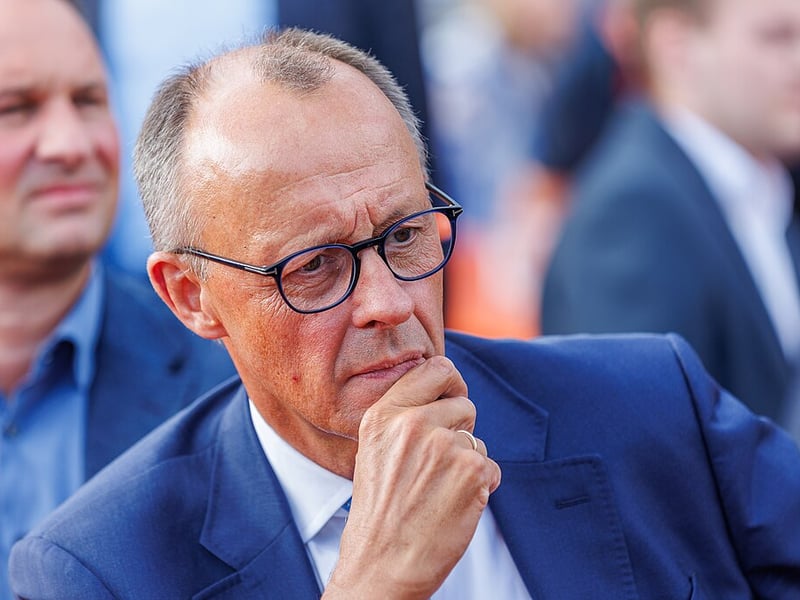
Whether they know who they’re voting for or not, Germans are already gearing up for a likely Merz chancellorship.
“I think he’s decent. His politics, especially on immigration, are quite logical,” trade association worker Michael said of Merz. “Sometimes he’s got to have a stronger handle on things and can get a bit emotional, but I like him.”
Others were pragmatic but negative about a Merz chancellorship.
“Oh man, I hope it’s not him, but I doubt we can avoid it. Whenever I see him I think of Mr. Burns from the Simpsons, just a nasty old guy with too much money,” said Christian, the chef.
“I thought his move to court AfD votes was dreadful,” said Micha, a 34-year-old herbalist and Greens supporter. “But I guess that’s just the direction Europe’s moving in; it’s a shame.”
Since none of the centrist parties are willing to form a coalition with the AfD, if Merz becomes chancellor he’ll likely be running another awkward, centrist coalition. While many Germans seem unhappy, changing much in this constellation will be tough.
“We’ll see how it goes. I think that things here in Germany aren’t as bad as they’re made out to be,” said Mathias. “We’ve gotten used to incredibly comfortable times, and I understand no one wants to give up a good thing, which is why we fight so much, but for most people here it’s not that bad.”
Jürg, the HR manager, said, “It seems to me many of us Germans have a constant feeling of ‘what is the government going to do for me?’ But why don’t you just do something for yourself? It’s a huge problem with our culture; we always see the glass as half empty. Now we have lots of reasons to see it that way as well, but no one does anything about it.”
 Follow @braneck
Subscribe to our free newsletters
Our weekly newsletter Closing Arguments offers the latest about ongoing trials, major litigation and rulings in courthouses around the U.S. and the world, while the monthly Under the Lights dishes the legal dirt from Hollywood, sports, Big Tech and the arts.