
 Search Articles


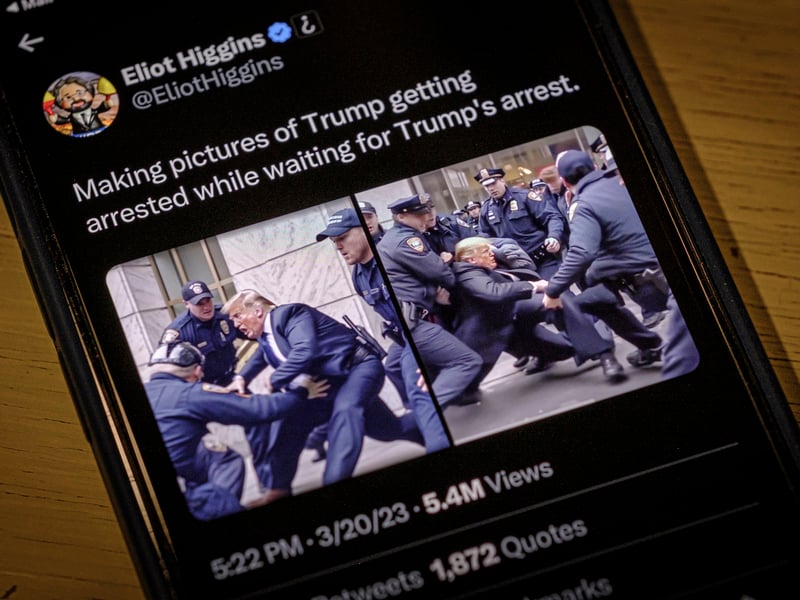
HONOLULU (CN) — A federal judge in Hawaii delivered a sweeping victory to satirists and political commentators on Friday, ruling that the state’s law banning certain digitally altered election content violates the First Amendment.
U.S. District Judge Shanlyn Park granted summary judgment to The Babylon Bee, a conservative satire website, permanently blocking enforcement of Hawaii’s Act 191. The law, which was set to take effect Feb. 2, aimed to curb the use of deepfakes and AI-generated content in state elections.
In a 38-page opinion, the Joe Biden appointee found that the law imposed unconstitutional restrictions on political speech.
“Political speech, of course, is at the core of what the First Amendment is designed to protect,” Park wrote in her order.
The law was adopted overwhelmingly by lawmakers during the 2024 State Legislative session and signed shortly afterward by Governor Josh Green. It barred media that falsely portrayed people saying or doing things they never did, when shared with reckless disregard for the potential to damage a candidate’s reputation or electoral chances.
It also defined such media as digitally created content that could lead a reasonable viewer to believe the depicted events actually happened. It included exemptions for broadcasters and certain service providers, and it provided a safe harbor for content that included prominent disclaimers.
The Babylon Bee, which attracts more than 20 million monthly viewers, including 10,000 from Hawaii, argued that requiring disclaimers on satirical content would undermine the very nature of the humor. Park agreed, ruling these provisions were insufficient to save the law from constitutional scrutiny.
“As plaintiffs point out, Act 191’s compelled disclaimer would impermissibly alter the content, intended effect, and message of their speech,” Park wrote. “Put simply, a mandatory disclaimer for parody or satire would kill the joke,” she said.
Hawaii officials have defended the law as necessary to protect electoral integrity in an era of sophisticated AI technology. The state legislature found that “the use of deepfakes or generative AI in elections can be a powerful tool used to spread disinformation and misinformation, which can increase political tensions and result in electoral-related conflict and violence.”
Park acknowledged that Hawaii has a compelling interest in regulating political deepfakes to protect the integrity of its elections. She noted that the U.S. Supreme Court has recognized that states may act to safeguard the election process and shield voters from confusion or improper influence.
However, a compelling interest alone was not enough. Park found that the law failed the narrow-tailoring requirement, concluding that the state had not demonstrated it had chosen the least restrictive way to achieve its goals.
She suggested several alternatives the state could pursue without restricting speech, including counter-speech campaigns, educational initiatives to improve digital literacy and enforcement of existing laws against fraud and defamation.
“[State defendants] have failed to demonstrate that existing laws are insufficient to deal with the purported risk of political deepfakes and generative AI technologies on the integrity of Hawaii elections,” she said.
Park was particularly critical of the law for its vague standards, noting that its main prohibition was subjective and unclear. She said it didn’t clearly define what behavior was illegal and risked uneven or discriminatory enforcement.
“Rather than require actual harm, Act 191 imposes a risk assessment based solely on the value judgments and biases of the enforcement agency — which could conceivably lead to discretionary and targeted enforcement that discriminates based on viewpoint,” she said.
Park’s ruling leaves Hawaii without its deepfake law as the 2026 election season approaches and may influence similar legislative efforts in other states grappling with how to address AI-generated political content without running afoul of the First Amendment.
Representatives for The Babylon Bee and the Hawaii Attorney General’s office did not immediately respond to requests for comment.
 Follow @JeremyYurow
Subscribe to our free newsletters
Our weekly newsletter Closing Arguments offers the latest about ongoing trials, major litigation and rulings in courthouses around the U.S. and the world, while the monthly Under the Lights dishes the legal dirt from Hollywood, sports, Big Tech and the arts.