
 Search Articles


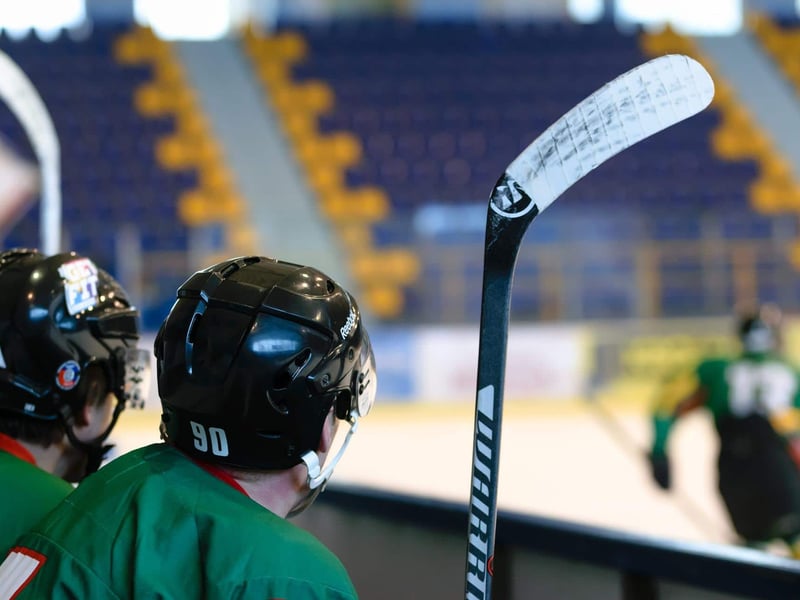
(CN) — A federal class action challenging a NCAA hockey eligibility rule could have implications that stretch far beyond the ice.
Canadian junior hockey player Rylan Masterson filed the federal suit Monday night in the Western District of New York, where he accuses the NCAA of violating federal antitrust laws by restricting player movement between major-junior hockey leagues and NCAA hockey.
According to NCAA rules, players are ineligible from competing in college hockey if they have ever played for the Canadian Hockey League — a 20-and-under junior league that Masterson calls “the biggest and most reliable supplier of NHL talent.” Because players sign contracts and receive modest stipends to play for CHL teams, the NCAA declares them professionals, thus having lost the privilege to play college hockey.
But Masterson, a 19-year-old who captained the Ontario Junior Hockey League’s Fort Erie Meteors last season, claims the rule is merely a way for the NCAA to illegally ice out its competition.
“In a perfectly competitive market, top-end hockey players could and would move between these leagues (Division I and the CHL) as their age, career goals, and circumstances change,” Masterson said in the 34-page complaint. “The NCAA member institutions, however, have entered into a horizontal agreement that prevents that result — the NCAA’s bylaws prohibit any player who has played a CHL game, even a preseason game, from playing Division I hockey.”
Masterson says he lost his NCAA eligibility when he played two preseason games for the CHL’s Windsor Spitfires in 2022. He was 16 years old. To this day, Masterson has never played a regular season game for a CHL team.
The lawsuit was a long time coming, according to Mit Winter, a college athletics attorney for Kennyhertz Perry in Kansas City, Missouri. In 2023, the NCAA reviewed its rules to determine which ones could be problematic from a legal perspective.
“This is one of the rules they identified,” Winter told Courthouse News on Tuesday.
Instead of changing the rule outright, the NCAA put the choice in the hands of its college hockey coaches, who left it in place despite the legal risks. Masterson’s lawsuit targets as defendants 10 of those colleges, including Boston University, Rochester Institute of Technology and Notre Dame. He laments the “impossible position” that the rule puts teenage players in by forcing them to decide whether they will ever want to play Division I hockey at such a young age.
“This scheme prevents competition between the CHL and NCAA for top-end players and thus artificially suppresses compensation for players and artificially creates less competitive leagues,” Masterson said, adding that the rule constitutes a “group boycott.”
The challenge is one of numerous recent antitrust suits against the NCAA, which have contributed to a changing climate for college sports. Unlike in years past, college athletes can now be paid for their names, images and likenesses, thanks in part to the 2021 Supreme Court ruling in NCAA v. Alston that shed restrictions on what those athletes can earn.
“I think a lot of NCAA rules are now problematic under antitrust law,” Winter said. “We’ve seen after the*Alston* decision, other federal courts, lower courts, have found that other certain NCAA rules most likely violate antitrust law. So the federal courts are no longer really buying the NCAA arguments that were successful for such a long time.”
That recent history favors the players, according to Winter, who believes the lawsuit could lead to other antitrust disputes over NCAA rules.
“Players definitely have a better chance of winning a case like this than they would have even just five years ago,” Winter said. “I think that if the plaintiffs are successful in this, there are probably some other NCAA rules that might be challenged as well relating to who can play college sports and who can’t.”
Masterson is seeking an injunction to keep the NCAA and its college hockey teams from enforcing the CHL ban, as well as compensatory damages and other relief. He’s being represented by New York-based Freedman Normand Friedland LLP and class-action specialty firm Berger Montague — the same firm behind the ongoing massive antitrust class-action case against the UFC.
Representatives for the NCAA did not immediately respond to requests for comment.
 Follow @Uebey
 Follow @uebey.bsky.social
Subscribe to our free newsletters
Our weekly newsletter Closing Arguments offers the latest about ongoing trials, major litigation and rulings in courthouses around the U.S. and the world, while the monthly Under the Lights dishes the legal dirt from Hollywood, sports, Big Tech and the arts.