
 Search Articles


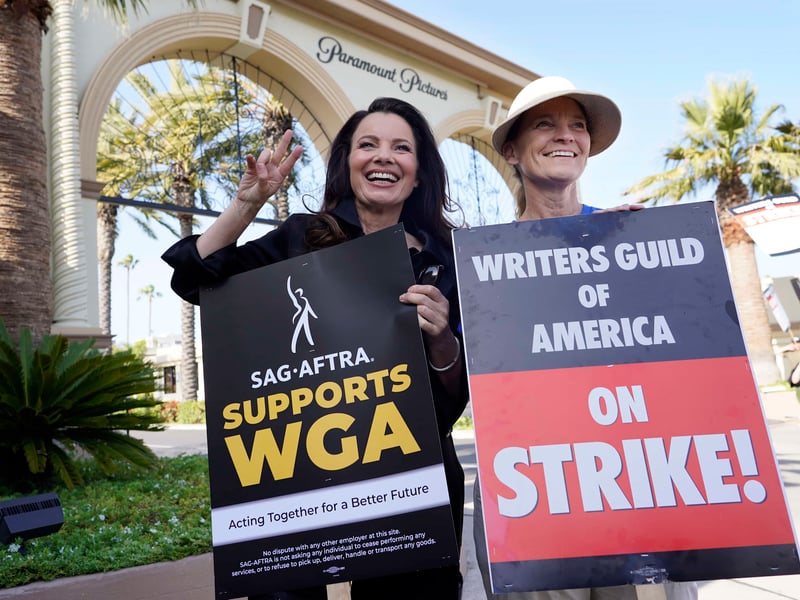
LOS ANGELES (CN) — Members of the Writers Guild of America, the union representing film and television writers, voted overwhelmingly to ratify their new contract, which ended their 148-day strike last month.
Of their 8,525 members, just 90 voted no while 8,435 of them, or 99%, approved the new contract which runs until May 2026.
“Through solidarity and determination, we have ratified a contract with meaningful gains and protections for writers in every sector of our combined membership,” said WGA West president Meredith Stiehm in a written statement. “Together we were able to accomplish what many said was impossible only six months ago.”
A spokesperson for the Alliance of Motion Picture and Television Producers, or AMPTP, the group that represents the major studios, said in a written statement: “The AMPTP member companies congratulate the WGA on the ratification of its new contract, which represents meaningful gains and protections for writers. It is important progress for our industry that writers are back to work.”
Under the agreement, minimum weekly pay for writers will increase more than 12% over the next three years, and writers will see an increase in residual payments for certain projects when they appear on streaming platforms like Netflix. Studios agreed to not let artificial intelligence software write or rewrite literary material — “meaning that AI-generated material can’t be used to undermine a writer’s credit or separated rights,” according to a WGA summary of the new contract. The deal will also guarantee a minimum of three to six writers for a television show, depending on how many episodes are included in every season.
Some writers are already back to work. But things haven’t quite returned to normal in Hollywood. The Screen Actors Guild, which represents some 160,000 actors, has been on strike since July 14. That means that most TV and film production remains at a standstill, although late night talk shows are back on the air and “Saturday Night Live” is scheduled to start its new season Saturday.
SAG-AFTRA and AMPTP officials have been negotiating all day on Monday, as indeed they were on Friday. Until a deal is reached, picket lines will remain outside the major studios, with both actors and writers marching around with signs.
The actors’ demands are similar to that of the writers — higher minimum pay, better residuals from streaming platforms, and protections against the use of artificial intelligence. Actors also want rules around self-recorded auditions, a growing trend which they say has amounted to a shifting of costs from the producers onto the performers.
“Now it’s time for the AMPTP to put the rest of the town back to work by negotiating a fair contract with our SAG-AFTRA siblings, who have supported writers throughout our negotiations,” said WGA East president Lisa Takeuchi . “Until the studios make a deal that addresses the needs of performers, WGA members will be on the picket lines, walking side-by-side with SAG-AFTRA in solidarity.”
The strike has had a major impact on the economies of both California and Los Angeles. The state has around 700,000 entertainment industry-related jobs, a number that doesn’t include businesses like restaurants, caterers and dry cleaners, all of which have been hurt by the prolonged work stoppage. Estimates of the loss in revenue range from $3.5 to $6 billion, a number that will continue to rise as long as actors remain on the picket lines.
 Follow @hillelaron
Subscribe to our free newsletters
Our weekly newsletter Closing Arguments offers the latest about ongoing trials, major litigation and rulings in courthouses around the U.S. and the world, while the monthly Under the Lights dishes the legal dirt from Hollywood, sports, Big Tech and the arts.