
 Search Articles


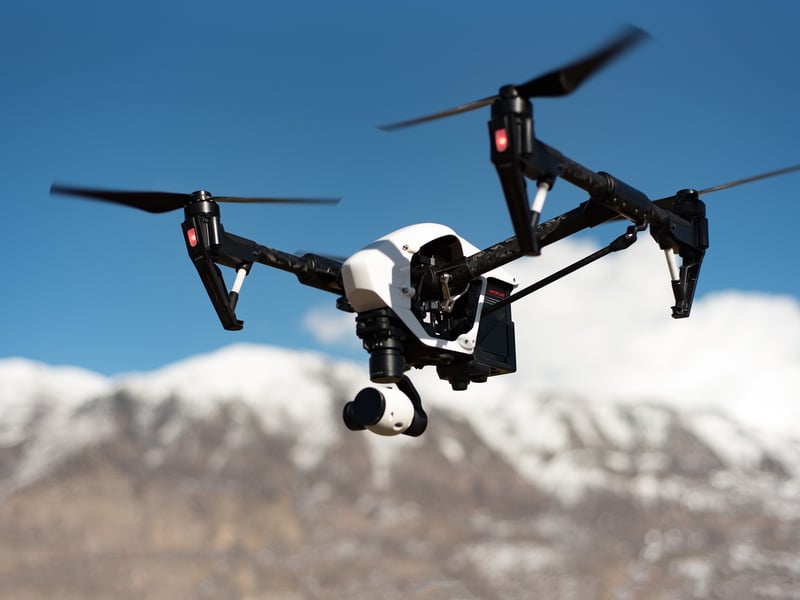
CINCINNATI (CN) — Spotters who help hunters locate downed animals through the use of unmanned aircraft do not violate a Michigan law that prohibits “drone hunting,” an entrepreneur and his company argued Wednesday at the Sixth Circuit.
Drone Deer Recovery LLC and its founder, Mike Yoder, claim the state of Michigan violates their First Amendment rights by enforcing a “drone statute” that outlaws hunting with the aircraft.
The law prohibits the use of aircraft to “take” animals, a term that can include tracking, following or locating deer, in addition to killing them.
Attorney Andrew Quinio of the Pacific Legal Foundation in Sacramento, California, argued on behalf of the drone company that the exchange of information between his client and hunters is speech protected by the First Amendment.
U.S. Circuit Judge Andre Mathis, an appointee of Joe Biden, interrupted the attorney and asked whether his clients could establish standing through a credible threat of enforcement by the Michigan Department of Natural Resources.
Mathis asked if the drone company could satisfy the factors set forth in the Sixth Circuit’s 2016 opinion in McKay v. Federspiel , which dealt with a prohibition on electronic devices in courtrooms.
“Yes, the threat does not have to be specific and personal to the plaintiffs to seek prospective relief,” Quinio answered. “They have restrained themselves from operating in Michigan and do have standing.”
Assistant Michigan Attorney General Nathan Gambill argued on behalf of the state. He told the panel the drone statute is an extension of a preexisting law that prohibited the use of planes to spot deer, whether dead or alive.
“The act of enhancing your senses and gaining an unfair advantage over these deer is what violates the law,” he said.
Senior U.S. Circuit Judge R. Guy Cole Jr., an appointee of Bill Clinton, asked about the specifics of a potential violation.
“At what point in the tracking process is the statute violated?” he asked.
“At the beginning, when they put their eyes in the sky and start looking for a deer,” Gambill answered. “The statute is violated without the hunter learning anything about the deer.”
Quinio disputed that point.
“The government regulates the means of speech creation in order to regulate speech,” he said. “If my client uses a drone to take pictures and sell postcards, he would not be in violation of the statute, but when he sends information to a hunter, he is. The statute is regulating content.”
Senior U.S. Circuit Judge Helene White, an appointee of George W. Bush, questioned the state’s attorney about any distinction between hunters and non-hunters using drones to take pictures.
“I’m getting a little confused,” she said, “it’s the purpose of the pictures that controls? If a nature lover sends up a drone without any intent to hurt them, do they violate the statute?”
“They very well may have,” Gambill said. “‘Take’ does not mean just killing a deer, and putting your eyes in the sky is not expressive conduct.”
The state’s attorney also pointed out the drone company brought as an-applied challenge to the law and included only the use of drones to recover downed deer in its complaint.
Drone Deer Recovery filed its lawsuit in federal court in 2023 against the Michigan Department of Natural Resources, but a federal judge sided with the state and found the statute in question did not regulate speech or involve the First Amendment.
U.S. District Judge Paul Maloney, a George W. Bush appointee, dismissed the suit in June 2024 after he determined Yoder and his company lacked standing.
“The drone statute does not regulate plaintiffs’ ability to send and receive information regarding downed game. Plaintiffs are free to track downed deer in a different manner and relay their findings. Plaintiffs’ ability to relay the location information is not regulated by the drone statute, just flying the drone,” he said.
In their brief to the appeals court, Yoder and his company called Maloney’s reasoning into question.
“‘Just flying’ the drone is not what is banned. In order for the user to violate the department’s application of the drone statute, they must convey the information they have created to the hunter. This is where the drone statute violates the First Amendment,” they said.
Gambill’s comment Wednesday that a violation occurs as soon as drone users put their “eyes in the sky” is part of the state’s stance in its brief to the court that rejects the hunters’ interpretation of the law.
“Yoder does not need to create a location pin, or send it to the hunter, for the violation to occur. Even if Mr. Yoder or Drone Deer Recovery violates the statute and locates the deer with a drone, the law still does not forbid them relaying that information to the hunter. The activity prohibited by Michigan law is conduct, not speech,” it said.
No timetable has been set for the court’s decision.
 Follow @kkoeninger44
Subscribe to our free newsletters
Our weekly newsletter Closing Arguments offers the latest about ongoing trials, major litigation and rulings in courthouses around the U.S. and the world, while the monthly Under the Lights dishes the legal dirt from Hollywood, sports, Big Tech and the arts.