Search Articles


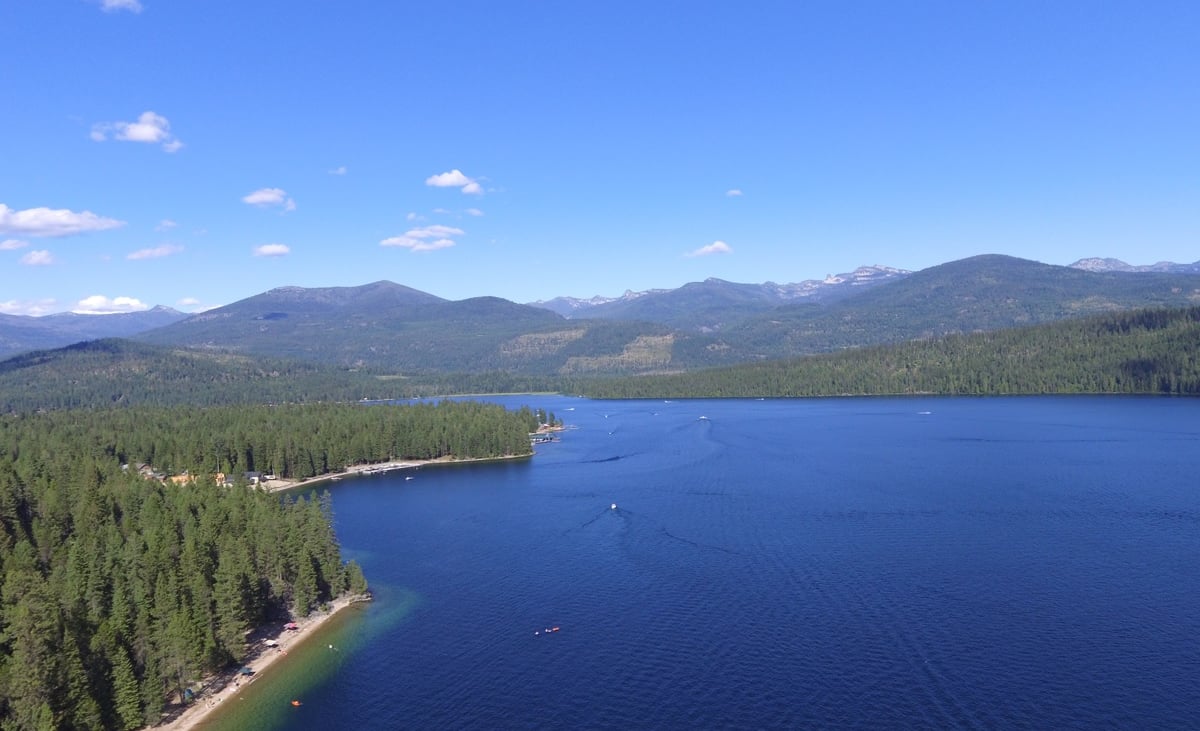
(CN) — Idaho defended its laws governing water rights in front of a panel of federal circuit court judges Tuesday, as the U.S. government asked the court to declare one a state statute that created a new forfeiture proceeding for stockwater rights unconstitutional.
A three-judge panel of the Ninth Circuit heard arguments for cross-appeals from the state and the federal government at the Pioneer Courthouse in Portland, Oregon.
Under Idaho law, the federal government must document the “beneficial use” of water on the land it owns on which it permits ranchers to graze livestock. The state may issue forfeiture proceedings for stockwater rights whenever it appears the U.S. is not watering its own livestock on a federal grazing allotment (which is invariably the case), unless the Idaho Department of Water Resources receives written evidence that a “principal/agent” relationship exists between the owner of a water right and the “agent” who is using the water.
The U.S. argues the law unlawfully discriminates against its interests. On Thursday, Department of Justice appellate attorney John Smeltzer said the federal government sued the state to protect water rights for Idaho ranchers who are legally permitted to use federal grazing lands.
“If we own the water rights, we own the land, and we’re permitting the use of the land, that’s use, that’s all you need to know,” Smeltzer told the panel. “There’s an agency relationship in the permit relationship.”
Idaho Deputy Attorney General Michael Orr said there is no federal water law and decreed water rights are administered by the states. Orr argued the statutes enacted by the Idaho legislature were not discriminatory against the U.S.
“Use of federal land is not the same thing as using water,” Orr told the panel. “And merely allowing the tenant to use the water on the land, it’s not sufficient to establish an agency relationship between the owner and the landowner.”
“That’s contrary to Idaho law,” Orr continued.
Responding to questioning from the judges on the panel, Orr conceded the federal government could develop “some other evidence” to establish water rights use, if the case was to go forward.
But he said having a permit for livestock to graze doesn’t automatically give a permittee water rights.
Upon question from U.S. Circuit Judge Jennifer Sung, a Joe Biden appointee, about establishing a water right, Smeltzer offered a different view.
“Once the U.S. owned the right, it could allow its permittees to use its right, and that would qualify as beneficial use, whether they were acting as an agent or not?” Sung asked.
“What I’m saying is there is an agency relationship within the permit relationship,” Smeltzer answered.
In 2024, U.S. District Judge David Nye, a Donald Trump appointee, rejected federal claims of unconstitutionality regarding the forfeiture law and blocked the Department of Justice’s attempt to stop Idaho ranchers from seeking forfeiture of stockwater rights on public lands. The ruling made clear that the federal government must productively use the water rights within five years or be subject to forfeiture under Idaho law.
The statutory changes by the Idaho legislature created “an orderly process to address allegations that a stockwater has been lost to forfeiture” according to Orr, and were determined after a 2007 Idaho Supreme Court decision establishing that if a rancher’s livestock was using the water on federal land, the rancher could establish a water right.
But the Idaho Supreme Court ruling left questions unanswered about water rights and public lands.
In 2022, the DOJ sued to block forfeiture of its stockwater rights. The federal government argued it doesn’t own any livestock, and the permitting system is the only way to apply the use of its water rights.
Orr said the Idaho legislature, Idaho ranchers and the Idaho Department of Water Resources would be directly affected by the outcome of the Ninth Circuit case.
Sung questioned whether some of the statutes imposed by Idaho on the U.S and which Nye found unconstitutional were ultimately to push the U.S. out of ownership of its water rights.
“It seems to me that that purpose of this statutory scheme as a whole was to divest the U.S. of these stockwater rights that the state contends were essentially mistakenly decreed to it,” she said.
U.S. Circuit Judge John Owens, a Barack Obama appointee, and U.S. Circuit Judge Holly Thomas rounded out the panel.
In its cross-appeal, among other issues, the state asked the court to reverse Nye’s finding that a statute relating to the transfer of grazing permits and stockwater rights is unconstitutional.
Subscribe to our free newsletters
Our weekly newsletter Closing Arguments offers the latest about ongoing trials, major litigation and rulings in courthouses around the U.S. and the world, while the monthly Under the Lights dishes the legal dirt from Hollywood, sports, Big Tech and the arts.