Search Articles


(CN) — Seven Illinois professionals claim Microsoft and Nvidia stole their unique voiceprints and used them to train commercial artificial intelligence voice synthesis models in recent lawsuits.
The professionals in fields such as investigative podcasting, broadcast journalism and audiobook narration sued Microsoft and Nvidia Tuesday in two separate lawsuits filed in U.S. District Court for the Northern District of Illinois.
Philip Rogers, Carol Marin, Alison Flowers, Robin Amer, Lindsey Dorcus, Yohance Lacour and Victoria Nassif are Peabody winners, Pulitzer finalists, Emmy Award winners and Order of Lincoln recipients.
“None of them was told that their voice was being used to train Nvidia’s commercial voice AI. None of them was asked. None of them consented,” attorney Ross Kimbarovsky said in the 103-page complaint against Nvidia.
The plaintiffs claim Nvidia and Microsoft obtained recordings of their voices, extracted the unique biometric signatures from the stolen voiceprints and used the data to build suites of commercial voice artificial intelligence products.
A voiceprint is the digital fingerprint of a human voice — a mathematical representation of its pitch, timbre, resonance, accent and distinctive speech patterns.
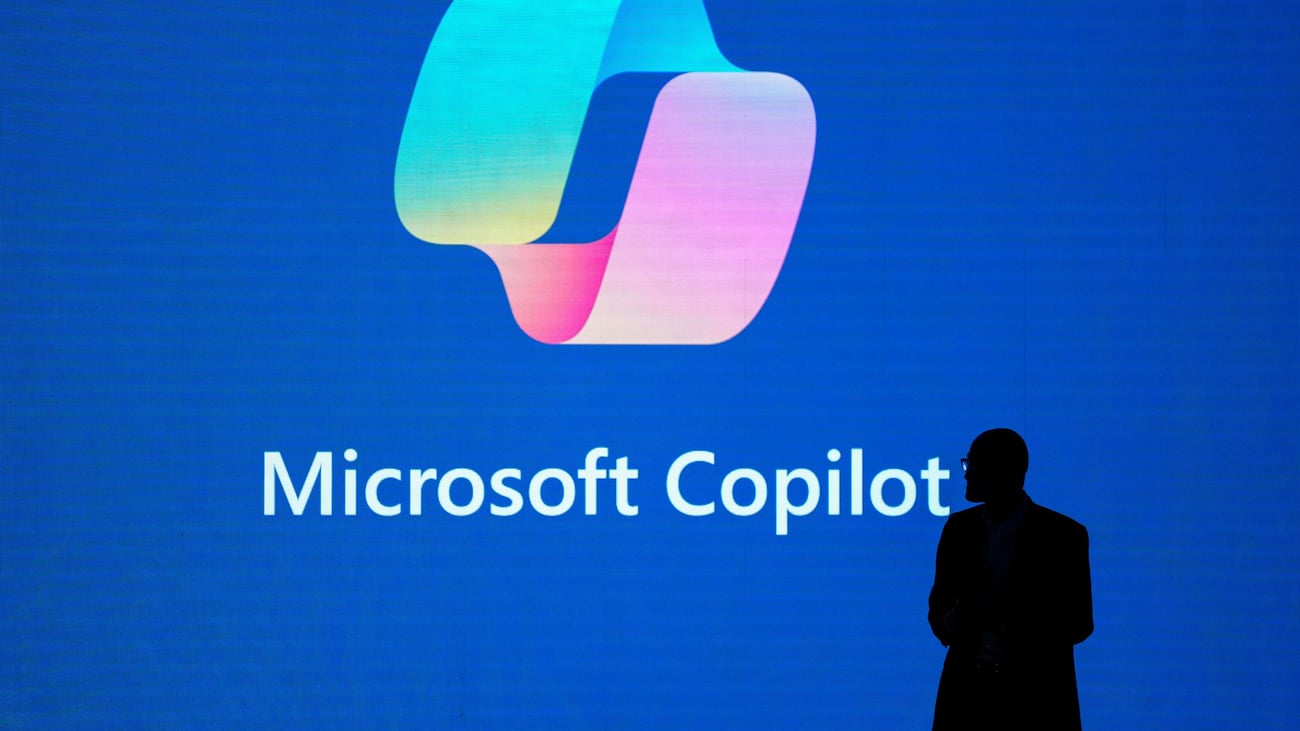
The companies used the voiceprints of highly accomplished professionals without consent or notification, according to the plaintiffs, knowingly violating Illinois’ Biometric Information Privacy Act for the construction of products like Microsoft Copilot and Nvidia’s Canary and Parakeet speech models.
The act requires written notice of the specific purpose and duration of voiceprint collection, along with a written release from the speaker.
Each suite of AI voice products utilized hundreds of thousands of hours of recordings from just as many speakers, including from each plaintiff, they say. Collection and training at that scale includes major compliance responsibilities, including identifying source speakers, providing notice and obtaining and storing countless releases.
“That compliance burden would have constrained the speed and scale of Microsoft’s voice AI development and the $281.7 billion in annual revenue and $75 billion Azure cloud business that depend on it,” Kimbarovsky said in the 101-page complaint naming Microsoft. “Microsoft chose speed and scale over compliance. That was not an oversight. It was a business decision.”
The plaintiffs are seeking statutory damages for violations of the Illinois privacy law, as well as actual damages and disgorgement of profits earned by both companies from the exploitation of their voiceprints.
It isn’t as simple as deleting the recordings — the plaintiffs assert their unique voices are encoded in each company’s models, which are deployed at a global scale. The biometric data and the product are one and the same.
Many of those models are targeted toward the very industries in which plaintiffs have built careers. Nvidia’s Magpie TTS flow is a text-to-speech product that excels at voice cloning, allowing users to “synthesize speech in any voice given just a few seconds of reference audio.” The model is designed for studio-grade narration and dubbing at a fraction of the cost of human services in the same field, according to the plaintiffs.
Dorcus and Nassif are professional audiobook narrators based in Illinois. Nassif, a first-generation Lebanese-Palestinian American, occupies a distinctive position in that market by providing authentic Arabic-accented narration of works by Arab and Palestinian American authors.
This content is particularly valuable to both Nvidia and Microsoft for multilingual voice training, and Nassif argues her distinctive voice is evident in their respective models.
Though she never created an account or downloaded a voice model with Nvidia, nor did she receive a disclosure or release document for use of her voice, she asserts her unique market position is being usurped by AI voice generators using her own voice.
“The technology Nvidia built using Nassif’s voiceprint now operates in the precise market, culturally authentic Arabic-accented narration, in which Nassif has built her career, in a competitive position Nassif neither chose nor authorized,” the plaintiffs said in the complaint.
Both companies took preventative measures to prevent voice fraud on the user-end when it became clear their products could be used for purposes such as impersonation and deepfakes, but stopped short of putting the same limitations on the development side.
This commercial exploitation, they say, is intentional noncompliance with Illinois law.
In addition to damages, the plaintiffs asked the court for an injunction requiring both companies to cease collection of voiceprints from recordings produced or recorded in Illinois without consent, identify the sources of voice training data and destroy all voiceprints unlawfully obtained from plaintiffs and the class.
Because they also argue the biometric information cannot be separated from the products themselves, destruction of the training materials would mean destruction or retraining of the commercial products built using their voices.
Neither Nvidia nor Microsoft could be immediately reached for comment.
 Follow @desdev5
Subscribe to our free newsletters
Our weekly newsletter Closing Arguments offers the latest about ongoing trials, major litigation and rulings in courthouses around the U.S. and the world, while the monthly Under the Lights dishes the legal dirt from Hollywood, sports, Big Tech and the arts.