Search Articles


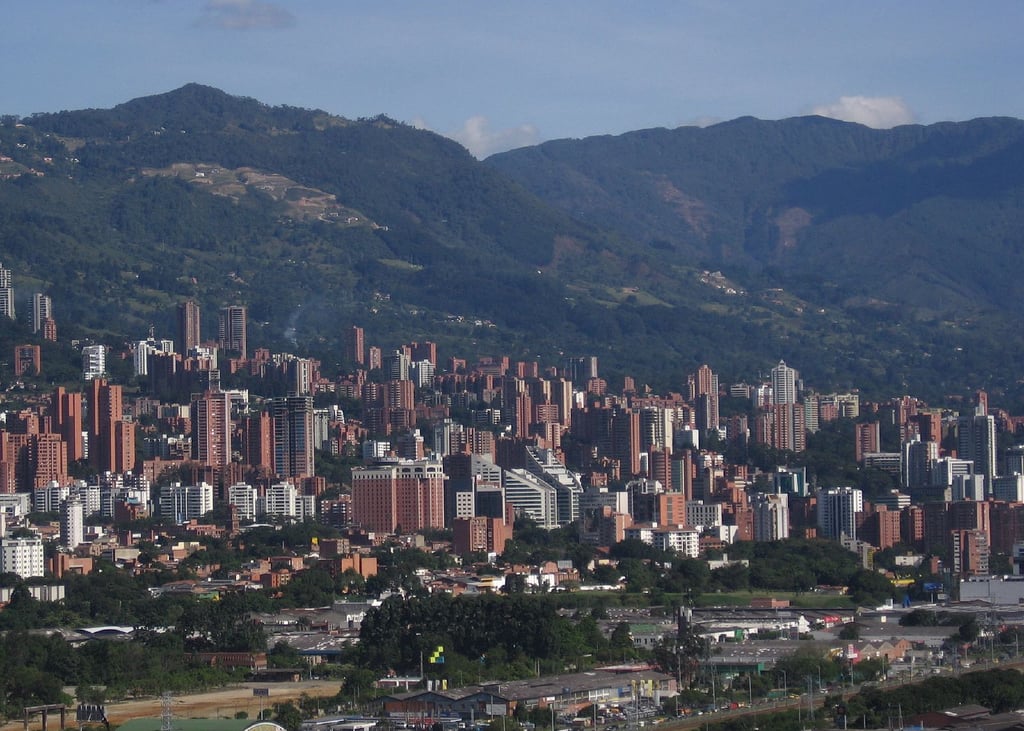
BUENOS AIRES (CN) — More than 40 million Colombians are registered to vote this Sunday in the country’s presidential elections, a first round that comes amid a highly polarized political scenario. If no candidate gains more than 50%, the top two finishers will face off in a June 21 runoff.
With more than a dozen candidates on the ballot, three contenders have emerged as the dominant forces in the race: leftist Iván Cepeda, the candidate of President Gustavo Petro’s Historic Pact coalition; Paloma Valencia, a conservative senator and political ally of former President Álvaro Uribe Vélez; and right-wing outsider Abelardo de la Espriella.
Other candidates are also running, spanning the political spectrum from the center and center-left to the conservative establishment, including former Bogotá Mayor Claudia López and centrist Sergio Fajardo.
These elections will most likely define which vision of the right will face Cepeda in the runoff, but the outcome will also speak to the path Colombians choose to confront the country’s chronic problems: insecurity, inequality, corruption and political fragmentation.
“It’s a highly polarized scenario,” said Sergio Guzmán, who runs the consultancy group Colombia Risk Analysis. Four years ago, the country’s first leftist coalition, Historic Pact, won the presidency under Petro, the country’s first leftist president. He pledged to change the tide in Colombia, a country ridden with violence and still grappling with the implementation of the 2016 peace accords, and to guarantee a more stable and equal country for its inhabitants.
And although some of his promises were delivered — poverty has declined, and the minimum wage has risen under his administration — the issue that remains central for many voters, security, still seems distant despite the government’s efforts.
“In Colombia, the question is not about left or right,” Guzmán said. “It’s about war or peace.” Petro’s administration, he said, was successful in placing other topics on the ballot: health, education and the economy. “They have de-securitized the political conversation, but it remains at the axis of the country’s politics.”
This is why political opponents are pushing back so hard against the peace strategy championed by Petro and Cepeda. Valencia, an experienced lawyer and veteran senator, represents the Democratic Center, the right-wing party founded by Uribe, whose signature “Democratic Security” policy drastically reduced kidnappings and weakened guerrilla groups in the early 2000s.
However, Uribe’s militarized approach faced severe criticism over human rights violations. The Special Jurisdiction for Peace, or JEP, has said at least 6,402 civilians were killed and falsely presented as combatants by members of the military during the armed conflict, in what became known as the “false positives” scandal.
Doubling down on her mentor’s legacy, Valencia is now proposing a hardline security strategy to recapture lost territory through closer cooperation with the United States, a stark contrast to Petro, who has fiercely opposed foreign intervention in Colombia’s domestic conflict.
De la Espriella has similarly staked his campaign on hardline policies. “I came to rock the boat, politically,” he said in a recent interview. “That’s the real transformation Colombia needs.” Echoing anti-establishment figures such as Argentina’s Javier Milei, he has promised to shrink the public sector by 40%.
But his boldest vow is to reclaim territories currently controlled by criminal and guerrilla groups within his first 90 days in office.
To achieve this, he plans to expand the military’s technological capabilities through drones and artificial intelligence, construct 10 privately run maximum-security prisons inspired by El Salvador President Nayib Bukele’s model and resume aerial fumigation of illicit coca crops.
“Any bandit who does not submit must be taken down,” he said.
To Cepeda, the topic is personal. His father, Manuel Cepeda Vargas, a leftist journalist and legislator, was killed in 1994 by members of paramilitary groups acting with state agents, according to court rulings. His son spent much of his life advocating for historical memory and justice for victims across the country.
Unlike his opponents, he defends Petro’s peace policy and promises to deepen it, rejecting the idea that negotiations with armed groups have simply enabled more violence.
And, just as Petro selected Francia Márquez — an Afro-Colombian environmental activist — as his vice president in 2022, Cepeda has chosen Aida Quilcué, an Indigenous senator, in a move aimed at broadening representation within his political coalition.
But there are other aspects of Colombia’s past that remain painfully familiar. CrisisWatch, the International Crisis Group’s violence tracker, reported the country’s security situation has deteriorated in recent months amid escalating conflict ahead of the elections. “As the 31 May elections drew near,” one briefing noted, “deadly attacks by armed and criminal groups intensified while presidential hopefuls came under threat, reflecting worsening violence that could escalate further around the polls.”
Electoral violence has remained at the center of the conversation since last year, when presidential hopeful Miguel Uribe Turbay was shot during a campaign rally. He later died from his injuries.
“The attack raised the spectre of a return to the sort of high-profile political violence that once afflicted Colombia,” a recent report, also by Crisis Group, said. The organization recorded hundreds of incidents of political violence over the past year.
While de la Espriella has pointed to the violence as proof Colombia needs a drastic shift in security policy — and has appeared at campaign events wearing a bulletproof vest — Valencia, the only woman among the leading candidates, has projected defiance. “They should hide from me,” she said recently. “Here I am, fearless.”
A central issue in these elections is Colombia’s relationship with the United States. While President Donald Trump’s second administration has prioritized Latin America in its foreign policy strategy, Petro has repeatedly criticized Trump and U.S. foreign policy in the region.
The relationship between Bogotá and Washington has grown increasingly tense at times during Petro’s presidency, particularly over security cooperation, Venezuela and the war in Gaza.
Although Petro and Trump met again in February after tensions surrounding Venezuela escalated, diplomatic relations remain delicate — a factor that could deeply affect Colombia in the years ahead.
While Cepeda has emphasized sovereignty and criticized recent U.S. foreign policy, Valencia and de la Espriella have openly embraced deeper cooperation with Washington, especially on security and counternarcotics.
This could become one of the defining issues after Sunday’s vote. “If Trump takes part, it will move the needle,” Guzmán said. “And the ‘Trump effect’ is unpredictable.”
Lucía Cholakian Herrera is a Courthouse News correspondent based in Buenos Aires, Argentina.
 Follow @luciacholakian
Subscribe to our free newsletters
Our weekly newsletter Closing Arguments offers the latest about ongoing trials, major litigation and rulings in courthouses around the U.S. and the world, while the monthly Under the Lights dishes the legal dirt from Hollywood, sports, Big Tech and the arts.