
 Search Articles


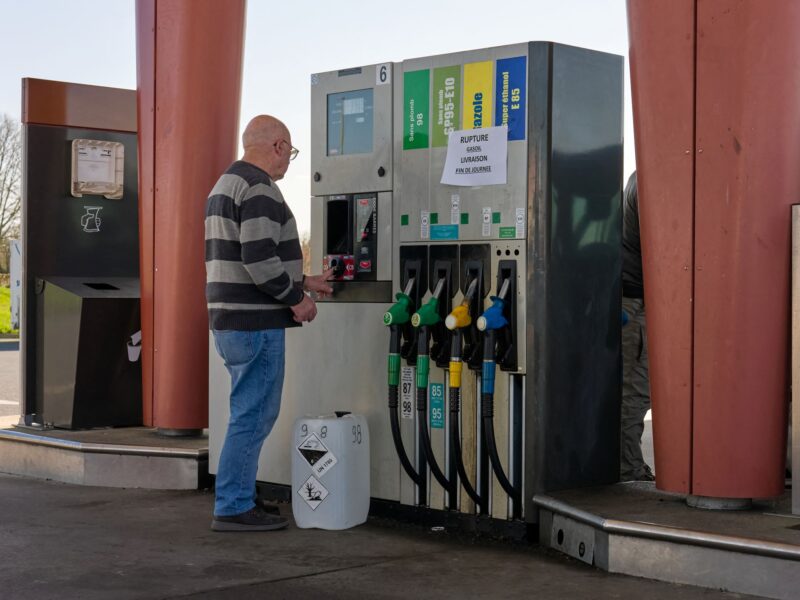
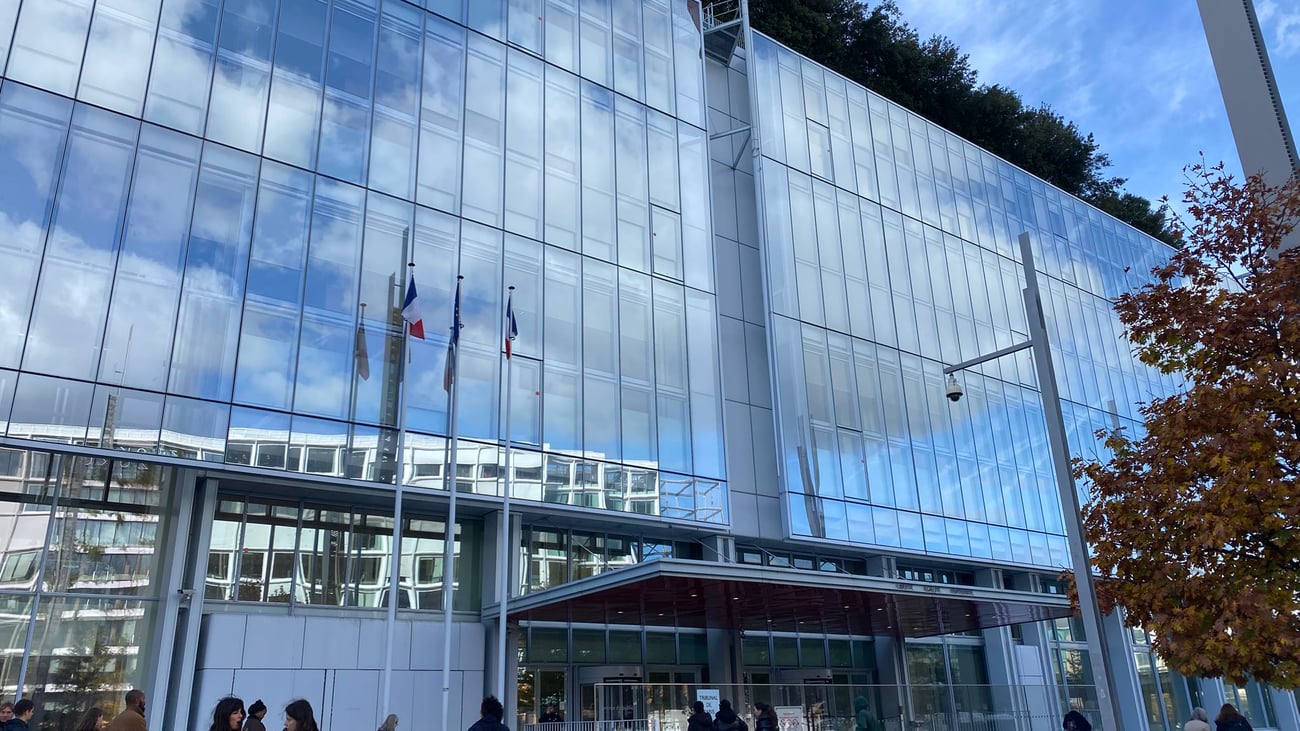
PARIS (CN) — As an unprecedented heat wave continued to tear through Europe Thursday, the Paris Judicial Court issued a landmark verdict for the environment: TotalEnergies must take its customers’ emissions into account as part of its climate responsibilities.
Under France’s Corporate Duty of Vigilance Law, companies with over 5,000 employees nationally or 10,000 internationally are required to implement measures that prevent infringements on human rights, public health and the environment.
TotalEnergies argued the greenhouse gas emissions generated by its clients were not its responsibility. But six years after the case was launched, the court ultimately found the company’s vigilance framework was incomplete by not taking these emissions into account.
It is the first-of-its-kind climate lawsuit in France.
“The court recognizes that large French companies … are obligated to identify the climate risks resulting from their activities and those of their subsidiaries, and to take the necessary measures to reduce their greenhouse gas emissions,” the plaintiffs said in a joint news release on Thursday. “This ruling marks an important milestone by confirming that the duty of vigilance fully applies to climate risks generated by multinational corporations.”
The multinational has six months to update its existing vigilance plan to include Scope 3 greenhouse gas emissions.

In 2020, the city Paris and four other organizations — Notre Affaire à Tous, Sherpa, France Nature Environnement and ZEA — took TotalEnergies to court, claiming it was failing to act on its climate obligations. The company is the sixth-largest producer of oil and gas worldwide at roughly 234 million barrels per day, and has said it aims to increase production by 3% annually between 2024-2030.
In addition to recognizing Scope 3 emissions as part of its vigilance requirements, the plaintiffs had asked that the company be forced to halt all new fossil fuel projects, reduce its current production levels and lower emissions. They also wanted an added financial penalty of roughly $28 million per day if it didn’t meet these requirements after six months.
Sébastien Mabile — one of the lawyers representing the civil parties in the case — remembers talking to Marie Toussaint, the founder of Notre Affaire à Tous and now a member of the European Parliament, before filing the lawsuit.
“[She] wanted to launch the case of the century, meaning to hold the state accountable for its failure to combat climate suffering,” Mabile said. “Seeing the litigation that was developing more and more against oil companies on the other side of the Atlantic, in the U.S., we had the idea not only to go after the state, but also to initiate action against the company with the largest carbon footprint in France — TotalEnergies.”
Legislation passed around that time gave the group confidence to move forward. In 2016, Article 1246 of France’s Civil Code stipulated that “Anyone responsible for environmental damage is obligated to repair it.” The following year, the Corporate Duty of Vigilance Law came into effect.
Initial hearings took place from Feb. 19-20, which Mabile and Justine Ripoll — the campaign manager of Notre Affaire à Tous — agreed was exceptionally long for a civil case, and testified to the gravity of their claims. In their arguments, the group leveraged an array of “precise” texts including the Paris Agreement, the Organisation for Economic Co-operation and Development’s guidelines, Intergovernmental Panel on Climate Change reports, International Energy Agency reports and existing laws.
“Faced with this, we had a defense from TotalEnergies that essentially tried to complicate matters and explain the complex nature of the energy market,” Mabile said.
Ripoll said TotalEnergies’ defense made conflicting arguments during the hearings; sometimes, they argued the company is really a small player in the global industry, and if they stopped producing oil and gas, others would pick up the slack and there would be no change in emissions.
“And at the same time, at other points in the trial, they said the exact opposite,” Ripoll said. “They said, ‘We are a major player in the energy transition. Without our expertise, the energy transition could not take place.’”
TotalEnergies did not immediately respond to a request for comment.
Critics were skeptical about taking the legal route to reduce greenhouse gas emissions.
Christian Gollier, a climate economist and one of the lead authors of the IPCC’s Fourth and Fifth Assessment Reports, was called into the hearings on Feb. 19 and 20 as an expert witness. Although he concedes that “if you reduce the supply of oil on the market, consumption can only follow and emissions will be reduced,” he’s worried about the eventual impact on consumers and the broader philosophical question of leaving this kind of decision to courts.
In his view, a carbon tax would allow the state to finance the energy transition or compensate households most vulnerable to the rise in fossil fuel prices.
“While the solution proposed by the NGOs attacking TotalEnergies means money will go into the pockets of oil companies, oligarchs and desert sheikhs in Saudi Arabia,” Gollier added.
In Gollier’s view, having a carbon tax would have been much more “socially desirable” outcome, because it would have allowed France to shield citizens from prices raised by lower supply. And if TotalEnergies is “forced” to reduce its supply, gas prices will go up and squeeze consumers.
“So it’s quite incredible that our democracy has not wanted to put in place a carbon pricing system, and we have a legal system that would like to implement more or less the same thing — a supply-side policy that will also drive up the price of gas at the pump,” Gollier said. “But which is not supported by the mechanisms, by the policies that are elected by the people, whereas judges are not … So, this poses a real problem for democracy.”
 Follow @lilyradz
Subscribe to our free newsletters
Our weekly newsletter Closing Arguments offers the latest about ongoing trials, major litigation and rulings in courthouses around the U.S. and the world, while the monthly Under the Lights dishes the legal dirt from Hollywood, sports, Big Tech and the arts.
Additional Reads


 Sanctioned ICC judges sue Trump in New York June 24, 2026