
 Search Articles


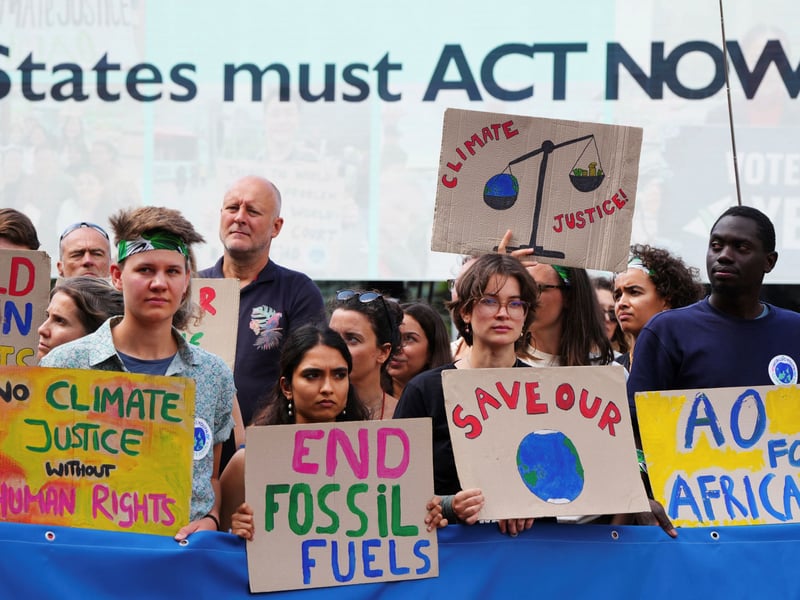
THE HAGUE, Netherlands (CN) — In a sweeping landmark advisory opinion issued Wednesday, the International Court of Justice said that countries have a legal duty to act on climate change, and they could face consequences if they fail to do so.
The United Nation’s top judicial arm laid out obligations under international law, signaling that climate inaction is no longer just a political failure but a legal one.
The legal opinion, requested by the UN General Assembly and adopted unanimously, lays out a framework that spans environmental treaties, human rights law and the law of the sea. While the opinion is not legally binding, it marks a pivotal moment in international climate diplomacy — one where law, not just science or politics — sets the terms of debate.
The court’s message was simple and strong. Climate duties aren’t just matters between countries. They are shared responsibilities that apply to all. States bear obligations not just to each other but to the global community, a concept known in legal terms as erga omnes. And for treaties like the Paris Agreement, those responsibilities are considered erga omnes partes — meaning every signatory has a stake in how others uphold their commitments.
From a youth campaign to the world court
The story behind the case began in the Pacific Islands, where young climate activists pushed their governments to take action through international law. Their efforts gained momentum after years of rising sea levels, intensifying storms and growing frustration with the slow pace of global climate talks. In response, the government of Vanuatu took the lead and introduced a resolution at the United Nations.
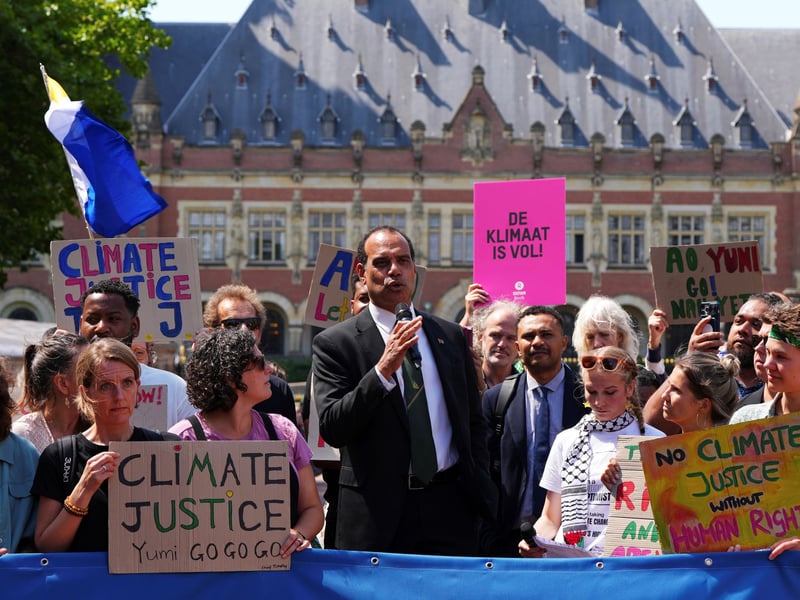
In March 2023, the UN General Assembly formally asked the International Court of Justice to clarify what international law says about states’ responsibilities to address climate change.
Specifically, it wanted to know what countries are legally obligated to do to protect the climate system for current and future generations, and what legal consequences they might face if they fail. A record 96 countries and 11 international organizations took part in the proceedings, making it the most widely supported advisory case the court has ever handled.
In Wednesday’s opinion, the court established that countries have a legal duty to act on climate change under binding rules of international law. That duty, the judges explained, comes from both global climate agreements such as the Paris Agreement and broader principles of customary international law that apply to all states, whether or not they have signed specific treaties.
Legal obligations, not aspirations
The court identified three core responsibilities under international law: cutting greenhouse gas emissions, adapting to the effects of global warming and cooperating across borders to address the crisis.
A key part of this foundation is the 2015 Paris Agreement, in which nearly every country pledged to limit global temperature rise and regularly update their national climate goals. Under the agreement, each state sets its own targets, known as nationally determined contributions.
The court stated that countries must “pursue domestic mitigation measures with the aim of achieving the objectives” of their contributions. It also underscored that these efforts must be carried out with due diligence, a legal standard that becomes more demanding for countries with greater capacity, wealth or historical responsibility.
Beyond the Paris Agreement, the court pointed to long-standing principles of international law. These include the duty to prevent environmental harm that extends beyond national borders and the obligation to work collectively to safeguard shared ecosystems.
Dr. Maria Antonia Tigre, director of global climate litigation at Columbia Law School’s Sabin Center, called the opinion a “watershed moment for global climate litigation.”
“Crucially, the court rejected the argument that climate obligations are limited to the UNFCCC, Kyoto Protocol or Paris Agreement. Instead, it confirmed that a broader legal framework — including human rights law, the law of the sea and customary international law — governs state conduct,” she said.
She also added that governments can also be held responsible for failing to regulate private actors that contribute to climate harm.
The judges concluded that these principles clearly apply to climate change, given its global nature and wide-reaching impacts. They noted that the build-up of greenhouse gases in the atmosphere results in “significant harm to the climate system and other parts of the environment,” and that such harm carries legal consequences.
If a country falls short of its legal duties under international law, it must stop what it’s doing, make sure it doesn’t happen again and take steps to make things right. That could involve repairing the damage, paying money to those affected or acknowledging the harm and taking responsibility in some other meaningful way.
Even when the harm is caused by several nations acting together, each one can still be held responsible.
“Each injured state may separately invoke the responsibility of every state which has committed an internationally wrongful act resulting in damage to the climate system," the court wrote.
The court also addressed a major hurdle in climate litigation: causation. It recognized that climate damage often results from many sources, but emphasized that this doesn’t eliminate accountability. A state can still be held liable if there is “a sufficiently direct and certain causal nexus,” even when other countries or factors are also involved.
Importantly, the judges clarified that emitting greenhouse gases isn’t illegal by itself. What triggers legal responsibility is the failure to fulfill obligations tied to preventing or addressing the resulting harm.
A global responsibility anchored in human rights
While the court didn’t settle whether individuals can bring direct claims, it emphasized the human cost of climate harm — from the right to life and health to housing and a decent standard of living. As the court put it, “protection of environment is precondition for enjoyment of human rights.”
They also gave special attention to those most at risk. Small island nations, which already face rising seas and shrinking land, were recognized as especially vulnerable. So are future generations, whose lives will be shaped by decisions made today.
The court also drew on the UN Convention on the Law of the Sea, noting that its pollution-prevention obligations extend to greenhouse gas emissions that acidify oceans and raise sea temperatures.
Elisa Morgera, professor of global environmental law at the University of Strathclyde and UN Special Rapporteur on climate change and human rights, welcomed the opinion for its clarity.
“The court made it unequivocally clear that international human rights law and the Convention on Biological Diversity provide essential obligations to tackle climate change,” she said. “Fossil fuel production, exploration licenses and subsidies may constitute an internationally wrongful act.”
Unanimous advisory opinions are rare at the ICJ; only five have been issued in nearly 80 years.
Lavanya Rajamani, a professor of international environmental law at the University of Oxford and a key legal adviser during the Paris Agreement negotiations, called the ruling “remarkable.”
“This opinion is likely to embolden national and regional courts to take states to task for their lack of climate ambition,” she said.
She added that the decision will also bolster the negotiating power of vulnerable states in climate talks “too often held hostage to ‘national determination,’ the rallying cry of major emitters.”
The court said “its conclusions will allow the law to inform and guide social and political action to address the ongoing climate crisis.”
What governments choose to do with that guidance or what happens if they ignore it remains an open question.
Subscribe to our free newsletters
Our weekly newsletter Closing Arguments offers the latest about ongoing trials, major litigation and rulings in courthouses around the U.S. and the world, while the monthly Under the Lights dishes the legal dirt from Hollywood, sports, Big Tech and the arts.