
 Search Articles


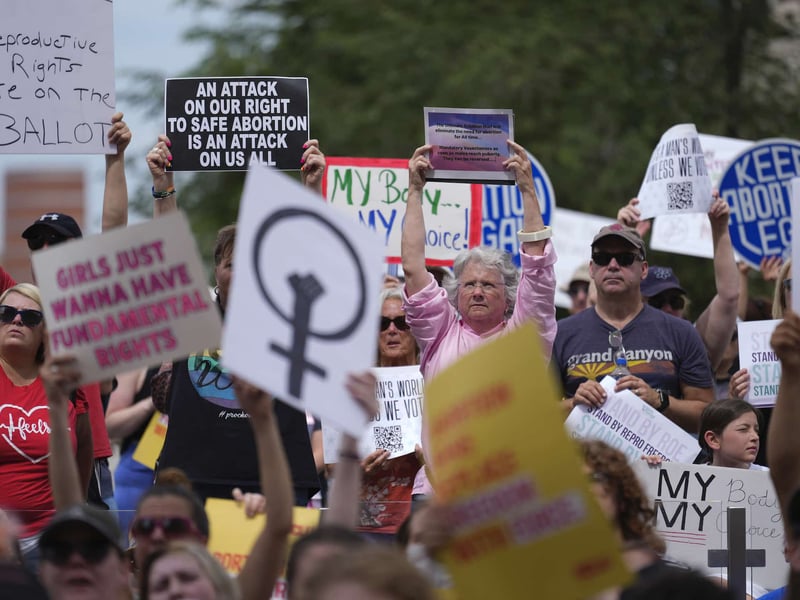
INDIANAPOLIS (CN) — An Indiana court blocked the state’s near-total abortion ban on Thursday finding the law ran afoul of religious freedom protections.
The American Civil Liberties Union claims in the 2022 class action on behalf of anonymous women and the advocacy group Hoosier Jews For Choice that the Indiana law violates religious freedoms by burdening the ability to obtain an abortion in accordance with their sincerely held beliefs.
In her 17-page ruling, Marion County Judge Christina R. Klineman blocked the law from being enforced against the plaintiffs, including any Indiana resident who objects to the ban on religious grounds.
“The court finds that there is significant public interest in ensuring the religious freedom of all citizens and the state’s position that religious freedom is somehow less important than other exceptions in the abortion law puts the court in an untenable position and finds a permanent injunction the only proper relief,” Klineman wrote.
Previously, the Indiana Court of Appeals had ruled that the law likely violatedIndiana’s Religious Freedom Restoration Act but stopped short of blocking the abortion ban, which has been upheld in a separate case by the Indiana Supreme Court.
The act prohibits the government from substantially burdening an individual’s exercise of religion unless the Indiana government has a compelling interest and uses the least restrictive means available.
While the abortion law — which went into effect in 2022 — only provides exceptions in the cases of fatal fetal anomalies, the mother’s health, and limited exemptions in cases of rape and incest, Klineman found that these exceptions undercut the state’s purported interest in “protecting prenatal life” by treating religious objections to the law differently.
“The abortion law would allow a plaintiff to seek an abortion if her pregnancy were the result of rape, but not if it were mandated by her religious beliefs. The state has not justified this differential treatment by establishing that its interest in the same prenatal life changes based upon the reason for terminating a pregnancy,” Klineman wrote.
Klineman also rejected the state’s argument that the law isn’t burdensome because it does not penalize abortion seekers and only providers, calling the claim “a false flag.”
“Penalizing providers to avoid the violation of RFRA is an untenable end-run around the conflict in these laws,” wrote Klineman.
The law criminalizes abortions that do not fall under one of the exceptions and physicians who perform an illegal abortion could face a fine of up to $10,000 and one to six years imprisonment.
The ACLU of Indiana celebrated the ruling in a statement released by ACLU attorney Stevie Pactor.
“Today’s ruling is a recognition that religious freedom protects people of many faiths and beliefs, not just those favored by the state,” Pactor said. “For more than three years, our clients have challenged a law that forces them to choose between their faith and their autonomy. This decision makes it clear that Indiana cannot enforce its abortion ban in ways that violate their religious freedom.”
A spokesperson from the Indiana Attorney General’s Office said the office has appealed the court’s decision.
“We disagree with the court’s decision and have already appealed. As we have with every challenge against our pro-life law, we’ll continue fighting to protect the lives of the unborn,” the spokesperson said.
Subscribe to our free newsletters
Our weekly newsletter Closing Arguments offers the latest about ongoing trials, major litigation and rulings in courthouses around the U.S. and the world, while the monthly Under the Lights dishes the legal dirt from Hollywood, sports, Big Tech and the arts.