
 Search Articles


INDIANAPOLIS (CN) — Indiana’s longest-serving U.S. representatives — one Democrat and one Republican — are fending off a host of challengers in their deeply partisan districts in the state’s May 5 primary election.
Democratic Representative André Carson, 51, has represented the 7th District since 2008 after winning a special election following the death of his grandmother, Representative Julia Carson.
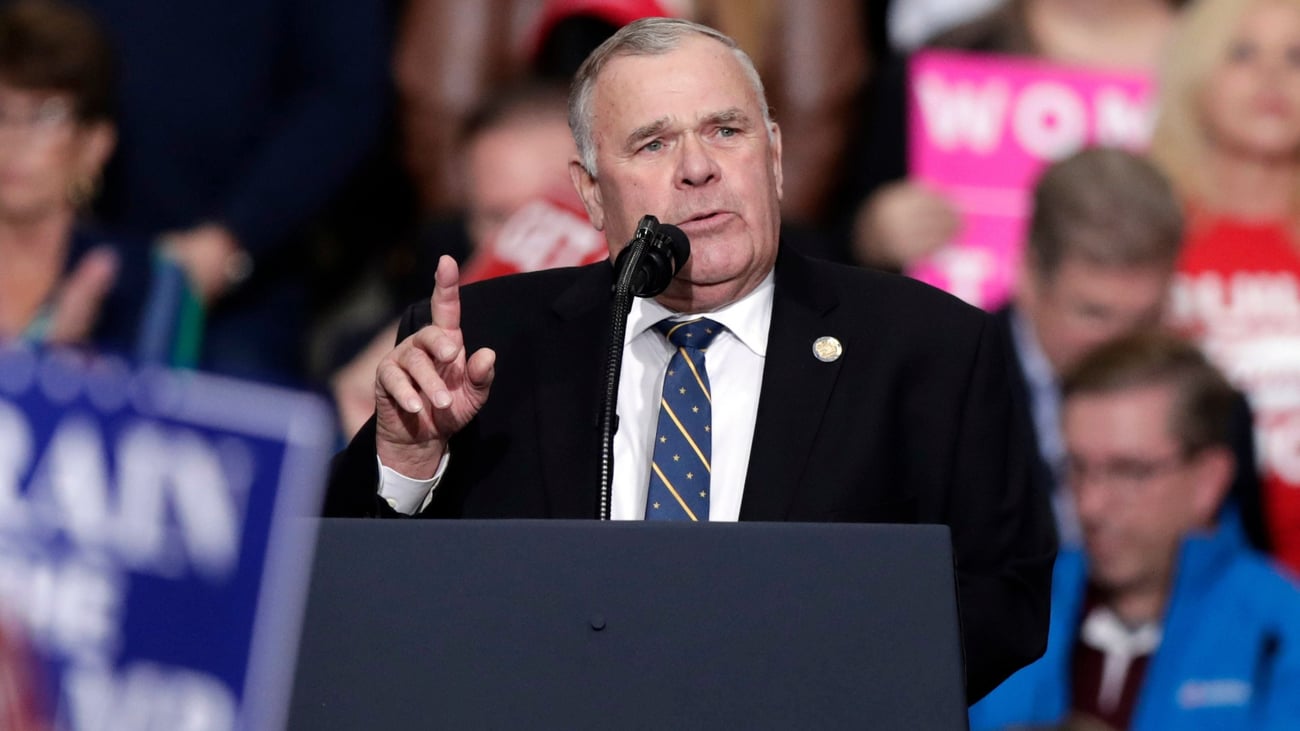
The 80-year-old Republican Representative Jim Baird has served in Indiana’s 4th District since 2019, after current state Attorney General Todd Rokita left to launch an unsuccessful U.S. Senate bid.
With both districts considered safe seats for the respective parties, the primary winners will be considered staunch favorites in the general election.
Research shows incumbents have a large electoral advantage and often win reelection.
“It’s very difficult to unseat in a primary or general, particularly in a primary in this case, an incumbent,” said Chad Kinsella, a political science professor at Ball State University.
Kinsella said name recognition and the frequent financial advantages are almost always enough for incumbents to keep their seats.
But despite long odds, both Carson and Baird have drawn viable opponents in their primaries.
7th Congressional District
In the Indianapolis district, Democrats George Hornedo, Destiny Wells and Denise Paul Hatch are seeking to unseat Carson.
Wells, a lieutenant colonel in the United States Army Reserve and attorney, has twice run for statewide offices and decided to enter the race near the filing deadline. In comments and a campaign letter, she has publicly criticized Carson’s effectiveness.
“Congressman André Carson has held this seat for nearly two decades, yet families across Marion County still face rising housing costs, limited healthcare access, neighborhood underinvestment and fewer opportunities,” Wells wrote. “These aren’t new problems. But after nearly 20 years, people are asking why they still feel stuck."
Hornedo, who served in the Obama administration at the Department of Justice, has also challenged Caron’s effectiveness and ties to political action committees.
He said in a campaign press release: “73% of André Carson’s campaign funding comes from political action committees, much of it from corporate PACs. Only 7% comes from small-dollar donors. The people of Indianapolis — the constituents he claims to represent — account for a fraction of what funds his political operation. The corporations, the defense contractors, the utilities, the financial institutions account for far more.”
Hatch was removed from her post as a Marion County township constable in 2024 after a felony for official misconduct but is allowed to run for federal office.
Carson both touted his record and criticized President Donald Trump when he announced his filing for reelection.
“I’ve helped lower costs for Hoosiers and bring projects like the Cultural Trail and bus rapid transit to Indy. But with Donald Trump, our country is in crisis. Join me as we fight to win the majority,” wrote Carson in a social media post on X.
According to data from the Federal Election Commission, Carson holds a massive fundraising and spending advantage over his opponents; he has been endorsed by businesses and groups like the Indiana Democrat African American Caucus, AFL-CIO, Communication Workers of America Union, Planned Parenthood Action Fund and JStreetPAC.
Laura Merrifield Wilson, a political science professor at the University of Indianapolis, thinks Carson should be considered the strong favorite for the primary.
“Incumbency advantage, particularly name recognition and networks, benefit Carson," Wilson said. “Worth noting, he doesn’t have any obvious liabilities or scandals. A glaring vulnerability might undercut his pursuit of reelection, but there doesn’t seem to be one in this case.”
4th Congressional District
Seeking his fifth term, Baird was previously a state representative and Putnam County commissioner and continued to seek reelection after his wife, Danise Baird, died in March from complications after a January car collision.
Baird has also been a vocal supporter of Trump and earned the president’s endorsement in January.
“Congressman Jim Baird is a Tremendous Champion for the Great People of Indiana’s 4th Congressional District!” said Trump in a Truth Social post. “Jim Baird has my Complete and Total Endorsement for Re-Election — HE WILL NOT LET YOU DOWN!"
State Representative Craig Haggard, a Republican, is challenging for the 4th District seat, which stretches south and west of Indianapolis and north past Lafayette.
Haggard has racked up several endorsements in his battle to unseat the incumbent, including from the state’s attorney general.
“Craig is a fighter and someone who I know will show up when his constituents need him most,” Rokita said in a statement. “That’s why I endorse Craig Haggard to represent us in Washington; we need fresh, strong voices that believe in what they fight for. After serving this seat for years, I know firsthand that the people of Indiana’s 4th need a strong conservative fighter.”
While Trump’s endorsement may help Baird, questions about the representative’s age might make him vulnerable.
“Baird is older and quite frankly, there was enough conversation about potential retirement, I imagine Haggard considered him to be a vulnerable incumbent," Wilson said. “Haggard is a strong challenger too, but incumbency advantage should never be underestimated.”
According to the FEC data, Baird has both raised and spent more money than Haggard, with both far outraising the third candidate in the race, John Piper. He is not considered a threat for the seat and has no FEC fundraising data available.
Both Baird and Haggard favored Trump’s push for Republican redistricting, which failed in Indiana. However, the hot-button national issue has not factored heavily in the state campaign.
“I think it’s more the power of incumbency, is going to be on display in this case,” said Kinsella. “I think that’s going to be with a lot of these races, I think you’re going to see that unless they’re critically damaged, and in this case I don’t think Baird is.”
The final factor in both primary races is turnout, and historically Indiana has seen sub-39% voter turnout in all primary general elections since 2002, with 2018 the one exception, when turnout spiked at 46.5%.
Primary elections generally have lower turnout than November general elections. However, the 2018 midterm election might prove a like comparison to 2024, as both years saw Democrats trying to get back into power during a Trump presidency.
“It is an election cycle where Democrats are highly charged and very engaged,” Wilson said.
But it is unclear what that means for Republicans in IN-4, or if increased Democratic turnout in IN-7 would endanger Carson or simply secure his reelection.
“By and large, I think the incumbents survive,” Wilson said. “We used to say ‘all politics is local,’ and while I am not sure that is completely true in 2026, I do think it largely stands.”
Early voting has already begun and ends the Monday before the primary election.
Subscribe to our free newsletters
Our weekly newsletter Closing Arguments offers the latest about ongoing trials, major litigation and rulings in courthouses around the U.S. and the world, while the monthly Under the Lights dishes the legal dirt from Hollywood, sports, Big Tech and the arts.
Additional Reads

 EEOC subpoena on Jewish UPenn personnel stayed April 28, 2026

