
 Search Articles


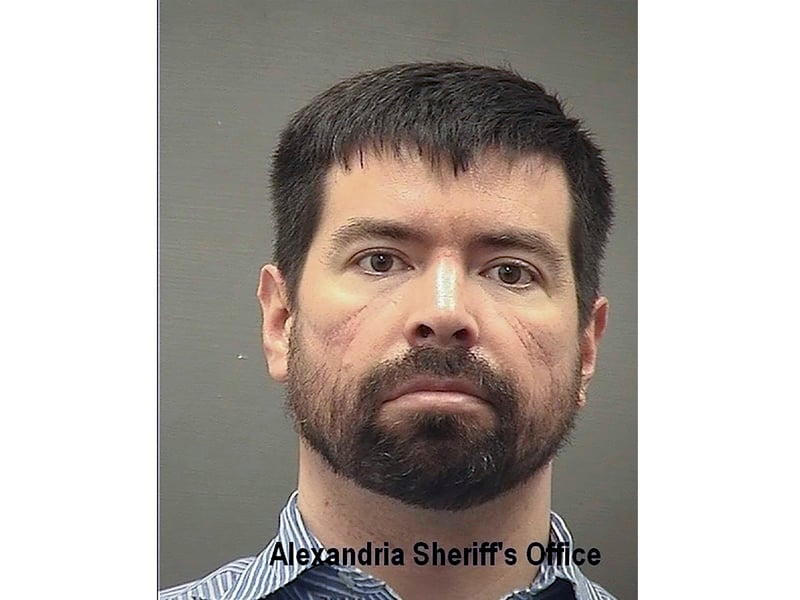
RICHMOND, Va. (CN) —A Fourth Circuit panel heard from an insurrectioniston Friday whoclaimed a jury wrongfully convicted him of unlawfully possessing firearm silencers, which he argued were simply solvent traps.
Hatchet Speed, a Navy veteran and Proud Boys member, a far-right extremist group, is seeking a retrial after a Virginia jury convicted him of unlawfully possessing unregistered firearm silencers. The devices were three solvent traps, tools intended to catch solvent residue, which Speed told an undercover FBI informant could be converted into silencers by drilling holes in them.
Speed argues the trial judge wrongly instructed jurors that the devices did not need to be operable to qualify as silencers, a claim he says tainted his 2023 conviction.
“It is possible that almost any inanimate object could be converted into a firearm silencer if enough alterations or fabrications were done to it,” Speed wrote in his brief. “Never before has a court convicted someone for merely possessing an object that could potentially be altered and converted into a silencer—where the object did, actually, function as something else.”
U.S. District Judge Michael Nachmanoff, a Joe Biden appointee, denied Speed’s motion for a new trial, ruling that thegovernment carried its burden of showing Speed possessed unregistered silencers, and sentenced Speed to three years in prison.
“No matter what they were masquerading as when they were sold as solvent traps, these devices were silencers,” government attorney Brian Samuels said. “No matter what names were put on it, these were silencers.”
Speed claims the trial court improperly excluded a statement he made to the undercover agent, which he hoped to use to show he didn’t know the solvent traps constituted a silencer.
“Once you drill a hole in the end without filling out the Form 1 [required to register silencers], you’re a felon.” Speed told the informant.
Prosecutors moved to exclude the statement, arguing it only reflected Speed’s mistaken belief that a device must be an operable silencer before being subject the National Firearms Act’s registration requirement. Nachmanoff agreed, ruling the statement could confuse jurors because the charges did not require proof that Speed knew he was breaking the law.
Speed disputes that view, arguing the offense requires intent to use the device as a silencer.
“Mr. Speed was robbed, the jury was robbed of hearing the actual evidence of Mr. Speed’s innocence,” attorney Roger Roots of John Pierce Law, representing Speed, said. “This was just an improper conviction."
Roots told the panel that the jury’s knowledge of Speed’s political views poisoned the trial. Prosecutors revealed to the jury conversations between Speed and the undercover FBI informant, where Speed spoke about his admiration for Adolph Hitler and outlined a plan for Christians to wipe out the country’s Jewish population.
“The trial was fundamentally unfair,” Roots said. “It was despicable. The government basically let the jury hear all these horrific statements that had been secretly recorded by a false friend."
According to prosecutors, Speed spent over $50,000 on firearms in the four months that followed the insurrection.
“Speed’s comments to the UCE glorified convicted domestic terrorists and attempted to rationalize the use of violence to further his expressed anti-government and anti-Semitic beliefs,” Nachmanoff wrote.
Speed also contends that the National Firearms Act’s ban on unregistered firearm suppressors violates the Second Amendment. Under the Biden administration, the government argued suppressors are not bearable “arms,” or alternatively qualify as “dangerous and unusual” weapons subject to regulation.
Since Trump took office in 2024, the government has shifted its position, agreeing that the Second Amendment protects firearm accessories like suppressors. It now argues, however, that the act’s registration and tax requirements remain constitutional because they impose only a modest, historically grounded burden.
“It regulates a nonessential firearm accessory, so the burden on the Second Amendment is less severe than a taxation or registration requirement applicable to weapons or essential components themselves,” the government wrote of the National Firearms Act in its brief. “Those burdens are comparable to the burdens imposed by historical laws taxing weapons that pose a special danger of misuse.”
Following the Supreme Court’s decision in New York State Rifle & Pistol Association v. Bruen, the government argued it can justify suppressor regulation by pointing to historical analogues, including 19th-century state taxes on weapons such as Bowie knives and dueling pistols associated with criminal misuse.
Despite the parties agreeing, U.S. Circuit Judge Harvie Wilkinson expressed skepticism about treating a silencer as a bearable arm protected by the Second Amendment.
“When does something become a bearable arm?” the Ronald Reagan appointee asked. “I don’t see the limiting principle here if we say every attachment to an otherwise operable firearm thereby becomes bearable arms.”
Speed purchased the solvent filters six days after an arms dealer informed him that, due to a processing backlog, it would take the Bureau of Alcohol, Tobacco, Firearms and Explosives more than a year to complete the required paperwork, making the possession of four purchased silencers lawful.
Speed is serving a four-year sentence for his role in the insurrection. Speed served as a petty officer first class in the U.S. Naval Reserve and was assigned to the Naval Warfare Space Field Activity at the National Reconnaissance Office in 2021.
U.S. Circuit Court Judges Marvin Quattlebaum and Julius Richardson, both Trump appointees, completed the panel. Roots did not respond to a request for comment.
Subscribe to our free newsletters
Our weekly newsletter Closing Arguments offers the latest about ongoing trials, major litigation and rulings in courthouses around the U.S. and the world, while the monthly Under the Lights dishes the legal dirt from Hollywood, sports, Big Tech and the arts.