
 Search Articles


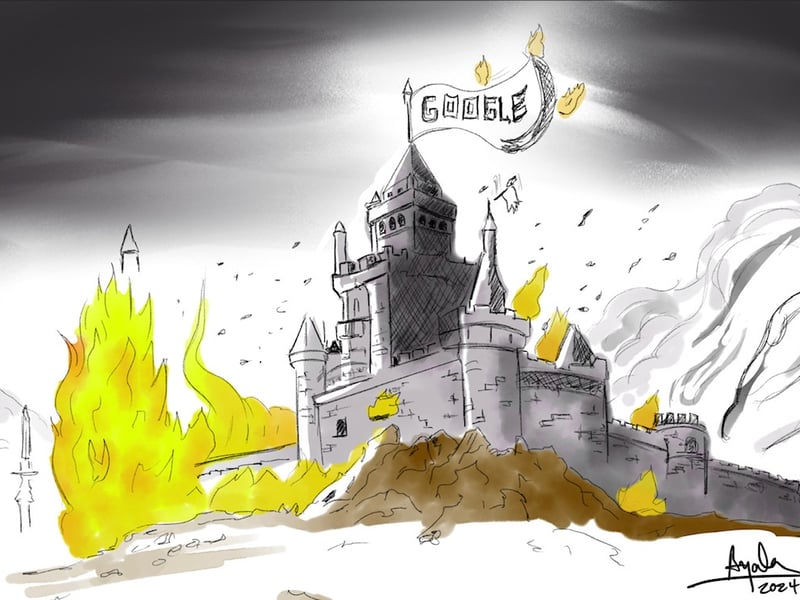
It’s like a huge set of bellows. The news when its bits are put together goes in great cycles, as stories build and build, then recede.
Just so, the antitrust rulings against Google are building and building. In the latest case, Judge James Donato in the Northern District of California enjoined Google based on a Sherman Act claim by video game maker Epic.
“The restoration of free competition in the relevant markets is the best medicine for correcting fees and prices,” wrote Donato. As reported by Courthouse News earlier this week, he ordered Google to open its app store to competitors.
Google controls 92% of the global search engine market.
That extraordinary statistic — not to mention the gargantuan amount of money that comes with it — has “monopoly” written all over it.
The injunction from Donato follows a sweeping ruling in August by Judge Amit Mehta in federal court in Washington who indeed branded Google a “monopolist” over its control of the internet search market.
It will be a year or so before he orders a remedy which allows for a long period of speculation on the outcome.
And there is also an ongoing trial over Google’s control of the internet advertising market — which brings in $20 billion — underway in federal court in Alexandria.
“Google is not here because they are big, they are here because they used that size to crush competition,” said the prosecutor in that case during her opening.
So the giant bellows are blowing on the fire around Google’s monopoly. The natural question, rarely expressed up until now, is whether Google will break up in the heat of that fire.
Vestiges of a related upheaval in the news business, a couple newspapers are still tossed onto my driveway. One of them is the pink-papered, London-based Financial Times.
And sure enough, a headline in the paper this week reads, “Will Google be broken up?”
That guesswork was then confirmed midweek when the Justice Department submitted its brief on remedies to Mehta in the search monopoly case and it indeed proposed a breakup as one of the remedies.
So that latest massive woosh from the great bellows, the brief on top of the app store injunction, only increases the heat around the internet giant. Now it’s true that the breakup of a company is so rare that the most famous instance, Standard Oil, is a century old, and the other big one, AT&T, is four decades past.
That said, it seems to the antitrust-untutored eye that Google is tailor made for that kind of remedy. With all its permutations, its monopoly is centered around control of one main market, internet searches.
“What Judge Mehta did was say: ‘Here are the limits and boy, you went way beyond them’,” Bill Baer, a partner at Arnold & Porter and former head of the DOJ’s antitrust division said in the Financial Times.
“What the [EU] Digital Markets Act shows so far is that it’s really hard to reintroduce competition once it’s been shut up," he added. “The U.S., working with the district court, will now be in a position to try and come up with some creative remedies, which break up Google’s unlawful dominance.”
From our viewpoint here at Courthouse News, some competition would help us break the maniacal grip Google has on the pathetic level of income we receive from ads on our site.
And what tells me it might just happen is that Google’s defense team appears to be resorting to the same tactics used by some of the court administrators in our First Amendment cases, which is to throw everything against the wall and see what sticks.
“Google’s modus operandi in this case has been to deluge the Court in an ocean of comments, many of which were cursory and undeveloped,” wrote Judge Donato.
That tactic of throwing everything against the wall could be interpreted as the reaction of lawyers who see the writing on the wall.
Subscribe to our free newsletters
Our weekly newsletter Closing Arguments offers the latest about ongoing trials, major litigation and rulings in courthouses around the U.S. and the world, while the monthly Under the Lights dishes the legal dirt from Hollywood, sports, Big Tech and the arts.