
 Search Articles


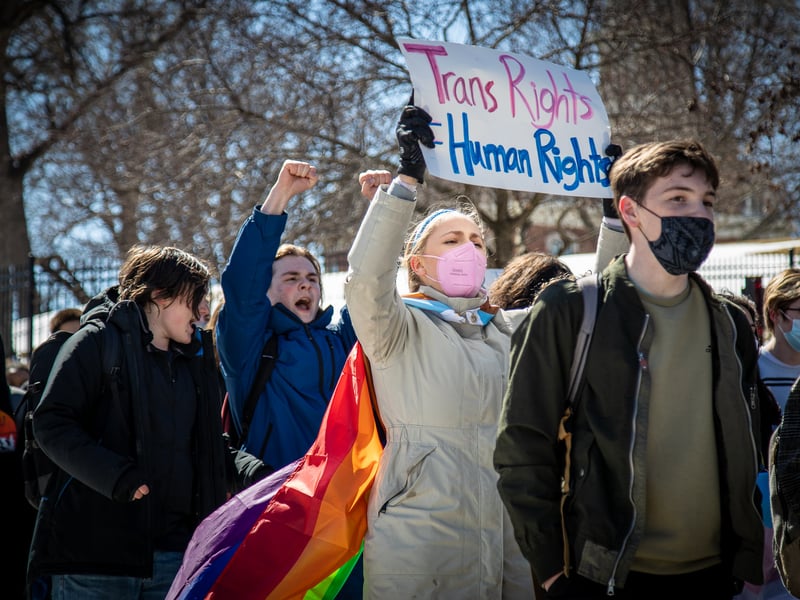
DES MOINES, Iowa (CN) — Iowa Governor Kim Reynolds Friday signed into law a bill passed by the Republican-dominated state Legislature this week that removes civil rights protections for transgender Iowans that have been in place for 18 years.
Senate File 418 removes civil rights protections for transgender people from the Iowa Civil Rights Act.
The Republican governor announced she was signing the bill into law in a video from the governor’s office. She said it is “common sense to acknowledge the obvious biological differences” between men and women, and she said the bill “safeguards the rights of women and girls.”
“It is why we have men and women’s bathrooms, but not men and women’s conference rooms; girls’ and boys’ sports, but not girls’ math and boys’ math; separate men and women’s prisons, but not different laws for men and women. It is about the biological differences, and that is all,” she said.
“It is also why Iowa has enacted laws protecting girls’ sports for girls and women’s private spaces like bathrooms and locker rooms.
Reynolds said that before she signed the bill, “the Civil Rights Code blurred the biological line between the sexes. It has also forced Iowa taxpayers to pay for gender reassignment surgeries. That is unacceptable to me, and it is unacceptable to most Iowans.”
On Thursday, the bill passed in the Iowa Legislature along party lines 33-15 in the Senate and 60-36 in the House, where five Republicans joined 31 Democrats voting no.
The bill scrubs all references to the term “gender identity” from the Iowa Code and defines “sex” to mean “the state of being either male or female as observed or clinically verified at birth.” It defines “male” and “female” in terms of the reproductive system a person has or will have “through the course of normal development.”
The corresponding sex — male or female — must be shown on birth certificates.
As a result, transgender Iowans will no longer be a protected class under the Iowa Civil Rights Act against discrimination in housing, employment, wages, public accommodation and education. The bill’s supporters say that, among other things, the change means trans people would no longer be able to use public restrooms, dressing rooms and showers designated for the opposite sex, and would not be eligible for taxpayer-paid gender reassignment procedures.
 Follow @roxalaird16
Subscribe to our free newsletters
Our weekly newsletter Closing Arguments offers the latest about ongoing trials, major litigation and rulings in courthouses around the U.S. and the world, while the monthly Under the Lights dishes the legal dirt from Hollywood, sports, Big Tech and the arts.