Search Articles


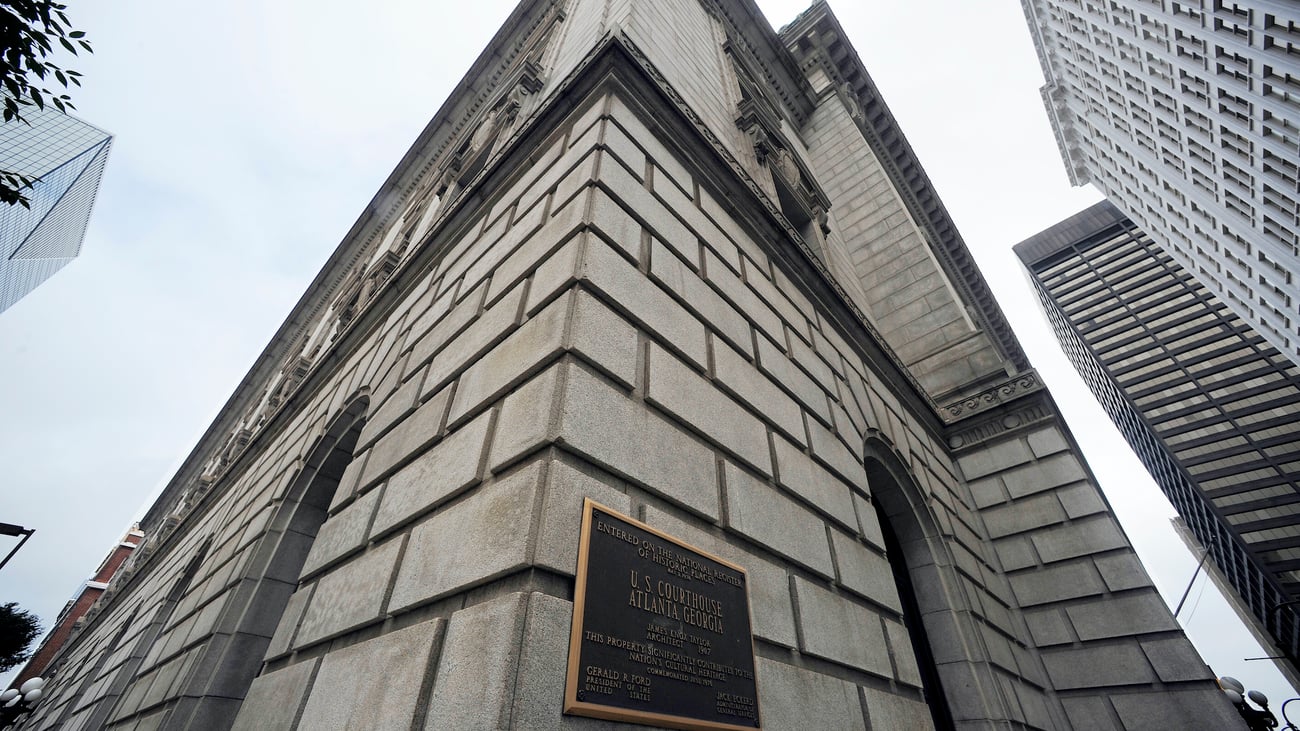
ATLANTA (CN) — A Florida mafioso currently serving a 20-year sentence for stealing millions of dollars in luxury goods from his Miami jail cell asked an 11th Circuit panel Wednesday to reconsider a lower court’s rejection of his demand for hard drives seized after he was caught watching porn in prison.
The government says the hard drives were confiscated when Colorado prison officials caught James Sabatino, an associate of the Gambino crime family, viewing porn on a prison computer under the guise of reviewing legal discovery.
Sabatino — who is imprisoned at the Supermax facility in Florence, Colorado, the highest security prison in the United States — has claimed the hard drives contain privileged attorney-client work product and that the seizure violates his Fourth, Fifth and Sixth Amendment rights. According to a government legal brief, a prison officer said Sabatino claimed the porn on his hard drive was evidence from a contraband cellphone previously seized from his jail cell.
Pornography is not allowed in maximum-security prisons.
A Florida federal judge rejected Sabatino’s emergency motion for the return of his property last year, ruling the court lacked jurisdiction over the issue because the hard drives were seized in Colorado. The drives were sent to the U.S. attorney’s office in Florida weeks later.
U.S. District Judge Joan Lenard ruled the motion should have been filed in Colorado federal court.
On Wednesday, Chief U.S. Circuit Judge William Pryor seemed inclined to uphold the dismissal.
“The question we have to answer is where the property was seized. Because that then determines where the motion has to be filed,” the George W. Bush appointee said.
But Miami attorney Israel Encinosa, who represents Sabatino, argued the motion was logically filed in Florida court since the decision to take the property was made by a Florida prosecutor. Encinosa said in a court filing that the hard drives were taken under the false belief that Sabatino was violating a protective order by possessing them.
“[Sabatino] was never cited by the Colorado Bureau of Prisons. He was never cited by ADX [Florence],” Encinosa said.
But assistant U.S. attorney Alix Cohen said Sabatino jumped the gun in filing the motion at all.
“He should’ve exhausted his administrative remedies if he felt the proper procedure for seizing contraband wasn’t followed,” assistant Cohen said. “He chose to avail himself of this rule. We do think he should have to follow the venue provision.”
Encinosa asked the three-judge appellate panel to send the case back to Florida, where it could be transferred to Colorado court.
But transferring the case may not be the end of Sabatino’s difficulties.
Encinosa reminded the panel that his client is prohibited from contacting anyone inside or outside the prison except his attorney and his stepmother. Sabatino accepted the restrictions as part of his agreement to plead guilty to conspiracy to violate the Racketeer Influenced and Correct Organizations (RICO) Act.
According to Encinosa, Sabatino cannot contact a Colorado attorney and therefore cannot obtain legal representation in Colorado to get his property back.
Cohen said the government is “particularly cautious” when it comes to Sabatino due to his “extremely lengthy history” of committing crimes in prison.
While imprisoned at the Federal Detention Center in Miami in 2014, where he was awaiting trial on other charges, Sabatino used contraband phones smuggled to him by guards to con luxury stores into believing he was a music industry executive working with celebrities like Beyonce and Jennifer Lopez.
He assured them that handbags, jewelry and clothing they released to his co-conspirators would be featured in music videos and later returned. Instead, the items were sold at pawn shops or delivered to associates of the Gambino crime family. Money was deposited into Sabatino’s commissary account.
According to a legal brief filed by his attorney, Sabatino was able to orchestrate the theft of more than $10 million worth of jewelry during a two-month period.
U.S. Circuit Judge Andrew Brasher expressed concern over Sabatino’s “very severe” restrictions, saying they could be illegal.
“The statute says if you’re going to restrict someone’s communication you’re supposed to identify the person they’re restricted from communicating with, and his restriction says he’s not allowed to communicate with anybody unless it’s on a list allowing him to communicate,” the Donald Trump appointee said.
While Brasher said he expected the government to add a potential Colorado-based attorney to Sabatino’s communication list, he also said he did not see how issues related to representation are “relevant to the problem that the motion has to be filed in the district where the property was seized.”
“It seems like we can’t really solve that problem here,” Brasher said. “It seems like asking the district court to solve that problem is the place.”
U.S. Circuit Judge Nancy Abudu, a Joe Biden appointee, rounded out the panel. They did not indicate when they will issue a decision in the appeal.
 Follow @KaylaGoggin_CNS
Subscribe to our free newsletters
Our weekly newsletter Closing Arguments offers the latest about ongoing trials, major litigation and rulings in courthouses around the U.S. and the world, while the monthly Under the Lights dishes the legal dirt from Hollywood, sports, Big Tech and the arts.