Search Articles


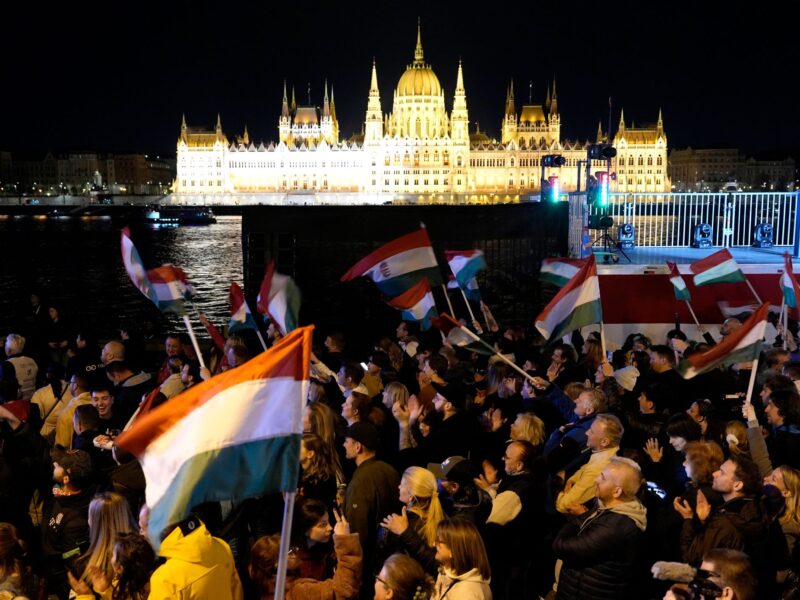
BUDAPEST, Hungary (CN) — Waving a bottle of beer to the sky and to a stream of honking cars passing by, Csaba Kiss was the picture of the relief so many Hungarians felt Sunday night when they could finally celebrate the end of 16 years of rule under Viktor Orbán, Europe’s far-right populist par excellence.
“Enough is enough,” Kiss said, standing near the Margaret Bridge over the Danube River among throngs cheering Orbán’s election defeat. “We’ve had 16 awful years behind us.”
The 53-year-old state phone company worker wore a T-shirt under his shirt that summarized the mood in Hungary: “Fck NER.”
NER stands for Nemzeti Együttműködés Rendszere, Hungarian for “System of National Cooperation,” a term and policy approach introduced by Orbán when he came to power in 2010. Today, though, many Hungarians see NER as standing for the rot in Orbán’s Hungary: a deep state-like network of political and business elites who have shaped the country and enriched themselves.
“The Orbán system in Hungary,” he said, “I hated it so much.”
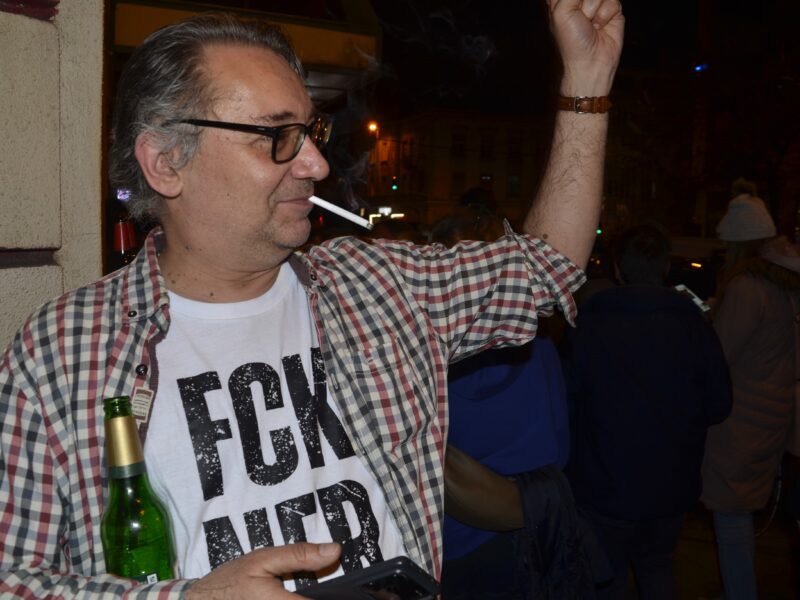
“I’ve been waiting for 16 years for this day,” he said, smiling wildly and taking another drink of beer amid a cacophony of shouts, chants, honks and laughter on the streets. “I’m one of the happiest people in the world.”
Orbán was ousted from power by Péter Magyar, an upstart 45-year-old politician who defected from Orbán’s Fidesz party in February 2024 and struck a chord with Hungarians by making public denunciations about the party’s corruption.
By late Sunday, Orbán conceded defeat with Magyar’s Tisza party on track for a stunning landslide victory. Magyar was poised to win an all-important supermajority in parliament, a threshold that would allow Tisza to undo controversial laws and rules put in place by Orbán. Turnout was at about 77.8%, smashing a previous record set in 2002.
“I was born into this,” said Janka Kovács, who at 19 has only known the Orbán system for nearly her entire lifetime. It was her first time voting, and she was part of a huge turnout of younger voters that helped Magyar win.
“I’m happy that I can be part of changing the whole regime and system,” the Hungarian literature university student said.
“It has been very corrupt,” she said. “The hospitals are not working, doctors are leaving, our teachers are leaving. I don’t like it because it has so much of an effect on me, my education, the health care system. So, I’m very happy to change it.”
Due to Orbán’s authoritarian rule in Hungary and his oversized role in European but also world affairs, the importance of this election weighed on Hungarians opposed to Orbán’s rule.
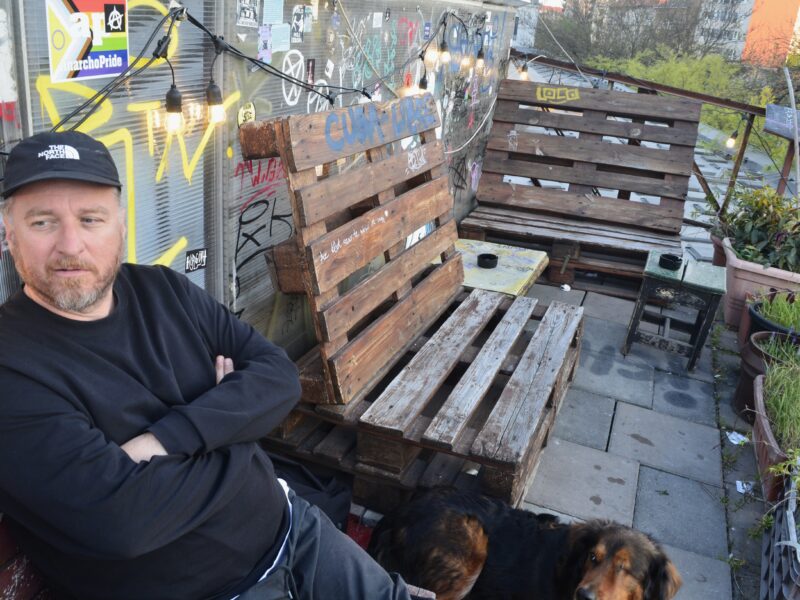
Such considerations were a big factor for Peter Majdik, who drove hundreds of miles from Bulgaria with his one-eyed dog for company just to make sure his vote against Orbán got counted — for sure.
“I could also have voted abroad, but we know that they are cheating with those votes,” said Majdik, a 50-year-old Budapest native who divides his time between Hungary and Bulgaria. “If you vote abroad at an embassy, many times, they just throw out your vote because no one can check it.”
Majdik’s mistrust of Orbán’s government underscored the tension hanging over Sunday’s parliamentary elections, where expectations were high that Orbán could be defeated.
At 62, Orbán has turned himself into a beacon for the global far right, but his critics say he’s done that by sacrificing Hungary, shutting down freedoms at home and installing a deeply corrupt system.
“I think this is the most important (election) since the change from socialism, since the fall of the Iron Curtain,” Majdik said, sitting on the eve of the election with a friend on the rooftop lounge of a funky community center in Budapest.
“We are deciding if we go closer to Russia or if we go closer to the West,” he said. “I really hope most of the people don’t want Russia to be in Hungary.”
Over the past 16 years, Orbán used his extraordinary political skills to become the longest-serving leader in the European Union and a chief architect behind a brand of far-right politics that’s taken Europe by storm. At the same time, he’s made common cause with U.S. President Donald Trump and Russian President Vladimir Putin and turned small Hungary into a player on the world stage.
His nationalist conservatism embraces both state intervention in the economy, including generous social programs and price controls, and engineering social life toward a worldview that views gay people, foreigners, liberals and internationalists as enemies of traditional Hungarian values.
Thanks to a string of good economic years, oodles of EU funds (until they were blocked by Brussels over corruption concerns) and strong foreign investment, Orbán rode a wave of popularity and won election after election. His support was especially strong among older and rural voters but also with middle-class Hungarians and the super-rich who benefited from his patronage system.
“It was almost cult-like how people loved him in the last 16 years,” said Katalin Bella, a 43-year-old library science professor, reflecting a day before the election on Orbán and his chances of losing this election.
“Actually, I don’t know what has changed in the last two years,” she added. “Half of the country doesn’t like him, but the other half does.”
At least two big things happened since 2024 to threaten Orbán’s grip on power: The economy stagnated, and he got a very wily rival in Magyar, a Fidesz whistleblower.
Magyar, a lawyer from a prominent Budapest family, is a conservative with his own populist tendencies who managed to win over large swaths of the electorate, including those on the left, by positioning himself as the best person to take down Orbán.
Formerly married to Orbán’s former justice minister, Magyar rocked Hungary in early 2024 by publicly excoriating Fidesz for corruption. After that, he went on the warpath against his former allies and stirred rallies with his calls to end Orbán’s “mafia state.”
Magyar has pledged his government would investigate Orbán and his circle of family members and cronies for corruption if he becomes prime minister.
For months, polls showed Tisza ahead of Fidesz. Still, polling in the last parliamentary election in 2022 also suggested Fidesz was at risk of losing, and it didn’t. Going into Sunday, Orbán and his supporters remained confident.
The complete election picture may not be clear until later in the week, when the votes of about people of Hungarian descent living in neighboring countries and eligible to vote are counted. After World War I, the boundaries of the former Kingdom of Hungary were greatly reduced, creating a Hungarian diaspora that includes these voters.
The atmosphere around the election was tense and toxic, with Magyar and Orbán accusing each other of playing dirty.
From December, when the campaign got going in earnest, the election was rocked by a series of scandals, leaks, smears, potential false flag operations, a media war and suspicions over foreign interference.
However, with the power of the state at his disposal, many Hungarians felt Orbán was in the best position to swing the election in his favor. Outside election monitors warned this election, like previous ones, was free but unfair.
The Fidesz machine has been accused of gerrymandering districts, voter intimidation, pumping out lies through its control of state media and vote buying, especially in rural areas.
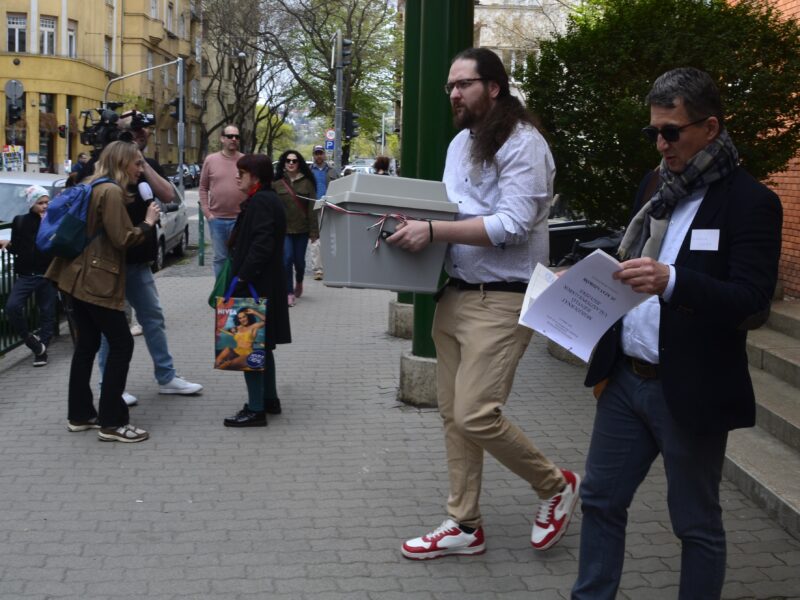
On Sunday, with voting underway, these concerns were on the minds of many voters.
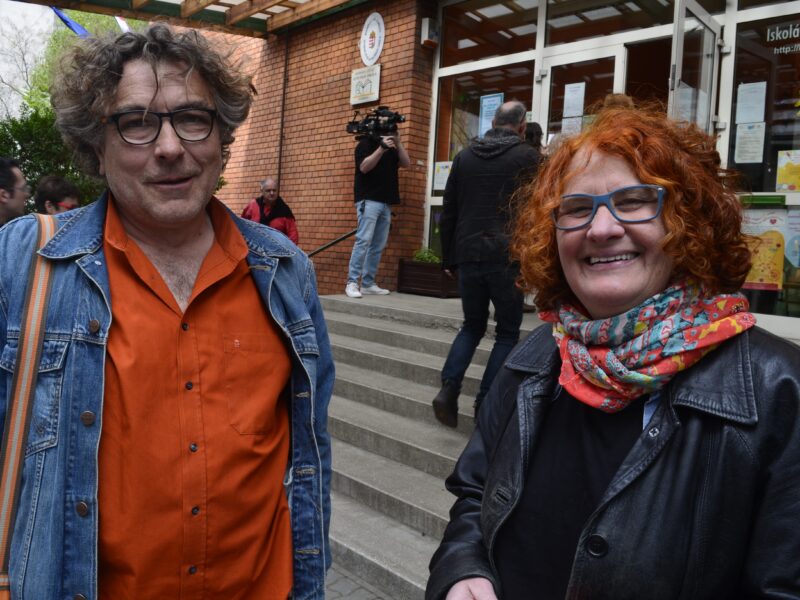
“We are all nervous,” said Monika Hafner, a 58-year-old who makes wooden toys with her husband, Lacek Fancsali. Both voted for Tisza because they said it represented the best chance of defeating Fidesz.
“We all want change because what’s happened over these last 16 years is a disaster,” Hafner said, standing outside a voting station in central Budapest.
“We were going way far in the wrong direction, maybe for decades,” Fancsali said. “This seems to be a chance to change it.”
He, like many others, voted for Tisza over his favorite party, the small anti-establishment and maverick Hungarian Two-Tailed Dog Party, to help ensure a Fidesz defeat.
Hafner wasn’t worried the election would be stolen as such but that a significant chunk of the electorate would buy into Fidesz’s negative messages.
“There are older people who believe in this brutal system, who eat up all the propaganda,” she said.
Fidesz used a well-tested election game plan: It finds a wedge issue and hammers on it. In the past, Fidesz has targeted immigrants, liberal American-Hungarian philanthropist George Soros and gay people to turn out its base for the election.
For this election, Orbán focused on stirring up fear that Hungary would be dragged into the war in Ukraine if Magyar won the election. Across Hungary, Fidesz billboards were plastered on bus stops, roadways and walls depicting Ukrainian Volodymyr Zelenskyy and Magyar as co-conspirators.
Since the outset of the war, Orbán has opposed helping Ukraine, arguing the West needed to force Kyiv into making concessions to end the war. But he was also close to Putin, and critics said he has simply been doing the Kremlin’s work to weaken Ukraine.
Majdik likened the anti-Magyar campaign posters to propaganda pumped out by Hungary’s past communist regimes.
“The national TV is basically governmental propaganda TV, and if you switch it on, you can either laugh like hell or cry,” he said. “It’s on the level of ‘1984’. It’s really [George] Orwell: Every week, another enemy. It’s brutal lies, it’s almost on the level of (North) Korea,” he said. Considering Hungary is “in the middle of the EU, this is a bit weird.”
This time, though, Orban’s attempt to turn out voters by demonizing Ukraine seems to have backfired.

“Every day, the big posters about the war, about the Ukrainians,” Kiss said with disgust. “You go along the streets, and you feel, ‘Oh my gosh, I hate this so much. I’m fed up, really.’”
Majdik said Orbán’s divisive politics were deeply damaging because they had polarized society.
“There are people who don’t talk to each other even in families, daughters are not talking to their mothers, sons are not talking to their fathers,” he said. “This is one of the worst things I have ever seen: We have a national depression.”
But based on his frequent trips around Hungary as part of his work, he said, even among Orbán’s most loyal supporters, dissatisfaction was growing.
For Bella, the library science professor, it remained a bit of a mystery why Orbán’s popularity dimmed.
“Something has changed, but I don’t really know what it has been,” she said. With a smile, she said it was hard to understand because she “wasn’t in the cult.”
It was perhaps due to the poor economy, but she added that Fidesz could not be faulted for that because Hungary is small and depends on the strength of other larger economies, such as Germany, which is struggling economically.
She doubted Magyar could turn the economy around and fulfill his pledges to invest in crumbling hospitals and schools.
“He’s made a lot of promises, which is very nice to hear, but I don’t know how he will be able to carry them out,” she said.
Perhaps, she said, corruption was a main cause of Orbán’s troubles.
“There is corruption. I think they should have been more careful,” she said. “They should have given more time to the country first and less to their own interests.”
Perhaps, it was simply Magyar’s time, she said.
“It was unfathomable two years ago that there would be anyone who could be a real counter-fight to the Fidesz regime,” she said.
“Péter Magyar also has this fan base now, a massive fan base like Orbán has,” she said. “If Péter Magyar hadn’t created his cult by now, he wouldn’t have any chance.”
She said Hungary faced strong headwinds regardless.
“We need to figure out something,” she said. “We need to improve the economy. We need to find some good deals. We need better living standards.”
Courthouse News reporter Cain Burdeau is based in the European Union.
 Follow @cainburdeau
Subscribe to our free newsletters
Our weekly newsletter Closing Arguments offers the latest about ongoing trials, major litigation and rulings in courthouses around the U.S. and the world, while the monthly Under the Lights dishes the legal dirt from Hollywood, sports, Big Tech and the arts.