
 Search Articles


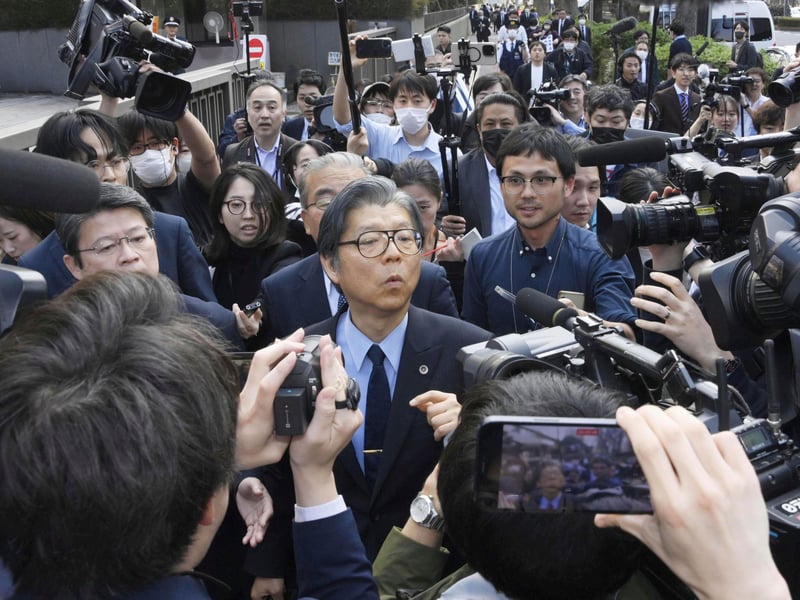
TOKYO (AFP) — A Japanese court ordered on Tuesday that a religious sect be stripped of official recognition, the government said, in the wake of the assassination of ex-premier Shinzo Abe.
A government spokesman told AFP that the Tokyo District Court “issued the dissolution order” for the Japanese chapter of the Unification Church, founded in South Korea and nicknamed the “Moonies” after its late founder, Sun Myung Moon.
The church is accused of pressuring followers into making life-ruining donations, and blamed for child neglect among its members, although it has denied any wrongdoing.
Former Prime Minister Abe, Japan’s longest-serving leader, was shot dead on the campaign trail in 2022, allegedly by a man who resented the Unification Church.
The suspected assassin, Tetsuya Yamagami, 44, was reportedly angry with the Church which bankrupted his family after his mother had donated around 100 million yen ($1 million at the time).
Investigations after Abe’s murder revealed close ties between the sect and many conservative ruling-party lawmakers, leading to the resignation of four ministers.
This prompted the government in 2023 to seek permission from the courts to have the group legally disbanded.
‘Caused such damage’
Tuesday’s court order, once enacted, will remove the church’s tax-exempt status while branding the organization a harmful entity, experts say.
However, the church will still be able to continue religious practices, lawyer Katsuomi Abe said before Tuesday’s ruling.
“Its reputation will decline, and the number of followers will decrease,” said Abe, who represents former believers seeking compensation after making huge donations.
“I don’t think any other organization has caused such damage” to Japanese society, he told AFP.
The amount donated by Japanese members over the decades has been estimated by some at hundreds of millions of U.S. dollars or more.
Since 2023, nearly 200 people have demanded compensation of 5.7 billion yen ($38 million) in total.
Abe and other lawyers welcomed the court decision, saying it “sincerely listened to the voices of victims and understood the actual damage.”
“I’m full of emotions,” lawyer Masaki Kito, who has been handling cases of former church members for more than 30 years, told reporters.
But Kito wished the government had acted sooner, saying “the number of victims has ballooned in the three decades.”
The Unification Church said in a statement they “take the decision very seriously” but “cannot accept it.”
The group, officially the Family Federation for World Peace and Unification, said they plan to file an appeal.
If they do, it could take up to a year for the dissolution order to be finalized.
Lawyers warn the church could transfer its financial assets elsewhere, partly due to a lack of legislation to return money to victims.
The church rose to global prominence in the 1970s and ’80s after its foundation in 1954, becoming famous for mass weddings often held in stadiums.
Japan has long been a financial hub, with the church telling members they must atone for the wartime occupation of Korea and selling expensive items to obtain forgiveness from sins.
Yamagami, now in pretrial detention, could face the death penalty if convicted over Abe’s killing.
Yamagami’s uncle has described receiving calls for help from him when his mother left her children alone and without food to attend church.
Since Abe’s murder, the church has pledged to prevent “excessive” member donations.
—
By NATSUKO FUKUE Agence France-Presse
Subscribe to our free newsletters
Our weekly newsletter Closing Arguments offers the latest about ongoing trials, major litigation and rulings in courthouses around the U.S. and the world, while the monthly Under the Lights dishes the legal dirt from Hollywood, sports, Big Tech and the arts.