
 Search Articles


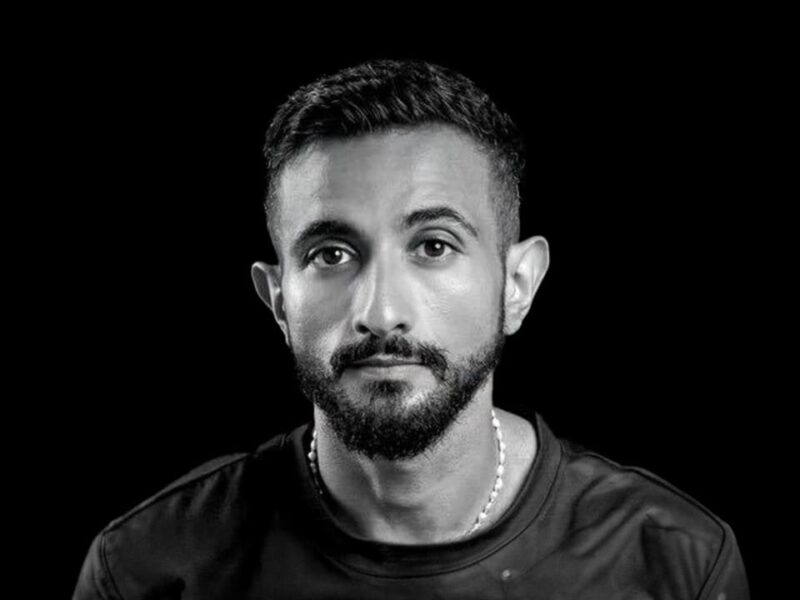
(CN) — A federal judge on Tuesday dismissed a lawsuit filed by Jewish Legal News against three school districts for canceling a Yemeni-born, pro-Israel speaker, finding that the organization lacked standing because it doesn’t have a “concrete, specific connection” to the speaker, Luai Ahmed.
Ahmed might have been able to sue; so, too, might the students of the schools who canceled the speeches. But a news organization, wrote U.S. Magistrate Judge Susan Van Keulen, could not.
“The right to receive information is always ’entirely derivative’ of the right of the speaker to speak,” the judge wrote in her ruling. “Plaintiff is not the direct recipient of Mr. Ahmed’s speech and is too far removed from the speech to claim a concrete injury.”
Born and raised in the Yemeni capital of Sana’a, Ahmed was forced to seek political asylum in Sweden because of his sexual orientation — Ahmed is gay — and feminist views. The now-32-year-old is an openly gay activist, columnist and influencer, of sorts, with a strong social media following. He has been a critic of both Islamic extremism and antisemitism, identifying as a “Muslim Zionist” and criticizing the UN Human Rights Council for its obsessive focus on Israel while ignoring other human rights crises in Yemen and Sudan.
In 2025, Ahmed was scheduled to speak at four Bay Area high schools across three different school districts. The talks were publicized by Jewish organizations; they were also targeted by protesters decrying the war in Gaza. The group Alameda4Ceasefire called, on Instagram, for the event to be canceled “to honor the safety of all students especially Queer, Muslim and Jewish students.” Bowing to pressure, each school either canceled or postponed the talks.
Jewish Legal News had been planning on covering the events and sued the three school districts, writing in its complaint, “The denial of access to Mr. Ahmed’s event constitutes a concrete injury: a lost opportunity to receive information, conduct interviews, and disseminate that information to the public. The cancellations also have a chilling effect on students’ future selections invitations speakers.”
But Van Keulen found that the news organization couldn’t sue.
“Plaintiff’s general interest, even if its mission is to ‘cover issues of antisemitism, free speech and educational policy is insufficient,” the judge wrote. “An organization’s ‘interest in another’s speech’ is not enough.”
Jewish Legal News lacked standing to sue for injunctive relief. Meanwhile, the school districts, she found, were immune from being sued for damages because they are agencies of the state. The complaint was dismissed with prejudice, meaning it cannot be refiled.
Plaintiff’s attorney Mark Javitch said he was disappointed in the ruling.
“I think the court got it wrong in requiring the relationship between the listener and the speaker to be concrete and particularized,” Javitch said in a phone interview. “We may appeal on that basis,” although he admitted that he was relying on an “obscure doctrine.” He also said he was considering getting parents and students to file a new, similar lawsuit.
“I think we’ve clearly got an instance of government censorship, and any parent in the community is probably gonna have standing to overcome those deficiencies,” Javitch said. “The prevailing curriculum at schools is so strongly anti-Zionist.”
The attorney for the school districts did not respond to an email requesting a comment on this story.
 Follow @hillelaron
Subscribe to our free newsletters
Our weekly newsletter Closing Arguments offers the latest about ongoing trials, major litigation and rulings in courthouses around the U.S. and the world, while the monthly Under the Lights dishes the legal dirt from Hollywood, sports, Big Tech and the arts.