
 Search Articles


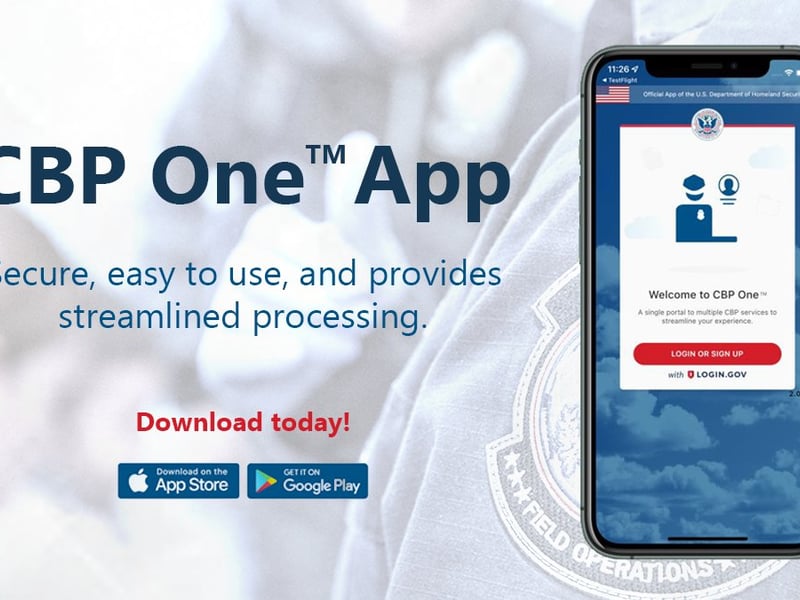
(CN) — A federal judge on Tuesday declined to dismiss a group of asylum-seekers’ challenge to the Department of Homeland Security’s use of the CBP One App, a smartphone application designed by U.S. Customs and Border Protection to be used by immigrants including those seeking asylum.
Two immigrant rights nonprofits and 10 unnamed asylum-seekers claim the U.S. has adopted an unwritten rule of turning away anyone seeking asylum at a port of entry along the southern border who hasn’t first applied using the CBP One App.
The rule makes it impossible for many noncitizens to make an appointment to present at a port of entry, the groups say in their July 2023 complaint filed in the Southern District of California.
“Some lack access to up-to-date smartphones, Wi-Fi, a cellular data plan, or reliable electricity, all of which are necessary to use CBP One. Others do not understand the few languages used in the app, are illiterate, lack technological know-how, or have disabilities that prevent them from successfully navigating the app,” the plaintiffs wrote.
The unwritten “CBP One Turnback Policy," the groups say, “is just the latest manifestation of the government’s multi-year effort to block asylum access for asylum-seekers in the process of arriving at the southern border.”
The U.S. government denies that such a policy exists and filed a motion to dismiss the complaint.
On Tuesday, U.S. District Judge Andrew Schopler agreed to dismiss certain portions of the complaint, including parts that sought to enjoin Mexican officials from cooperating with border protection agents and an Alien Tort Statute claim.
The plaintiffs, Schopler wrote in his ruling, failed to show that the alleged policy was a violation of a universally accepted international norm, pointing out that other turnback policies have been “implemented in some European Union member states and Australia.”
The rest of the complaint, the Joe Biden-appointed Schopler ruled, could remain, including a Fifth Amendment violation claim and claims under the Administrative procedure act.
“Plaintiffs’ case is not about the right to asylum, but the right to be inspected and processed — and not turned away — upon first presenting at a port of entry,” Schopler wrote. “At the very least, the turnback denied them that right. Put another way, with each turnback CBP wrongfully ‘determined’ that plaintiffs lacked a ‘right’ to inspection and asylum processing before being returned to Mexico.”
Nicole Elizabeth Ramos of Al Otro Lado, one of the plaintiff groups, criticized the government’s response to the lawsuit in a written statement following Tuesday’s ruling.
“While the government denies that a CBP One turnback policy exists, the amount of money that it spends on litigation to prevent refugees from being processed upon arrival at US ports of entry belies their true intention, which is not safer, more efficient asylum processing, but rather the goal is to deter, delay and deny access to the only legal process that refugees have to save their lives,” Ramos said.
“[W]e look forward to presenting our evidence at trial, evidence supplied by the words and actions of CBP officers themselves,” she continued.
Border crossings have risen dramatically since 2020. About a third of those were asylum-seekers. In June, President Biden announced a new policy of turning away the vast majority of asylum-seekers until the number of people trying to cross the border illegally fell below 1,500 per week.
On Monday, Biden expanded that policy to require 28 straight days of illegal border crossings below 1,500 before the asylum ban is lifted. The American Civil Liberties Union and other groups have sued to overturn that policy as well.
 Follow @hillelaron
Subscribe to our free newsletters
Our weekly newsletter Closing Arguments offers the latest about ongoing trials, major litigation and rulings in courthouses around the U.S. and the world, while the monthly Under the Lights dishes the legal dirt from Hollywood, sports, Big Tech and the arts.