
 Search Articles


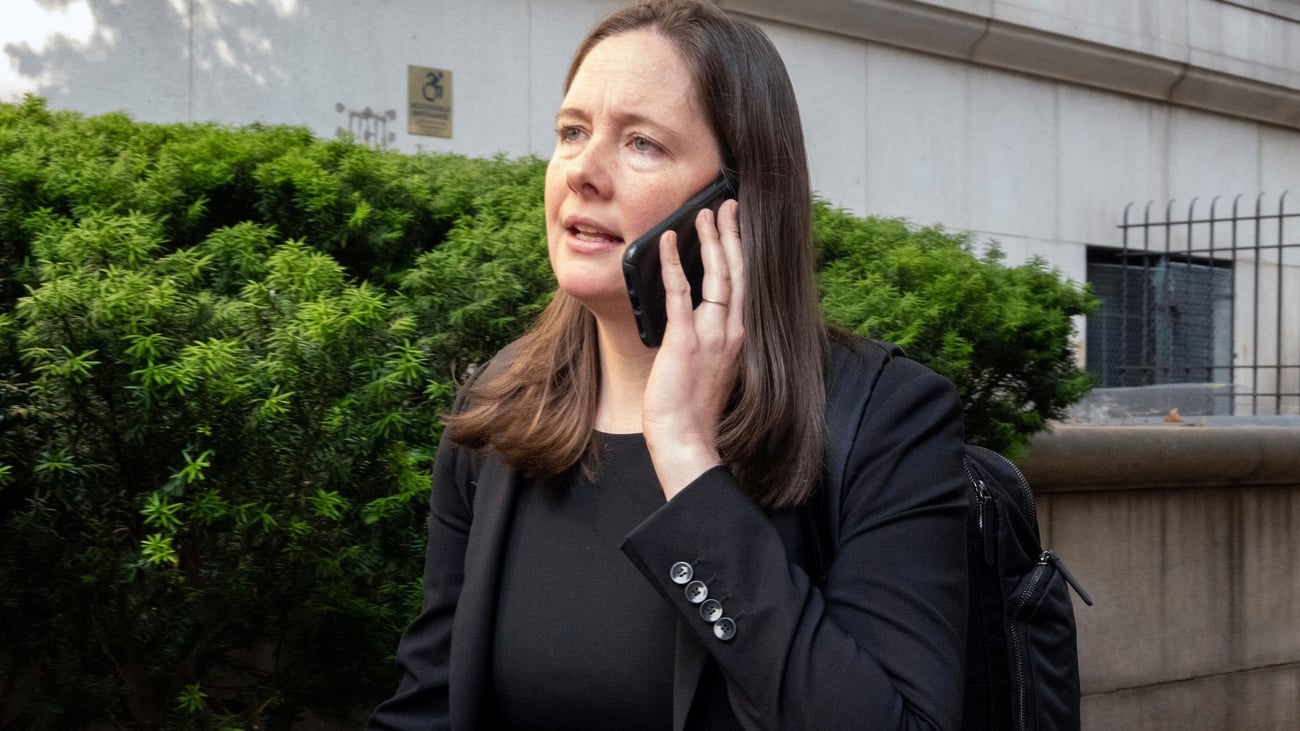
MANHATTAN (CN) — A federal judge on Tuesday advanced former Assistant U.S. Attorney Maurene Comey’s lawsuit against the Trump administration, in which she claims she was fired only because her father is outspoken Trump critic and former FBI Director James Comey.
The Trump administration sought to dismiss Comey’s complaint, asserting the dispute should be handled through administrative proceedings by the Merit Systems Protection Board, an executive branch agency created by the Civil Service Reform Act of 1978.
However, U.S. District Judge Jesse Furman ruled Tuesday that Comey’s suit was properly filed in U.S. District Court for the Southern District of New York.
“The court concludes that Comey’s case does not fall within the purview of the CSRA’s scheme because she was fired pursuant to Article II of the Constitution, not pursuant to the CSRA itself,” he wrote in a 27-page opinion, referring to the president’s executive power vested under Article II of the U.S. Constitution.
“Defendants’ sole reliance on the Constitution — rather than the removal provisions of the CSRA — places Comey’s case outside the universe of cases that Congress intended the MSPB to resolve,” the judge wrote.
In a footnote to the ruling, Furman opined that whether the U.S. government could properly rely on the Constitution to fire Comey “is the merits question at the heart of this case — and thus a question for another day.”
“For now, it suffices to say that the president has long been understood to have constitutional powers separate and apart from any powers granted by statute,” the judge wrote. “And regardless, that is the sole basis of the power that defendants invoked in firing Comey.”
Furman, a Barack Obama appointee, ordered the Trump administration to answer Comey’s claims within two weeks.
President Donald Trump has asserted that presidents need unrestricted removal power over the executive branch, embracing a broader version of Article II called the unitary executive theory.
Comey, who had worked for the U.S. Department of Justice since 2016, led last summer’s prosecution of hip-hop producer Sean “Diddy” Combs and also handled the feds’ Jeffrey Epstein cases.
The U.S. Attorney’s Office for the Northern District of New York, currently led by Trump loyalist First Assistant U.S. Attorney John A. Sarcone III, agreed to defend the Justice Department against Comey’s lawsuit after the Southern District of New York recused itself from the case due to the Comey family’s deep ties to the office.
Representatives for Sarcone’s office did not immediately respond to requests for comment Tuesday morning.
Maurene Comey initially brought her complaint in September 2025, claiming she was fired “solely or substantially because her father is former FBI Director James B. Comey, or because of her perceived political affiliation and beliefs, or both.”
Represented by Manhattan-based attorney Ellen Blain and Connecticut counsel Margaret M. Donovan, Comey claims in her complaint “there is no legitimate explanation” for the firing.
Comey says she never received an explanation for her abrupt firing, noting the Civil Service Reform Act specifically prohibits termination for discriminatory reasons such as political affiliation.
In her complaint, she says that when she asked the reason for her termination, fellow federal prosecutor Jay Clayton, a Trump appointee and occasional golf partner, told her: “All I can say is it came from Washington. I can’t tell you anything else.”
 Follow @jruss_jruss
Subscribe to our free newsletters
Our weekly newsletter Closing Arguments offers the latest about ongoing trials, major litigation and rulings in courthouses around the U.S. and the world, while the monthly Under the Lights dishes the legal dirt from Hollywood, sports, Big Tech and the arts.
Additional Reads


 Sidebar: Across the pond April 28, 2026