
 Search Articles


MINNEAPOLIS (CN) — A federal judge gave advocates and the Justice Department six days to fix what she described as a vast disconnect in evidence regarding the treatment of immigrant detainees in Minnesota during a federal court hearing Friday.
Faced with a mountain of evidence from advocates claiming constitutional violations of blocking detainees’ right to counsel, against a single declaration from a federal field office director, U.S. District Judge Nancy Brasel made her frustration clear.
“There’s an enormous gap in the experience in the record of the declarants, and the statements you’re making now,” Brasel said to a Justice Department attorney. “We can do a war on declarants all day long, you’re not winning, and you know that.”
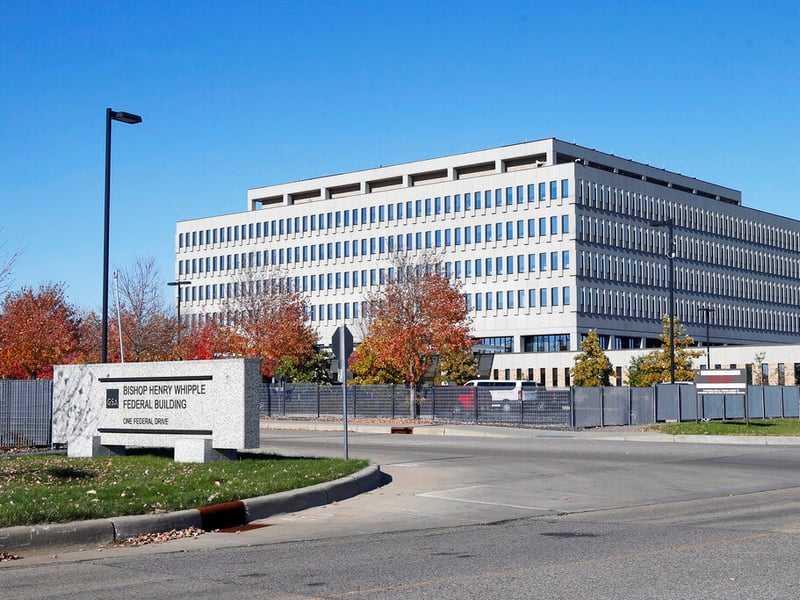
Brasel, a Donald Trump appointee, issued the directive at the close of a preliminary injunction hearing, expressing concern about federal procedures at the Bishop Henry Whipple Federal Building, where many detainees are held before transfer, often out of state.
Friday’s hearing stems from a class action filed by the Advocates for Human Rights and a detainee, who say immigration agents in Minnesota pressure detainees to waive their rights and restrict attorney access to the facility.
Attorney Jeffrey Dubner, representing the advocates, said this environment chills protected legal speech and leaves detainees in a communication “dead zone” until they are “booked” — a process that often leads to out-of-state transfers.
“The real standard is, can your attorney get there and back in a day,” Dubner said, claiming that attorney communication with detainees is made substantially more difficult once they leave the state. “It’s another thing to say ‘you can talk to your attorney’ 1,700 miles away in Texas.”
The government argued detainees at the Whipple building have access to free, unmonitored phone calls, but advocates submitted declarations from attorneys and detainees disputing that claim.
They said calls, when permitted, often take place within earshot of federal agents, undermining attorney-client confidentiality.
Both sides agreed detainees have a constitutional right to counsel. Advocates argued that the right is being hollowed out by restricted access, while the government relied on its existing policy, providing no evidence that it is being upheld in Minnesota.
In addressing some of the reported violations, Justice Department attorney Christina Parascandola argued that, since the Whipple building is a temporary “holding facility,” rather than a “detention center,” it lacks the infrastructure for face-to-face legal meetings. Dubner countered that the facility’s inadequacies do not excuse constitutional violations.
“Defendants chose to detain thousands of people without making preparations or provisions,” he said. “The fact that they didn’t prepare for that does not mean those factors go away.”
Dubner added that, since the start of “Operation Metro Surge,” detainees at the Whipple building have been kept in the facility for far longer than a short-term holding facility typically mandates.
When Parascandola said the government had not had enough time to investigate and would be better positioned if the declarations were not anonymous, Brasel was unmoved.
The judge noted that several initialed declarants had filed Habeas Corpus petitions that could be used to find identification numbers. Parascandola said the government has not looked into that.
Parascandola also conceded she had never visited the Whipple building and struggled to bridge the gap in the record noted by the court.
Brasel issued an order shortly after the ruling, requiring the federal government to allow Justice Department attorneys access to personally view the conditions at the Whipple building by Monday.
The advocacy group is seeking immediate court intervention to restore detainees’ right to access counsel and prevent retaliatory and obstructive practices by ICE and DHS agents that block legal representation.
Without a temporary halt to the government’s actions, advocates say detainees face unjustified deprivations of physical liberty, including wrongful deportation, and extreme psychological stress.
Brasel indicated she is prepared to rule—likely in favor of the advocates given the stark contrast in the evidence — unless the two sides can reach a settlement that restores proper access to counsel and pleases both parties.
“I would vastly prefer, given that you agree on certain aspects, to give you the opportunity to craft a remedy that works for all parties,” she said. “I will rule at that time [Feb. 12] if you have not reached a settlement.”
Subscribe to our free newsletters
Our weekly newsletter Closing Arguments offers the latest about ongoing trials, major litigation and rulings in courthouses around the U.S. and the world, while the monthly Under the Lights dishes the legal dirt from Hollywood, sports, Big Tech and the arts.