
 Search Articles


MANHATTAN (CN) — The Trump administration cannot terminate the legal status of roughly 10,000 Latin Americans in the United States via family reunification parole programs, a federal judge has ordered.
In a 42-page order filed late Saturday night, U.S. District Judge Indira Talwani ruled the government’s sudden call to end those programs — a move that would affect the status of thousands of noncitizens from Cuba, Haiti, Colombia, Ecuador, El Salvador, Guatemala and Honduras — was arbitrary and capricious.
The Department of Homeland Security announced in December that it would be ending the Joe Biden-era reunification system, which permitted U.S. citizens or green card holders to sponsor family members for lawful status while they awaited immigrant visas. The Trump administration claims the programs are rife with fraud and allowed “poorly vetted aliens to circumvent the traditional parole process.”
“Parole was never intended to be used in this way, and DHS is returning parole to a case-by-case basis as intended by Congress,” Homeland Security said in a statement on Dec. 12.
But Talwani, a Barack Obama appointee in Boston’s federal court, found the department failed to consider whether the affected individuals could return to their home countries. The judge pointed to declarations from several of the noncitizens, one of whom described selling her car in Guatemala to afford the required medical exams.
“We also sold the rest of our property in Guatemala, like our house and the bookstore, to afford the move to the United States,” the anonymous noncitizen wrote to the court.
A Colombian woman wrote that she sold “all of my possessions” and left her university to move to the United States for good under the program.
“I believed in good faith I would never return to Colombia,” she said.
Talwani criticized Homeland Security Secretary Kristi Noem for failing to take these situations into account before ordering the programs be ended, which would effectively strip these noncitizens of their lawful status.
“The secretary could not provide a reasoned explanation of the agency’s change in policy without acknowledging these interests,” the judge wrote. “Accordingly, failure to do so was arbitrary and capricious.”
Talwani was also unconvinced by the government’s claims of rampant fraud in the program, writing that “it is not possible” to conclude any parolees fraudulently acquired their status based on the record before her.
“DHS alleged numerous possible ways an applicant could fraudulently acquire a grant of parole. Yet, it provided no credible facts to suggest that fraud had actually occurred,” the judge wrote.
A Homeland Security spokesperson didn’t immediately reply to a request for comment.
Talwani’s order addresses just a piece of a class action challenge to the Trump administration’s broader rollback of temporary parole affecting about half a million migrants in the United States. Immigration groups filed that claim last February and sought to prevent the government from targeting those parolees.
The judge had previously sided with the immigration groups, ruling last year to block the administration from ending grants of parole to more than 400,000 people from Cuba, Haiti, Nicaragua and Venezuela in an order that has since faced a tug-of-war at higher jurisdictions.
The Supreme Court iced Talwani’s order in May, finding in a 7-2 ruling that the Trump administration’s move to end that legal status was a lawful one. But the First Circuit reversed that ruling in September, protecting those migrants from deportation for the time being.
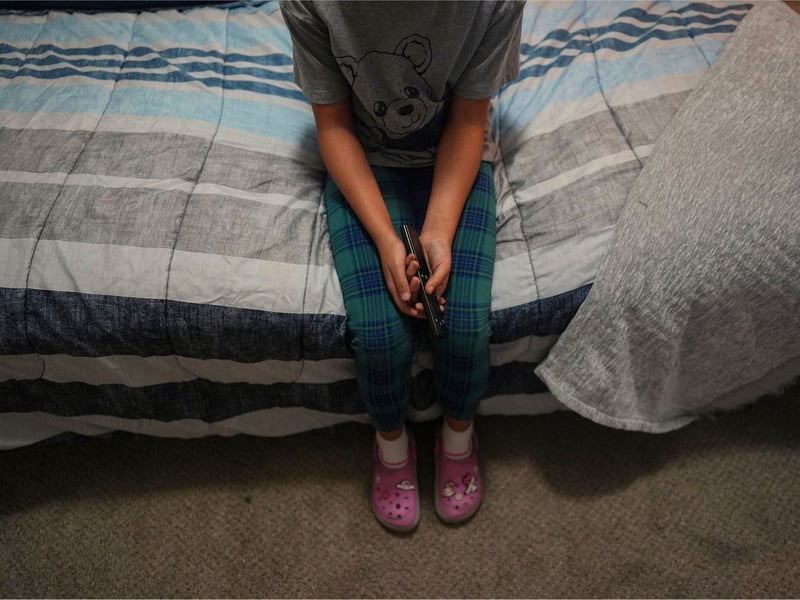
Talwani’s latest ruling protects several thousand migrants on parole via family reunification programs, specifically, as the broader case plays out in Massachusetts federal court. The immigration groups estimate that more than a quarter of those individuals are children.
Justice Action Center, one of those groups behind the case, said in a statement that it expects the government to appeal the injunction.
 Follow @Uebey
 Follow @uebey.bsky.social
Subscribe to our free newsletters
Our weekly newsletter Closing Arguments offers the latest about ongoing trials, major litigation and rulings in courthouses around the U.S. and the world, while the monthly Under the Lights dishes the legal dirt from Hollywood, sports, Big Tech and the arts.