
 Search Articles


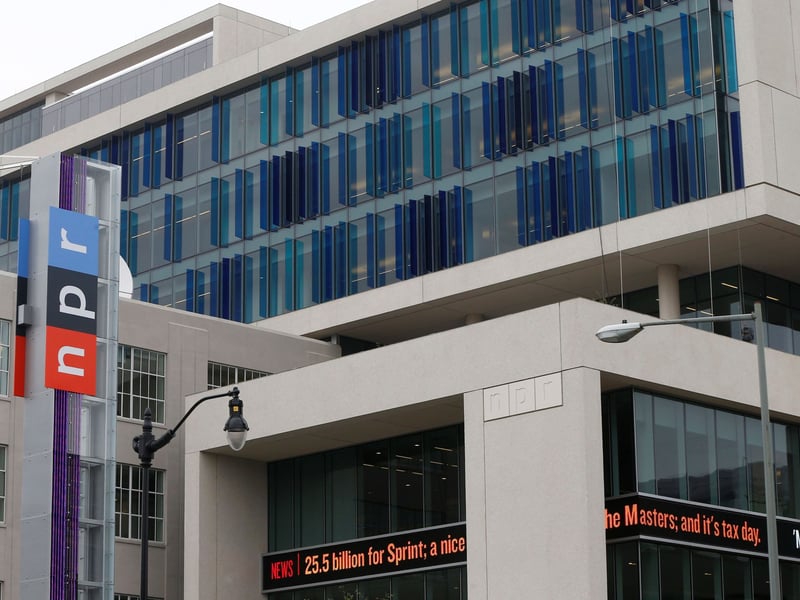
WASHINGTON (CN) — A federal judge ruled Tuesday against President Donald Trump’s executive order ending federal funding to NPR and PBS because of their perceived “left-wing propaganda,” finding it was clear viewpoint discrimination and unconstitutional under the First Amendment.
U.S. District Judge Randolph Moss partially granted the public media organizations’ motion for summary judgment and blocked federal agencies from implementing Trump’s May 2025 executive order, “Ending Taxpayer Subsidization of Biased Media.”
The Barack Obama appointee determined that, while the president may criticize reporting, fund other speech or impose limits on federal grants, it may not use government power to punish disfavored expression.
The First Amendment, the judge said, draws that line and prevents the government from denying any benefit while infringing on the freedom of speech, even if an individual has no entitlement to the benefit.
“Executive Order 14290 crosses that line,” Moss wrote. “It does not define or regulate the content of government speech or ensure compliance with a federal program. Nor does it set neutral and germane criteria that apply to all applicants for a federal grant program.”
The order, he wrote, singles out two speakers and bars them from all federally funded programs based on their speech, without regard to where the funds will ultimately be used, including for a nationwide broadcast interconnection system, security for journalists in war zones, the emergency broadcast system or children’s educational programming.
“To borrow a phrase from Judge John Bates, Executive Order 14290 is simply ‘another lever in the president’s arsenal [to punish or] to extinguish speech he dislikes,’” Moss wrote, citing his George W. Bush-appointed colleague’s ruling blocking Trump’s executive order targeting firm Jenner Block.
“Although there are many lawful reasons that the government might decline to make ‘a valuable governmental benefit’ available to someone, punishing disfavored private speech is not one of them,” Moss added.
Katherine Maher, president and CEO of NPR, said in an emailed statement that Moss’s ruling was a “decisive affirmation of the rights of a free and independent press.”
“Public media exists to serve the public interest — that of Americans — not of any political agenda or elected official,” Maher said. “NPR and our member stations will continue delivering independent, fact-based, high-quality reprint to communities across the United States, regardless of the administration of the day.”
A secondary issue in the case centered on Trump’s parallel shutdown of the Corporation for Public Broadcasting, through which the government historically funded the Public Radio Satellite System. NPR operates the system, which broadcasts NPR’s national programming and international programming from the BBC to hundreds of member stations across the country.
Most of the federal funding affected by the executive order passed through the CPB and Trump separately pushed Congress to defund it, which it ultimately did in July 2025 by rescinding $1.1 billion earmarked for the next two fiscal years.
While the CPB initially approved the distribution of $36 million to NPR for the satellite system’s operation in April 2025, it reversed course two days later in an apparent effort to appease the president. During the course of the litigation, the parties settled and the CPB agreed to disburse the funds to NPR.
The CPB has since dissolved, leaving the public media outlets’ claims challenging the administration’s interference in the corporation’s operations moot.
 Follow @Ryan_Knappy
Subscribe to our free newsletters
Our weekly newsletter Closing Arguments offers the latest about ongoing trials, major litigation and rulings in courthouses around the U.S. and the world, while the monthly Under the Lights dishes the legal dirt from Hollywood, sports, Big Tech and the arts.