
 Search Articles


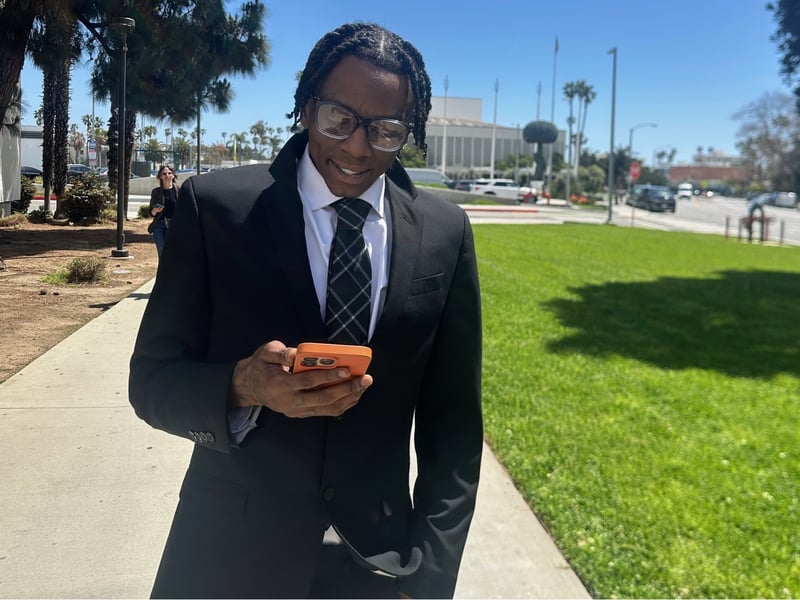
LOS ANGELES (CN) — A Superior Court judge said Thursday that he was considering reducing a $4.25 million verdict issued against rapper Soulja Boy for sexual assault.
“The judgment is almost $4 million in non-economic actual damages,” Superior Court Judge Mark Epstein wrote in his tentative ruling. “That is a lot of money given that plaintiff claims no economic loss beyond $15,000 in unpaid wages.” Epstein made it clear he was leaning against lowering the judgment, although he did think it was a “very, very big” number.
The 34-year-old rapper, whose real name is DeAndre Way, rose to fame after his 2007 self-released single “Crank That (Soulja Boy)” became a viral hit, spawning an online dance craze. In April, he was found liable by a jury in Santa Monica for sexual battery, assault and gender violence for his treatment of an unnamed woman who worked as Way’s assistant for nearly two years.
During the trial, the woman testified that he regularly raped and beat her, at times keeping her in his house like a prisoner and never paying her for her services. For a time, the two fell in love and had a consensual relationship. But his behavior always turned abusive again, she said.
“I didn’t even feel human anymore,” the woman testified at one point. “I felt like an animal."
Way denied ever raping the woman, saying the two were in a consensual relationship and that he never formally employed her. After the trial, he said the fact that the plaintiff was allowed to remain anonymous created an “unequal playing field” that prejudiced the jury against him. He has filed an appeal.
His attorneys also filed a motion for a new trial. On Thursday, Way’s attorney, Ayang Inyang of Ivie McNeill Wyatt, pointed to a handwritten note written to the judge by one of the jurors, partway through the trial. The juror wrote: “In light of some of the testimony that’s been given, myself and other juror would like some reassurance that our information will be kept secret and destroy at the end of the trial. I am the only person in the world with my name and my last name is specific to my immediate family, so I have some concerns about safety.”
Inyang said the note was evidence of juror misconduct.
“We believe the jury was prematurely deliberating and making determinations on the evidence,” Inyang said.
Judge Epstein disagreed, saying, “When I think of juror misconduct, I think of the jury doing independent research, a jury flipping a coin, a jury kicking someone out of the room. A juror who is expressing safety concerns, that’s not juror misconduct.”
In his tentative ruling, Epstein wrote that he was not inclined to grant a new trial — a rare thing for a judge to grant, in any case. And while he agreed that several things said by the plaintiff’s attorneys during their opening and closing arguments were “inappropriate and misconduct,” he said the statements were “harmless at worst.”
He agreed that some of the issues raised during the trial might have made some of the jurors afraid but wrote “that is something that is just in the nature of the case given the issues.” The judge also chided one of the attorneys for asking Way, during cross-examination, if the defendant had heard the phrase “The truth shall set you free.”
“That was misconduct by plaintiff’s counsel and not even close to the line,” Epstein wrote. “The court gave some thought as to whether the conduct was reportable to the Bar, although it ultimately decided against reporting it.” He noted that he sustained the defense’s objection to the question in a “somewhat angry tenor and tone,” adding: “The court does not believe that this affected the jury in plaintiff’s favor.”
But Epstein said he was undecided as to whether or not to lower the $4.25 million judgment by issuing a remitter. Plaintiff’s attorney Dean Aynechi, a partner at West Coast Trial Lawyers, said the judgment was fair — in fact, it had been something of a disappointment for him and his co-counsels, who had asked the jury for more than twice that amount.
“We would argue that it was a pretty low verdict, in light of the evidence that came out,” Aynechi said. “Plaintiff testified to dozens of rapes, dozens of assaults. Her life was threatened multiple times.”
Judge Epstein was especially skeptical about one piece of the judgment: the $250,000 award for punitive damages.
“You’ve got to point to some evidence in the record that says he has ability to pay out,” Epstein told Aynechi. “He’s got 20 years before he pays off the compensatory damages, not to mention interest. Doesn’t that seem a little long?”
“He was very evasive as to how much money he had in his bank account,” Aynechi offered.
Epstein did not issue a final ruling and said he would give the matter some more thought. He is expected to make a final decision by Monday. Should he reduce the judgment, the plaintiffs can reject the remitter, but that would trigger a new trial.
 Follow @hillelaron
Subscribe to our free newsletters
Our weekly newsletter Closing Arguments offers the latest about ongoing trials, major litigation and rulings in courthouses around the U.S. and the world, while the monthly Under the Lights dishes the legal dirt from Hollywood, sports, Big Tech and the arts.