Search Articles


RALEIGH, N.C. (CN) — A federal judge on Thursday dismissed a patent infringement lawsuit against Epic Games, finding that the patents at issue were directed to abstract ideas and lacked an “inventive concept.”
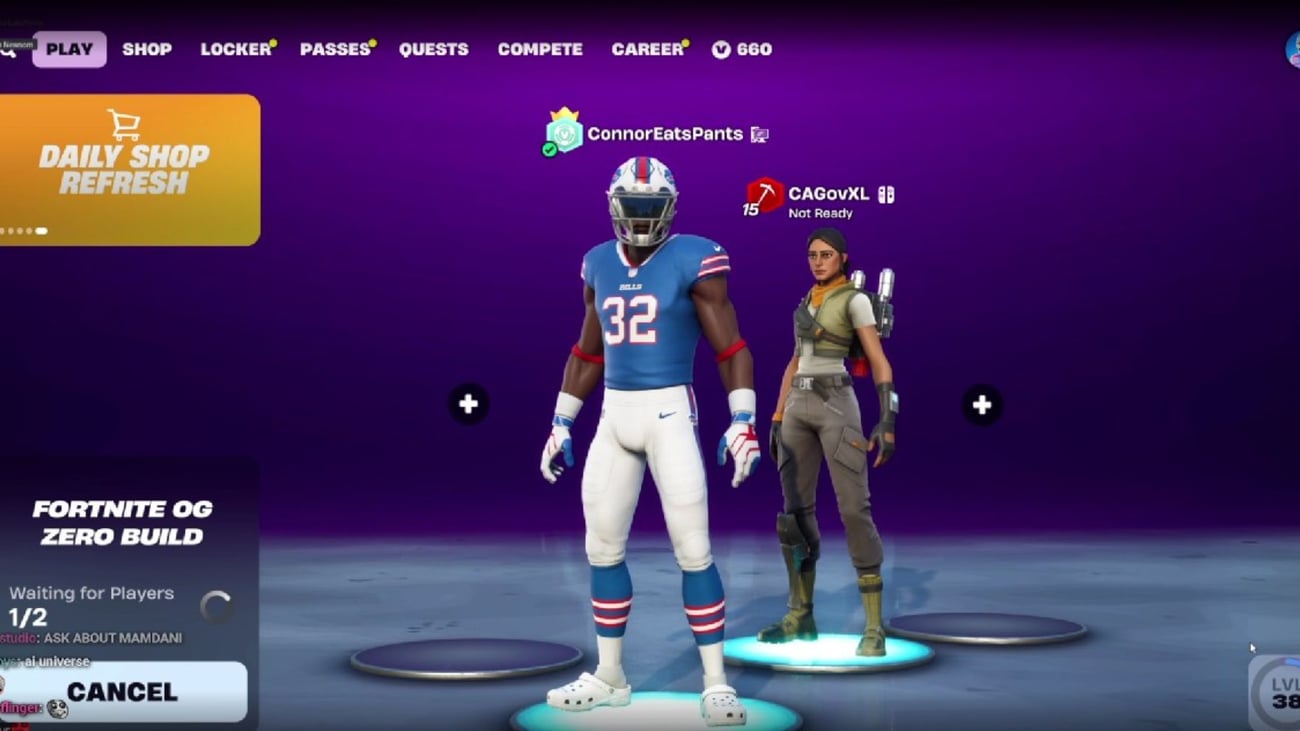
IngenioShare sued the video game giant in July 2025, claiming that Epic Games infringed multiple patents covering methods and systems for assigning users a digital identity separate from their contact information to protect their privacy. The company asserted Epic has known since 2018 that its systems infringed one or more of IngenioShare’s patents and induced infringement by users through in-game communication features crucial to popular games like Fortnite and Rocket League.
Chief U.S. District Judge Richard Myers II dismissed the complaint with prejudice, preventing IngenioShare from refiling its claims.
IngenioShare’s infringement claims were based on a single representative patent, Myers said. However, that patent “merely applies an abstract idea and does not fundamentally change or improve how a computer functions,” he said.
IngenioShare failed to show that the patent transformed an abstract idea into a patent-eligible creation, Myers said. The digital identity, or “identifier,” at the center of the patent was not an inventive concept, he found.
Myers also found the patent does not disclose a specific technique for improving computer or network functionality.
“‘810 Claim 1 is directed to a generic user problem of managing potentially unwanted electronic communications, not computer-specific functions. Thus, ‘810 Claim 1 claims results, but it does not describe how to achieve the results in a non-abstract way,” Myers, a Donald Trump appointee, said.
The fact that the patent is narrowly tailored to focus on contact information in text and voice conversations “does not redirect the claim to patent eligible matter,” he added.
The representative patent claimed five abstract functions: allowing a user to contact another person through a communication option, notifying the user of the selected communication method, providing a blocking function, sending a message through the selected communication channel and determining whether the recipient is available.
Although the patent concerns internet-based communications, it “does not recite how to concretely achieve these results,” Myers wrote.
IngenioShare claimed its patents improve computer-network capabilities and solve the problem of managing multiple modes of communication. Epic countered that the case concerns the abstract idea of managing digital communications.
The dismissal is a win for Epic Games, which had asked the court to dismiss the case. The patents at issue should be ineligible for patent protection, it argued.
IngenioShare said its patents provide a technical solution that improves computer-network capabilities, arguing that the creation of a digital identifier separate from contact information is inventive, it said in filings.
Representatives for both sides did not respond to requests for comment.
IngenioShare initially sued Epic in Texas in 2021 over several of the same patents, but the case was dismissed in 2022 for improper venue.
Epic Games previously prevailed in a separate case against metaverse company Utherverse in Seattle in 2025. Utherverse had claimed Epic infringed its patent related to group virtual experiences featuring in-game performances. Epic filed a countersuit in 2022, arguing the patents were invalid. A jury found for Epic in May 2025, determining that it didn’t infringe Utherverse’s patent.
IngenioShare, which has a limited web presence, emphasizes its investment in licensing and acquiring patent portfolios on its website. Co-founder Peter Tong also founded IpVenture, a company that develops products, obtains patents and licenses intellectual property.
 Follow @SKHaulenbeek
 Follow @shaulenbeek.bsky.social
Subscribe to our free newsletters
Our weekly newsletter Closing Arguments offers the latest about ongoing trials, major litigation and rulings in courthouses around the U.S. and the world, while the monthly Under the Lights dishes the legal dirt from Hollywood, sports, Big Tech and the arts.