
 Search Articles


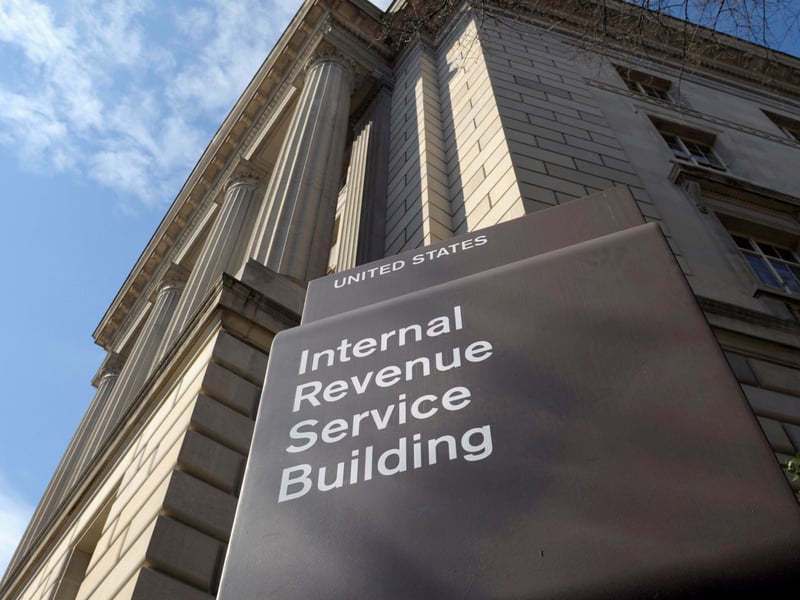
WASHINGTON (CN) — A federal judge on Thursday slammed the Internal Revenue Service for handing over confidential taxpayer information to the U.S. Immigration and Customs Enforcement, saying it violated the law “approximately 42,695 times.”
In November, U.S. District Judge Colleen Kollar-Kotelly halted the Trump administration’s effort to use identifiable information held by the IRS to further its mass deportation campaign, a decision now pending before the D.C. Circuit.
“The IRS violated the [Internal Revenue Code] approximately 42,695 times by disclosing last known taxpayer addresses to ICE through [Taxpayer Identification Number] Matching without confirming that ICE’s request set forth the ‘address of the taxpayer with respect to whom the requested return information related,” Kollar-Kotelly wrote.
The Bill Clinton appointee issued the 13-page opinion in response to the Center for Taxpayer Rights’ motion asking whether, if the case were still fully before her, she would allow the government to file a supplemental declaration by IRS Chief Risk and Control Officer Dottie Romo, and grant limited discovery.
Kollar-Kotelly indicated that she would allow the filing and that the discovery request raises enough of an issue for her to consider, if the D.C. Circuit felt it would be helpful for its ultimate decision.
In the Feb. 11 declaration, Romo admitted the IRS violated the Internal Revenue Code by disclosing confidential taxpayer addresses to ICE in response to requests that were either legally “incomplete or insufficient.”
Specifically, the immigration agency is required to identify the name and addresses of the taxpayer it is requesting personally identifiable information on, rather than request information en masse.
Kollar-Kotelly noted that, in her Nov. 21 preliminary injunction opinion, she already found the IRS violated that requirement because of examples where the IRS handed over taxpayer addresses without confirming that ICE first had the taxpayers’ addresses.
She explained that conclusion was based on the Justice Department’s representation that, if ICE at least provided a name and taxpayer identification numbers, or TIN, then the IRS would disclose that individual’s last known address without confirming ICE’s provided address matched its records.
According to the Justice Department, that was the procedure for around “39,000” of the 47,289 addresses that were provided to ICE.
Romo described an automated procedure where the IRS would determine if ICE-supplied information matched any of the agency’s records. For example, if ICE provided a Social Security number for an individual, the IRS would provide their last known address.
Under that process, known as TIN Matching, the IRS would not check the ICE-supplied address beyond checking the ZIP code.
“If ICE’s request did not include a taxpayer’s [social security number], then, and only then, did the IRS confirm that ‘the ICE-supplied first name, last name and address fields matched with a name and associated address in IRS’s records,” Kollar-Kotelly wrote.
Of the 47,289 taxpayer addresses the IRS provided ICE, 90.3% were matched through TIN Matching — the 42,695 times Kollar-Kotelly determined violated the law — while the remaining 9.7%, or 4,594 addresses, were matched by address matching.
Romo further revealed the IRS turned over address information even when ICE’s requests failed to even provide the individual’s actual address — with entries stating “Failed to Provide” or “Unknown Address” or “NA” — or were missing a street name or street number.
“In other words, the IRS not only failed to ensure that ICE’s request for confidential taxpayer address information met the statutory requirements, but this failure led the IRS to disclose confidential taxpayer addresses to ICE in situations where ICE’s request for that information was patently deficient,” Kollar-Kotelly said.
Further, the agency turned over individuals’ last-known addresses even when ICE provided addresses tied to jails, detention facilities or prisons, without providing the corresponding street names and numbers for those facilities.
The system was so lax, Kollar-Kotelly emphasized, that ICE could have submitted requests with an address like “Don’t Care 12345” or “00000” and still receive a taxpayer’s address through the TIN Matching process.
In the early months of Trump’s second term, ICE requested the addresses, phone numbers and email addresses of 700,000 immigrants; former IRS Commissioner Doug O’Donnell refused to comply with the request but was quickly removed from office.
The position has since seen significant turnover — Melanie Krause served between February and April, Gary Shaply from April 16 to April 18, Michael Faulkender from April to June, Billy Long from June to August and currently Treasury Secretary Scott Bessent since August.
“The Romo declaration is a significant development in this case,” Kollar-Kotelly wrote.
“Not only does it confirm the court’s finding that the IRS violated IRC Section 6103(i)(2) by disclosing thousands of confidential taxpayer addresses to ICE without first determining that ICE’s request included the ‘address of the taxpayer,’ but it reveals that the IRS provided confidential taxpayer addresses to ICE in response to requests from ICE that the IRS now admits were legally deficient,” she added.
 Follow @Ryan_Knappy
Subscribe to our free newsletters
Our weekly newsletter Closing Arguments offers the latest about ongoing trials, major litigation and rulings in courthouses around the U.S. and the world, while the monthly Under the Lights dishes the legal dirt from Hollywood, sports, Big Tech and the arts.