
 Search Articles


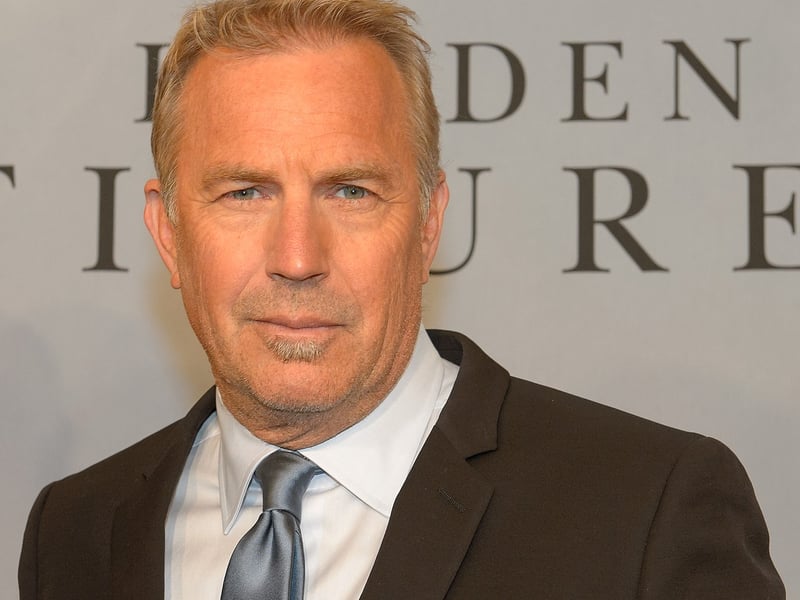
LOS ANGELES (CN) — A California judge on Thursday rejected Kevin Costner’s bid to get a stunt double’s sexual harassment and discrimination lawsuit thrown out because they stifle his constitutional rights to creative expression.
Los Angeles Superior Court Judge Jon Takasugi denied Costner’s anti-SLAPP motion in the lawsuit filed by Devyn LaBella. However, Takasugi tossed her claim that the actor and director interfered with her civil rights through intimidation and coercion in demanding that she participate in a sexually exploitative, simulated rape scene.
“This early in the case, there’s sufficient evidence to move forward,” Takasugi told the lawyers at a hearing in downtown LA.
LaBella worked as the stunt double for actress Ella Hunt during the production of “Horizon: An American Saga, Chapter 2,” the second installment of in a series of epic Westerns produced and directed by Costner, who also stars in the movies.
She sued Costner and his production company in May, saying that she was the victim of a violent unscripted, unscheduled rape scene directed by Costner that has upended her career and left her with permanent trauma that she will be required to address for years to come.
LaBella claims she was on set to perform in an innocuous rain scene as a double for Hunt. Costner, however, required her to stand in for a shot that, “without proper notice, consent, preparation, or appropriate safeguard measures in place, such as the project’s intimacy coordinator being called in,” involved Roger Ivens, a 6-foot-2-inch, 220 pound actor, performing a violent, simulated rape.
“Ironically, as is so often the case in situations involving violent sex acts against women, defendants argue that I ‘consented’ to what occurred on May 2, 2023,” LaBella said in a declaration. “Succinctly put, I did not. I was trapped in many ways, not the least of which was Mr. Costner’s commanding presence.”
“I was pinned in by the physical presence of a large, muscular male actor (Roger Ivens) lying with his body right next to and touching my entire side, with his hand on or near my breast and vaginal areas, at times stretching his leg and buttocks across my body, at others looming over me on all fours, and at other times mounted fully on top of me,” she said.
While LaBella seeks damages for sexual discrimination and harassment, retaliation and infliction of emotional distress among other claims, Costner’s attorney T. Wayne Harman told the judge the case boils down to creation of a hostile workplace that can’t succeed based on a single, isolated incident.
Moreover, Harman said, LaBella’s version of what happened on set that morning is completely inaccurate. There was no “scene” being filmed, he said, but LaBella had been asked to help block the shot — a kind of rehearsal to establish camera angles and the like for the actual shooting of the scene.
In addition, he said, the scene didn’t depict a rape at all, but foretold a rape that occurred offscreen.
“It wasn’t a rape scene,” Harman said. “There was no simulated sex.”
The other actor was lying next to LaBella in the back of a wagon and moved her multiple layers of skirts up to her knees and then turned above her on “all fours,” the lawyer explained. There was no thrusting of the hips or any other sexual movements.
Costner asked that LaBella’s claims be struck under California’s anti-SLAPP statute — an acronym for strategic lawsuit against public participation — which defendants can use to seek a quick dismissal of meritless lawsuits that are intended to curtail their First Amendment rights.
Kate McFarlane, one of LaBella’s lawyers, argued at the hearing that a lack of safety protocols during a movie shoot shouldn’t be considered part of the creative process and that a line was crossed.
The judge agreed with Costner that LaBella’s lawsuit implicates protected activity, which one of the two requirements for a successful anti-SLAPP motion. But he wasn’t persuaded that LaBella couldn’t prevail on the merit of her claims.
“While plaintiff alleges a single incident, she submitted evidence which could show that she was subjected to an unplanned and unrehearsed simulated rape scene which was performed without a discussion, explanation, rehearsal, choreography session or stunt or intimacy coordinator present,” Takasugi wrote in a tentative ruling that he adopted as final at the hearing.
“At the very least, this evidence could suggest that a reasonable person, in the same position, and considering all the circumstances, would find this to be a hostile work environment,” he said.
 Follow @edpettersson
Subscribe to our free newsletters
Our weekly newsletter Closing Arguments offers the latest about ongoing trials, major litigation and rulings in courthouses around the U.S. and the world, while the monthly Under the Lights dishes the legal dirt from Hollywood, sports, Big Tech and the arts.