
 Search Articles


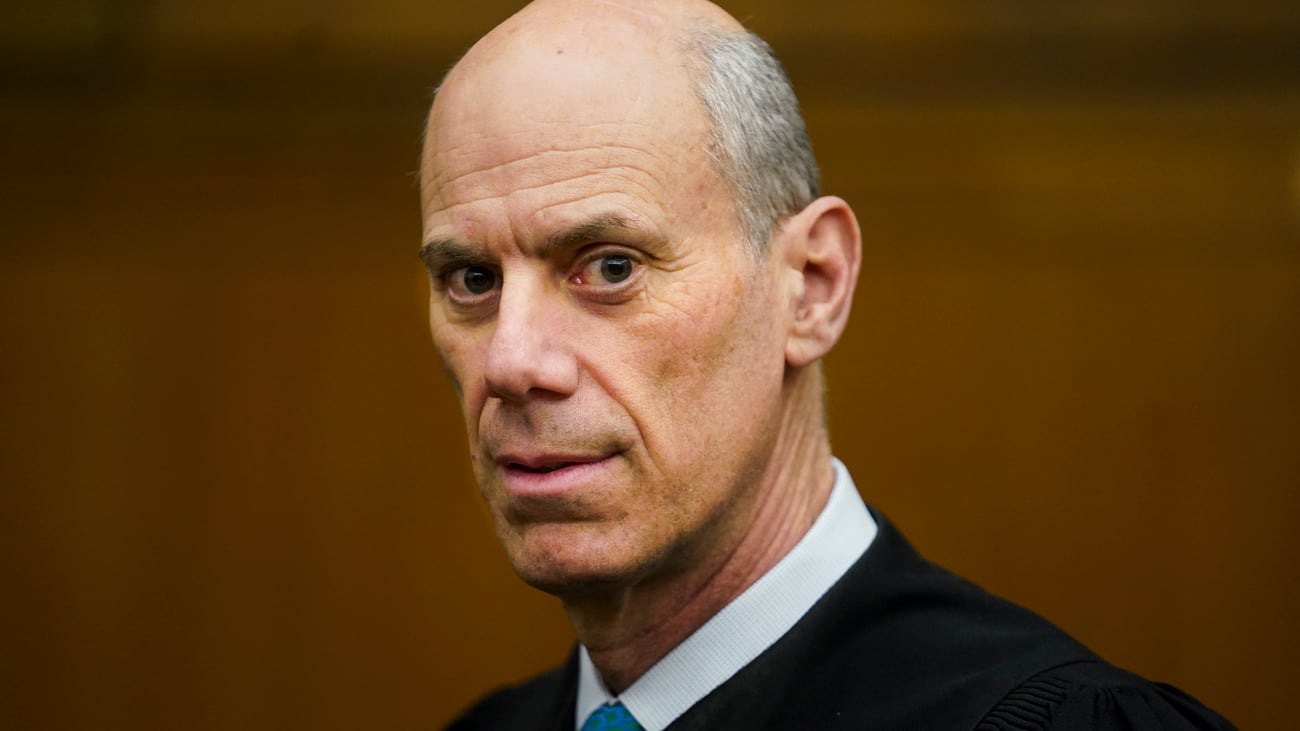
WASHINGTON (CN) — A split D.C. Circuit panel ruled Tuesday that Chief U.S. District Judge James Boasberg cannot move forward with a renewed criminal contempt effort against the Trump administration over the deportation of over 200 Venezuelan men to El Salvador in 2025.
The three-judge panel ruled 2-1 that Boasberg’s investigation into whether the Trump administration wrongfully ignored orders to return the deported men from the Salvadoran mega prison known as CECOT went beyond his authority.
“The district court proposed to probe high-level Executive branch deliberations about matters of national security and diplomacy,” U.S. Circuit Judge Neomi Rao, a Donald Trump appointee, wrote for the majority. “These proceedings are a clear abuse of discretion, as the district court’s order said nothing about transferring custody of the plaintiffs and therefore lacks the clarity to support criminal contempt based on the transfer of custody.”
The government had already identified then-Homeland Security Secretary Kristi Noem as the official responsible for the decision to transfer custody of the 137 deported men, who were labeled members of the Tren de Aragua gang under the Alien Enemies Act, to El Salvador, the majority found.
Rao was joined by U.S. Circuit Judge Justin Walker, a fellow Trump appointee.
Noem’s decision effectively allowed the government to claim it had no power to order the men’s return — despite a now-lapsed deal with Salvadoran President Nayib Bukele to pay up to $20,000 per person held at CECOT.
In the almost 13 months since their deportation, the 137 men have been released from CECOT and many have returned to their home country Venezuela.
On Feb. 12, Boasberg ordered the government to facilitate their return to the U.S., if they so chose, where they would be placed back into immigration custody but could challenge their gang designations and be allowed to remain in the country.
The American Civil Liberties Union, which represents the deportee class, reported just one of 91 men contacted have stated they will not challenge their designations as of March 6. Those who wish to be flown from a third country to the U.S. on flights provided by the government total 22, while 68 overall wish to supplement their habeas corpus petitions.
Tuesday’s decision is the second time the Trump administration has been relieved of potential criminal contempt by a D.C. Circuit panel dominated by Trump appointees. In the first, U.S. Circuit Judge Gregory Katsas, another Trump appointee, wrote that because Boasberg’s initial order mandating two planes carrying the deportees to turn around was insufficiently clear, it could not support a contempt inquiry for the government’s apparent violation.
In Tuesday’s decision, the majority found by continuing to probe into the government’s decision-making, Boasberg had “moved the goalposts” and was disregarding the appellate court’s reasoning to nix his first inquiry.
She wrote the proposed outline of any contempt hearings, which would include testimony from two attorneys and allow ACLU questioning, “threaten an open-ended, freewheeling inquiry into executive branch decision making on matters of national security that implicate ongoing military and diplomatic initiatives" given the recent military incursions in Venezuela.
Erez Reuveni, former Justice Department attorney turned whistleblower. was set as the first witness, with Drew Ensign, deputy assistant attorney general and counsel at the March 15, 2025, hearing was set as the second.
In a concurring opinion, Walker wrote the government had not violated Boasberg’s written order. While his bench ruling at the March 15 hearing ordered the government to immediately “turn around and return to the United States” any active flights, the written order issued less than an hour later only prohibited the removal of immigrants currently in the U.S.
“The government did not violate the oral order while it was in effect,” Walker wrote. “And at no point did the government violate the written order that superseded it.”
U.S. Circuit Judge Michelle Childs, a Joe Biden appointee, wrote in a 79-page dissent that her colleagues had again stepped in too early to halt the contempt inquiry, which was meant to be a fact-finding effort in advance of any actual contempt trial and was an effort “to preserve and enforce our law.”
“Instead of properly rejecting the current petition to end the district court’s factual inquiry, the majority had determined that no further facts are needed because, as a matter of law, the alleged contemnors just cannot have committee contempt,” Childs wrote. “In so doing, the majority has stymied the district court’s inhered and statutory powers and done so in a way that will affect not only these contempt proceedings but will also echo in future proceedings against any litigants.”
Childs wrote that under the majority’s ruling, any litigant could argue they had not committed contempt before any finding of contempt can even be made. Further, the government can simply “wave the wand of separation of powers” and petition the court to relieve it of potential contempt.
“Addressing contempt is an integral part of the trial court’s sacred mystery; it is key to maintaining the order and safety of the court when applying the law,” Childs concluded. “Mandamus, therefore, should only issue on days where it is needed to restore, and not upset, the balance of power in our government. But today is not one of those days.”
 Follow @Ryan_Knappy
Subscribe to our free newsletters
Our weekly newsletter Closing Arguments offers the latest about ongoing trials, major litigation and rulings in courthouses around the U.S. and the world, while the monthly Under the Lights dishes the legal dirt from Hollywood, sports, Big Tech and the arts.
Additional Reads
 Sampling gets a cautious yes from EU judges April 14, 2026
 Farm loan recipient disclosure April 14, 2026
 Nearly 700 reported killed in Sudan drone strikes this year April 14, 2026