
 Search Articles


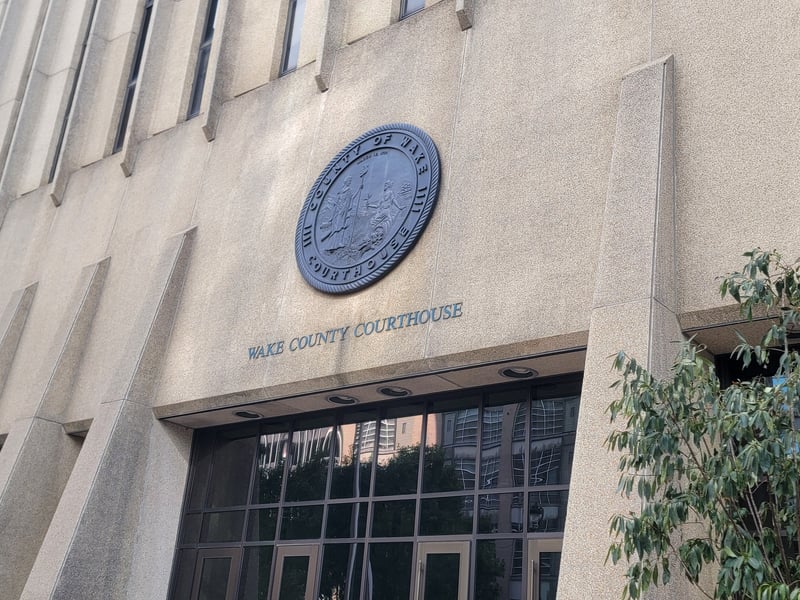
RALEIGH, N.C. (CN) — A business court judge ended a North Carolina town’s lawsuit against utilities giant Duke Energy Thursday evening.
Carrboro, North Carolina, a small town north of Raleigh, sued the company in December 2024, claiming it is causing and accelerating climate change. Duke has attempted to conceal the dangers of climate change from the public, it said, despite understanding the dangers of fossil fuel emissions since 1968.
The town said Duke is misleading the public over the causes and consequences of climate change and has “materially slowed the transition away from fossil fuels and toward renewable energy,” by failing to timely retire coal plants, increasing reliance upon natural gas and refusing to make meaningful investments in clean energy. The effects of climate change has led to increased storms, which have damaged the town’s municipal property and infrastructure, which, it argued, entitles it to compensation.
Temperature impacts and more extreme precipitation will require roads to be replaced more frequently, and worsening storms will necessitate new anti-flooding and anti-erosion infrastructure, Carrboro said. The parties have only appeared in court once, in an hourslong hearing in which Carrboro fought against dismissal.
Business Court Judge Mark Davis called Carrboro’s legal theory “novel” in his 32-page opinion and order granting Duke’s request to dismiss the case.
“It would be a vast understatement to say that this case presents an issue of first impression under North Carolina law,” he said. “Here, a municipality seeks to hold a public utility company liable for damages resulting from extreme weather events allegedly caused by climate change based on allegations that (1) the company misled the American public for decades about the effects of fossil fuel consumption on the environment; and (2) as result, the public’s transition to alternative forms of energy was delayed.”
Carrboro’s case presents nonjusticiable questions, Davis said, as the court isn’t the proper place to handle the dispute. The state has a utilities commission and department of environmental quality, which are tasked by the General Assembly with handling issues concerning fossil fuel emissions and pollution abatement efforts, he said, and the courts “lack the capacity to resolve these issues through traditional methods,” adding that the suit raises many questions that a jury would not be equipped to answer.
“Carrboro contends that because the causes of action it has pled are ones that our courts routinely adjudicate (common law claims for negligence, gross negligence, nuisance, and trespass) this action is necessarily capable of judicial resolution,” he wrote. “Carrboro’s assertion ignores the fact that many significant issues regarding climate change are not only the subject of complex scientific debate but also implicate political, economic, and moral choices made by governments and members of the public literally across the globe.”
Carrboro’s claims don’t demonstrate distinct causation from a specific polluter to a specific victim, Davis said, and instead the town’s claims are as a “result of the collective impact of acts by literally billions of unrelated emitters dispersed throughout the globe.”
“Carrboro’s theory in this case would require a factfinder to make decisions based on pure conjecture divorced from any clearly articulable or objective standards, necessarily requiring rank speculation as to the internal motivations of hundreds of millions of individuals in the United States and the cumulative effect of their actions on global phenomenon,” he wrote.
A jury could only speculate how being further along in transitioning to renewable energy sources would have prevented Carrboro from facing storm-related damage, he added. The town has standing, but fails to survive the motion to dismiss because the claims are nonjusticiable, he wrote; the state’s energy policy is not handled by the judiciary.
In September, counsel for Carrboro argued that the town was entitled to damages for deceiving the public, and that its status as a regulated utilities provider shouldn’t exclude it from claims. The company’s communications made people “highly skeptical” about the dangers of fossil fuels, Matthew Quinn, attorney for Carrboro, told the courtroom.
“I can’t say I have a trespass injury by the clouds, right?” asked Duke Energy attorney H. Hunter Bruton, criticizing Carrboro’s claim that it was trespassed by climate change and emphasizing that the town couldn’t prove injury.
Duke Energy is a regulated utility, and the decisions Carrboro complained about implicate choices made by the General Assembly and utilities commission, Sterling Marchand of Baker Botts, representing Duke, pointed out. Duke also argued that the town’s claims were preempted by federal law, including the Clean Air Act, which Davis declined to decide on.
Representatives for Carrboro did not immediately reply to requests for comment made outside of normal business hours.
In a statement, Duke Energy said “We are pleased with the court’s decision to dismiss the Carrboro climate change litigation. The ruling enables us to continue prioritizing safe, reliable service for our customers while working collaboratively with communities on long‑term energy and environmental goals.”
 Follow @SKHaulenbeek
 Follow @shaulenbeek.bsky.social
Subscribe to our free newsletters
Our weekly newsletter Closing Arguments offers the latest about ongoing trials, major litigation and rulings in courthouses around the U.S. and the world, while the monthly Under the Lights dishes the legal dirt from Hollywood, sports, Big Tech and the arts.