
 Search Articles


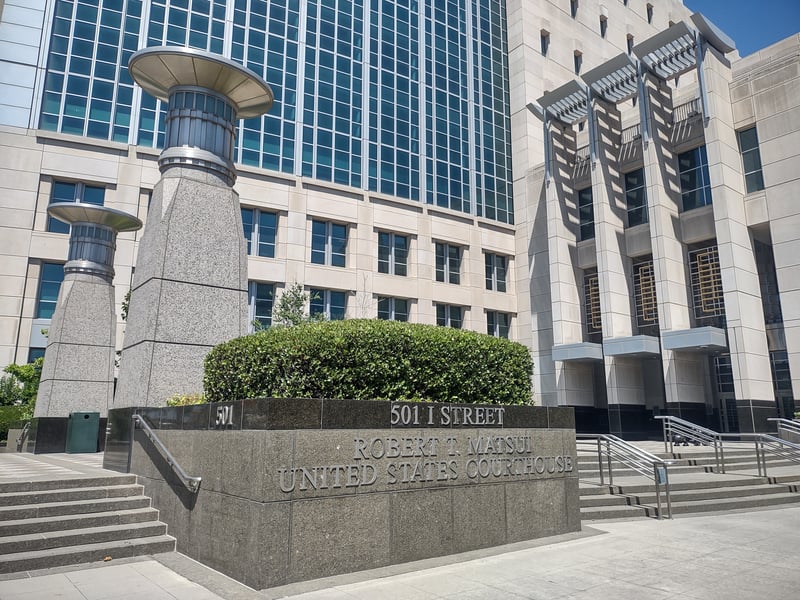
SACRAMENTO, Calif. (CN) — A federal judge on Wednesday recommended that an inverse condemnation claim against PacifiCorp should proceed, potentially keeping the utility on the line for restitution for the 2020 Slater Fire.
The recommendation from U.S. Magistrate Judge Deborah Barnes stems from a suit filed by Siskiyou County over the fire that burned almost 160,000 acres and damaged or destroyed over 700 structures. There were multiple injuries and deaths.
Siskiyou County says the fire started when a decayed and rotting tree fell into PacifiCorp’s power lines, blaming the utility for “negligent and improper vegetation management” and problematic maintenance and operation of the electrical system.
The judge’s recommendation, if upheld by U.S. District Court Judge Dale Drozd, means the inverse condemnation claim will proceed. Additional claims of negligence, nuisance, and trespass, among others, weren’t challenged.
“We look forward to exploring a path toward resolution with PacifiCorp,” said John Fiske, an attorney for the county, in an email. “Siskiyou County suffered taxpayer and public resource damages, and the county seeks reimbursement for those damages.”
Inverse condemnation is a method for property owners to receive restitution when a government damages property for public use.
PacifiCorp argues that the California Supreme Court has never determined that inverse condemnation applies to a private utility like itself. However, Barnes found courts have not limited inverse condemnation to public entities only.
“In California a public utility is in many respects more akin to a governmental entity than to a purely private employer,” Barnes cites from a 1979 case.
Barnes also points to a handful of legal decisions, noting that it’s “solidly established” that a public utility can be held liable for inverse condemnation.
PacifiCorp also argues that Siskiyou County can’t claim “substantial causation” — that one act led to another. Instead, the county has reached conclusions — and not offered facts — about PacifiCorp’s actions leading to fire damage.
However, Barnes noted the law at this stage of the proceeding requires her to accept the facts as presented by the county as true.
The county claims PacifiCorp knew that weather and other conditions could affect its electrical distribution system. Also, PacifiCorp’s own wildlife mitigation plan states that good vegetation and de-energizing policies are essential to stopping equipment from sparking wildfires.
Days before the September 2020 fire started, the National Weather Service issued a fire weather watch and a red flag warning. Other utility operators de-energized their lines when winds struck. PacifiCorp did not, Barnes writes.
According to the judge, PacifiCorp knew about the heightened fire risk and kept its lines energized. Additionally, a proper inspection of trees in the area would have alerted it to the rot in the tree that fell.
“At issue here is a claim of inverse condemnation which requires that the damage be ‘substantially caused by an inherent risk presented by the deliberate design, construction, or maintenance of the public improvement,’” Barnes wrote.
“If a plaintiff’s property is damaged as a result of the defendant’s design, construction, or maintenance of a public improvement then the plaintiff is entitled to compensation for the damage ‘whether it was intentional or the result of negligence by the public entity,’” she continued.
Both sides have two weeks to object to Barnes’ recommendation once they receive it. If they don’t file an objection, it could waive their right to appeal Judge Drozd’s final order.
A jury trial is set for December.
Subscribe to our free newsletters
Our weekly newsletter Closing Arguments offers the latest about ongoing trials, major litigation and rulings in courthouses around the U.S. and the world, while the monthly Under the Lights dishes the legal dirt from Hollywood, sports, Big Tech and the arts.