
 Search Articles


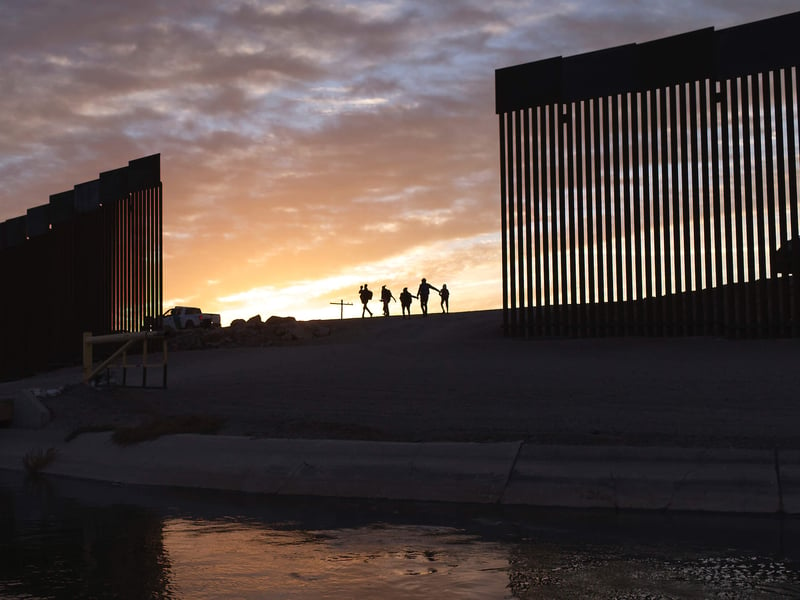
WASHINGTON (CN) — A federal judge blocked the Trump administration from deporting asylum seekers on Wednesday, finding President Donald Trump’s Jan. 20 proclamation of an “invasion” at the U.S.-Mexico border did not grant him the authority to “adopt an alternative immigration system.”
On the first day of his second term, Trump issued the proclamation “Guaranteeing the States Protection Against Invasion,” which effectively prevented anyone who crosses the southern border without going through a port of entry, or crosses without certain documentation, from applying for asylum or withholding of removal.
U.S. District Judge Randolph Moss found no law that gives the administration the authority to unilaterally replace longstanding immigration rules with an “extra-statutory, extra-regulatory” decoration regime that denies immigrants opportunity to request asylum and does not comply with the United Nations Convention against Torture.
“As the framers understood, ‘every breach of the fundamental laws,’ even when ‘dictated by necessity,’ undermines respect for the rule of law and ‘forms a precedent for other breaches where the same plea of necessity does not exist at all, or is less urgent or palpable,” Moss wrote, quoting from The Federalist Papers. “Here, nothing in the INA or the Constitution grants the president or his deletes the sweeping authority asserted in the proclamation and implementing guidance. An appeal to necessity cannot fill that void.”
The Barack Obama appointee acknowledged the “enormous challenges” the executive faces in stemming illegal immigration and in dealing with the “overwhelming backlog” of asylum claims, but said it does not justify circumventing the INA or the president’s enumerated powers under Article II and Article IV.
A coalition of immigrants’ rights groups and 13 asylum seekers brought the challenge in February, calling Trump’s move an “extreme presidential overreach” and warning that all asylum seekers, including families an unaccompanied children could be deported and put at risk of persecution or torture.
The immigrants have fled persecution in Afghanistan, Ecuador, Cuba, Egypt, Brazil, Turkey and Peru. Six of them have already been deported despite their asylum claims, while the remaining seven immigrants are still in the United States and thus protected by Moss’ order.
Rochelle Garza, president of the Texas Civil Rights Project, applauded Moss’ order in an emailed statement as a “win for human dignity and the rule of law.”
“It sends a clear message: the government cannot use cruelty as a weapon against people fleeing violence,” Garza said. “The court’s blocking of the Trump administration’s executive action underscores the inhumane and unlawful nature of this policy and strengthens our call to protect the rights to seek asylum.”
The decision comes on the heels of the Supreme Court’s decision in Trump v. Casa **** on Friday, which limited federal judges’ ability to grant nationwide relief via “universal” injunctions that covered both parties and non-parties alike.
Under the new Casa regime, plaintiffs seeking to “universalize” their relief must file class actions, Administrative Procedure Act challenges, or potentially seek complete relief via state-initiated or organization suits. The justices did not address the question of state and organizational suits and left that for lower courts to decide.
The immigrant rights groups in this case brought both a class action and an APA suit, seeking relief for a putative class of all others who “were, are or will be subject to” Trump’s proclamation and the vacatur of the proclamation.
Moss noted his decision only applies to asylum seekers currently in the U.S. but ordered further briefing to address how to remedy those who’ve already been deported.
The Trump administration argued that any relief should be limited to the individual plaintiffs in the case, which would effectively kneecap any remedy Moss could issue.
“That contention is both at odds with settled precedent and difficult to square with the statutory text of the APA, which offers no such limitation,” Moss said.
Faisal Al-Juburi, a spokesman for lead plaintiff Refugee and Immigrant Center for Education and Legal Services lauded Moss’ decision in an emailed statement.
He said the decision makes clear that the U.S. is a nation of laws, the Trump administration’s actions go beyond the limits set by the Constitution and by Congress and that the judicial branch “stands between us and anarchy.”
“The Trump administration’s prerogative is once again found to be unlawful,” Al-Juburi said. “It is increasingly clear where the illegality lies, and it is not with the immigrant families upon whom this administration is inflicting unfathomable harm.”
Moss’ order will likely be appealed to the D.C. Circuit and potentially to the Supreme Court.
 Follow @Ryan_Knappy
Subscribe to our free newsletters
Our weekly newsletter Closing Arguments offers the latest about ongoing trials, major litigation and rulings in courthouses around the U.S. and the world, while the monthly Under the Lights dishes the legal dirt from Hollywood, sports, Big Tech and the arts.