
 Search Articles


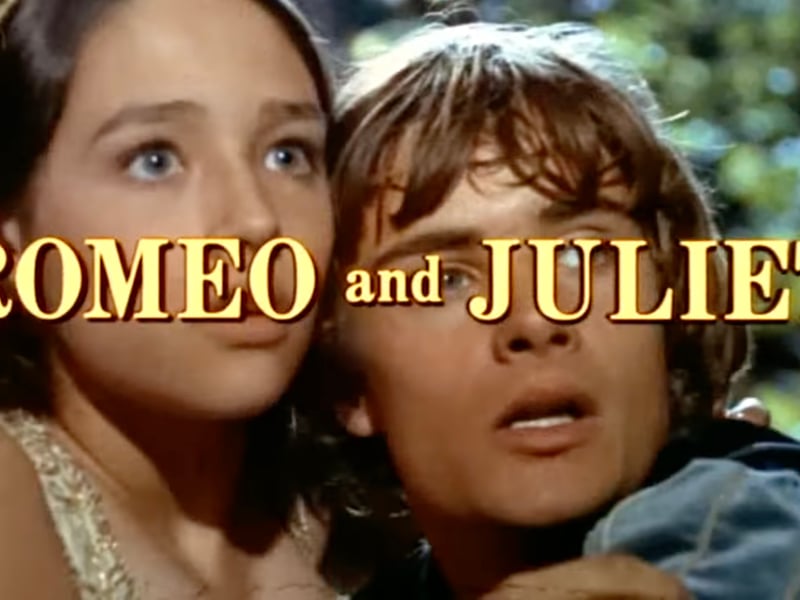
LOS ANGELES (CN) — A Superior Court judge on Monday dismissed a second lawsuit filed by the stars of the acclaimed 1968 film version of William Shakespeare’s “Romeo and Juliet” over a brief nude scene, which was filmed in Italy when the two actors were minors.
Olivia Hussey and Leonard Whiting were 16 and 17 years old, respectively, when the film was made. They say that the noted Italian director Franco Zeffirelli convinced them to perform “the bedroom scene,” in which the famously star-crossed lovers lie in bed the morning after their wedding, without clothes, with the understanding that the film would contain no nudity — a promise they say was broken when the scene included a shot of Whiting’s bare butt and a glimpse of Hussey’s breasts.
This is the second time Hussey and Whiting have sued over the controversial scene filmed more than half a century ago. Last year, a different Superior Court judge threw out the first lawsuit following an anti-SLAPP motion by Paramount, writing that the plaintiffs had “not put forth any authority showing the film here can be deemed to be sufficiently sexually suggestive as a matter of law to be held to be conclusively illegal.” The judge ruled that the plaintiffs’ attorney’s depiction of the scene as “pornographic material” was a “gross mischaracterization.”
The second lawsuit, filed in February, took aim not so much at the original film but at the 2023 release of a new digitally remastered DVD version of the movie for The Criterion Collection, a home video distributor of “important classic and contemporary films.”
“The digital release contained … digitally enhanced photographs of Whiting and Hussey lying together in the nude in a bed simulating a newly married couple luxuriating after a session of marital coitus,” Hussey and Whiting say in their newer complaint. “It also contained computer created, digitally enhanced photographs of the aureoles and nipples on Hussey’s naked breasts.” The rerelease, they say, “falsely portrayed them as willing participants in the purveyance of prurient abuse of youthful pulchritude in the service of monetary gain and rendered them the subject of ridicule and obloquy rather than respect and praise for their virtuoso performances.”
The suit asked for at least $35,000 in damages.
In a written declaration, Hussey called the scene “child pornography,” regardless of its artistry. Even though the last court had rejected that argument, Hussey wrote that the rerelease “had been enhanced in a way to make those photographs appear to be of lewd and lascivious conduct, rather than an intimate love scene.”
She added: “I was convinced — and remain convinced — that Paramount engineered that release to embarrass me in retaliation for my participating in the 2022 lawsuit against them.”
Her attorney, William Romaine of the Romaine Lokhandwala Law Group, said in court Monday: “The photograph of her nipple is different. The coloring is different. More importantly, there’s dark shadows all over the area, to make it look like there was a spotlight on Ms. Hussey’s breast.”
Romaine added: “There is no evidence whatsoever that there was any consent to the release of the intimate photographs in 2023.”
Paramount had filed an anti-SLAPP motion — a legal maneuver to quickly dismiss a lawsuit aimed at chilling free speech or public participation — for the second lawsuit as well, writing that the dismissal of the first lawsuit “should have been the end of this nonsense,” noting again that Whiting and Hussey had, in the past, always praised the film and defended the nude scene as “tastefully” done and “needed for the film.”
“Plaintiffs’ theory that the Criterion release of the film exceeds the resolution of all prior iterations of the film is simply wrong,” Paramount’s lawyers wrote in the motion. “The Criterion release is, in reality, a lower picture quality of the film than the 1968 theatrical release; a lower resolution than the digitally-restored 4K film that plaintiffs watched and applauded at a public film festival in 2016; and the same resolution as the film that has been in wide television and digital distribution since 2007 or earlier.”
Superior Court Judge Holly Fujie agreed with the studio, writing in her tentative ruling, which she later adopted as final, “Plaintiffs cannot prove that they did not consent to the inclusion of the bedroom scene in the film and its subsequent distribution, including the 2023 release of the film.” She added: “Even in the absence of express consent, however, plaintiffs’ subsequent conduct in the decades that followed since the film’s original 1968 release speaks to plaintiffs’ implied ratification and approval of the film, including the bedroom scene.”
Fujie was also unconvinced that the newer version of the movie was more lewd than the original.
“A comparison of the 2023 release with the prior versions shows no significant visible improvement in the film, particularly in the bedroom scene, to the naked eye,” the judge wrote.
After the hearing, Romaine said his clients would appeal the ruling.
“The 2023 release was illegal under federal law,” Romaine said. “The argument that they consented is something a jury has to decide.”
 Follow @hillelaron
Subscribe to our free newsletters
Our weekly newsletter Closing Arguments offers the latest about ongoing trials, major litigation and rulings in courthouses around the U.S. and the world, while the monthly Under the Lights dishes the legal dirt from Hollywood, sports, Big Tech and the arts.