Search Articles


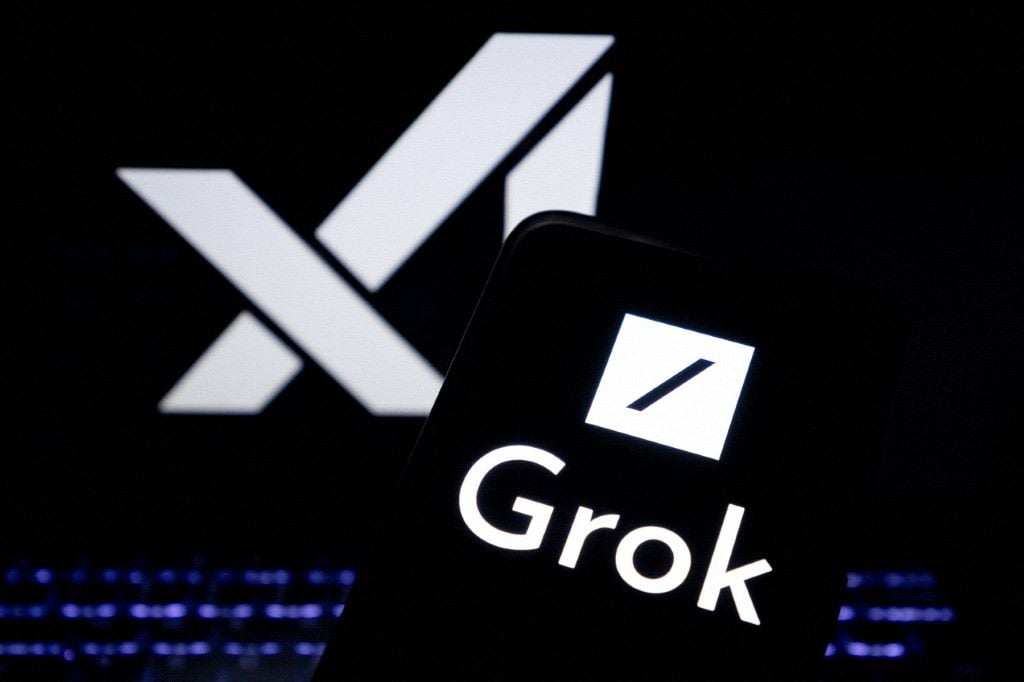
SAN FRANCISCO (CN) — A federal judge on Monday dismissed, for the second time, claims of trade secret misappropriation brought by Elon Musk’s artificial intelligence company against OpenAI.
U.S. District Judge Rita Lin found insufficient evidence that OpenAI induced an xAI employee to misappropriate trade secrets or knew confidential information was disclosed during the hiring process.
xAI sued OpenAI on Feb. 3 after eight engineers and executives left the company in quick succession during the summer of 2025, most of them joining OpenAI. The company accused its rival of orchestrating the departures to obtain confidential information.
The lawsuit centered on former xAI employee Xuechen Li, whom xAI accused of downloading source code while being recruited by OpenAI and disclosing trade secrets during an interview presentation.
Lin rejected those claims, writing that asking a prospective employee about prior work experience does not amount to encouraging the disclosure of trade secrets.
“Merely asking Li to discuss his previous work—a routine part of the hiring process—does not allow a plausible inference that OpenAI induced Li to reveal anything confidential or secret about that work,” the Joe Biden appointee wrote in her order.
Lin also wrote that OpenAI’s continued interest in Li would only be unlawful if the company knew he exposed trade secrets, which OpenAI denies.
“The allegations are not sufficient to plausibly infer that it was obvious to OpenAI engineers that the information disclosed was an xAI trade secret,” she said. “That an xAI engineer ‘confirmed’ that the slides disclosed xAI trade secrets does not supply the inference that an OpenAI engineer, based on their industry experience, would know that the slides disclosed xAI trade secrets.”
Lin further found that even if OpenAI knew the information contained trade secrets, xAI still failed to state a misappropriation claim because OpenAI obtained the information passively. As she put it, “mere possession of trade secrets is not sufficient to constitute misappropriation.”
She dismissed the case against OpenAI without leave to amend, finding that xAI had failed to cure deficiencies identified in an earlier dismissal order. In that ruling, Lin concluded that even if employees had stolen trade secrets, xAI had sued the wrong party.
“Notably absent are allegations about the conduct of OpenAI itself,” Lin said in the February order. “xAI does not allege any facts indicating that OpenAI induced xAI’s former employees to steal xAI’s trade secrets or that these former xAI employees used any stolen trade secrets once employed by OpenAI.”
xAI’s original argument against OpenAI focused on multiple former xAI employees, including Li, whom it accuses of bringing confidential information to OpenAI.
Lin wrote that holding future employers liable for a new hire’s pre-employment conduct, without claims that the information was used, would risk exposing companies to liability whenever they hired someone who had improperly taken files from a prior job.
The judge also found claims against six other former employees named by xAI insufficient.
“While xAI may state misappropriation claims against a couple of its former employees, it does not state a plausible misappropriation claim against OpenAI, which is the sole defendant in this case,” she wrote.
Representatives for xAI and OpenAI did not immediately respond to requests for comment.
Last August, xAI filed a lawsuit against Li, claiming the engineer stole confidential information and trade secrets. The next month, Lin ordered Li to turn over his personal electronic devices and temporarily blocked him from working at OpenAI or another competitor of xAI concerning generative AI, as well as communicating about generative AI.
Musk and Altman, who cofounded OpenAI in 2015 and later clashed over who should lead it, have had a long-running feud over the startup’s direction ever since Musk stepped down from the company board in 2018.
Musk also sued OpenAI CEO Sam Altman and his company in 2024, seeking a court order to prevent it from proceeding with a for-profit restructuring. Musk claimed the move violated OpenAI’s nonprofit mission and breached the terms of his previous donations to the company, approximately $45 million.
In May, a unanimous nine-person jury cleared OpenAI of liability, finding Musk’s claims fell outside the statute of limitations.
 Follow @mhattridge_
Subscribe to our free newsletters
Our weekly newsletter Closing Arguments offers the latest about ongoing trials, major litigation and rulings in courthouses around the U.S. and the world, while the monthly Under the Lights dishes the legal dirt from Hollywood, sports, Big Tech and the arts.