
 Search Articles


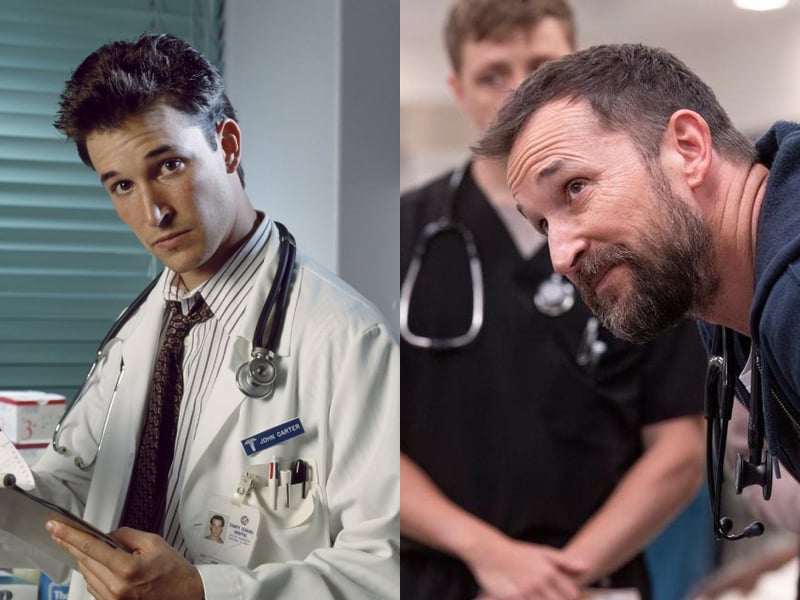
LOS ANGELES (CN) — Lawyers for Warner Brothers appeared in court Thursday to ask a judge to dismiss a lawsuit filed by the estate of the late novelist Michael Crichton over the new Max medical drama “The Pitt,” which shares more than a few similarities with the long-running show “ER.”
The producers of “The Pitt” had been in talks with Michael Crichton’s widow, Sherri Crichton, over launching a reboot of “ER,” which Michael Crichton created in the 1990s. The actor Noah Wylie, who began ER as a young medical student, was attached to play the same role in the reboot. Talks fell apart, and the producers instead created a new series that also takes place inside an emergency room — moving the setting from Chicago to Pittsburgh. Wylie remained attached as the main character.
Last year Michael Crichton’s estate sued Warner Brothers, which owns Max (formerly HBO), writing in its complaint: “The Pitt is ER. It’s not like ER, it’s not kind of ER, it’s not sort of ER. It is ER, complete with the same executive producer, writer, star, production companies, studio, and network as the planned ER reboot.”
The suit was not for copyright but for breach of contract; the estate argues that the contract Michael Crichton signed with Warner Brothers in the 90s gave him the rights to sequels, remakes and “derivative works.”
The crux of the suit, then, is whether or not “The Pitt” is derivative of “ER,” and just what that word means.
“The Pitt is not derivative of ER,” Warner Brothers wrote in its motion to dismiss. “The Pitt and ER involve completely different characters, plots, settings, themes, and pacing. While they are both medical dramas set in hospitals, this does not make The Pitt “derivative” — plaintiff does not own this generic concept, shared by numerous medical dramas set in hospitals that have aired before, during, and after ER (e.g., Grey’s Anatomy, Chicago Med, House, The Good Doctor, The Resident, and many more).”
Superior Court Judge Wendy Chang said that her tentative ruling was deny the anti-SLAPP motion, but invited both sides to make arguments.
Warner Brothers attorney Ilissa Samplin, a partner at Gibson Dunn, argued that the word “derivative” had a legal definition under the Copyright Act.
“‘The Pitt’ is not a derivative work under the copyright standard,” Samplin told the judge. “What these shows have in common — they share a genre. They share an actor … These are shows that have common tropes of the genre, like a hospital setting and common terminology … Under the copyright case law, these are not protectable elements.”
Samplin went on to cite numerous differences between the shows: “ER” had commercial breaks and no profanity; “The Pitt,” which premiered earlier this month, has profanity but no commercial breaks. “The Pitt” is a “documentary-style” show, the attorney argued, while ER was a “soapy” one.
Robert Klieger, a partner at Houston Hennigan who represents the Michael Crichton estate, said the key fact of the case was that “The Pitt” producers negotiated with Sherri Crichton for three years — and was what made the medical drama a derivative work.
“Under that theory, is there any medical drama that could’ve been created by these same defendants?” Judge Chang asked, sounding skeptical.
“Absolutely,” Klieger replied. “If they had created a medical drama where Noah Wylie plays a dermatologist, or a surgeon.”
Chang pressed the lawyer, “Any medical drama in an emergency room setting that could’ve been created by these defendants for the end of time?”
“Yes,” Klieger said, treading more carefully. He argued that there were many ways to make an emergency room drama. The two shows in question, he said, were “strikingly similar” because they had many of the same elements — for example, both are almost entirely cloistered within the confines of a hospital. Both shows contained medical jargon.
“This is not a case about individual elements,” Klieger said. “It’s the combination of elements.”
He argued that there was enough of a dispute over the facts in the case — that is, just how similar the two shows were — for the suit to make it past the first hurdle of a motion to dismiss, and to be decided by a jury.
The judge said she would “endeavor to rule” as soon as she could.
Michael Crichton received an M.D. from Harvard Medical School. Though he never practiced medicine, he interned at an emergency room for a short time, and based the script for the ER pilot on his own experiences. The project generated little interest until Crichton found fame and fortune as a novelist, publishing such works as “The Andromeda Strain” and, most famously, “Jurassic Park,” which became an enormously successful movie directed by Steven Spielberg.
Following that film, Spielberg and Crichton collaborated again on the two-hour ER pilot, which starred a young George Clooney, Anthony Edwards and Noah Wylie.
The show was a smash hit, ran for 15 seasons and won numerous awards, including 23 Emmys. It launched Clooney’s career and set a template for medical dramas that exists to this day.
In its lawsuit, the estate claims that Warner Brothers has, not for the first time, betrayed Michael Crichton’s trust, and diminished and erased him “entirely from his creations.” The first offense, the suit says, was during the HBO series “Westworld,” which is based on the 1973 film of the same name written and directed by a young Crichton.
“In lieu of the ‘created by’ credit that Crichton deserved, the studio relegated him to a ‘based upon’ credit buried deep in the end credits,” the plaintiff wrote in its complaint. “But that indignity pales in comparison to what [Warner Brothers] and its cohorts are now attempting in connection with ER.”
The estate also suggests that the deal over the reboot fell apart, in large measure, over whether or not the late author would receive a “created by” credit at the start of the show.
“They would never do this to Michael Crichton if Michael Crichton was alive,” Klieger said during the hearing.
 Follow @hillelaron
Subscribe to our free newsletters
Our weekly newsletter Closing Arguments offers the latest about ongoing trials, major litigation and rulings in courthouses around the U.S. and the world, while the monthly Under the Lights dishes the legal dirt from Hollywood, sports, Big Tech and the arts.