
 Search Articles


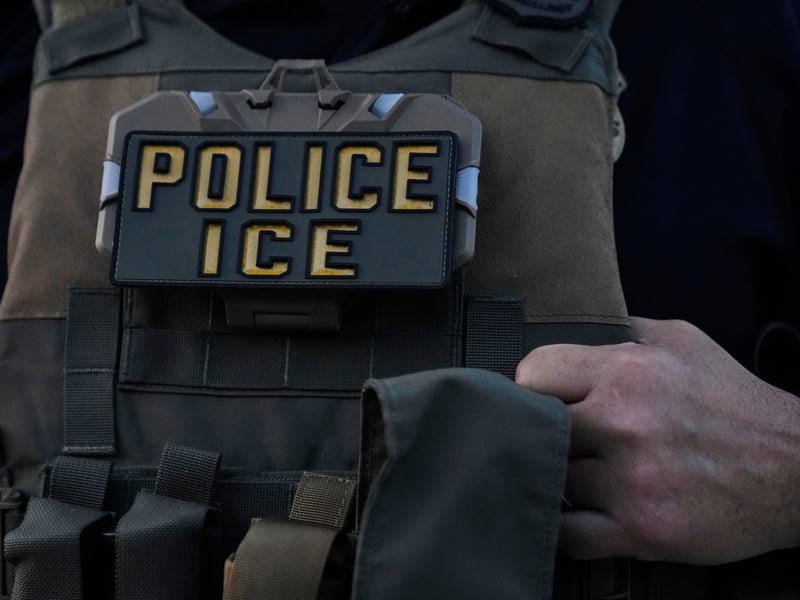
FORT WORTH, Texas (CN) — The Justice Department and attorneys for nine defendants made closing arguments Wednesday in a federal trial in Fort Worth, Texas, that has served as a proving ground for the Trump administration’s efforts to prosecute “antifa” as an organized terrorist group.
The case centers around a shooting at the Prairieland Detention Center, a North Texas ICE facility, on July 4, 2025, in which a police officer was shot. Prosecutors have argued an “antifa cell” conspired to attack the facility, shooting fireworks at it and vandalizing property, and that the incident culminated in the shooting of a police officer who was called to the scene.
The defendants in the case are charged with a variety of federal crimes, including rioting, providing material support to terrorists, use and carry of an explosive, attempted murder of U.S. government employees and discharging a firearm during a crime of violence. Defendant Daniel Rolando Sanchez-Estrada, who was not present at the event, has been charged with concealing evidence after the fact.
During the trial, which lasted two weeks, the jury heard testimony from numerous witnesses, including several other individuals who were arrested in connection with the incident and took plea deals. The defense did not put on any witnesses.
The defendants have claimed the event was supposed to be a peaceful “noise demonstration” where they shot off fireworks to show support for the detainees inside the facility and that no violence was intended. During closing arguments, an attorney for defendant Zachary Evetts said the goal of the protest was to provide “a message of hope to the foreigner who resides in our land.”
But Assistant U.S. Attorney Shawn Smith rejected the idea that this was meant to be a peaceful protest, arguing that because the protesters had guns, body armor and first aid kits, there was a conspiracy to ambush the facility. He also said the protesters wore “black bloc” by dressing in all black to conceal their identities, which he said is further evidence of a conspiracy.
“It’s impossible to tell who’s doing what,” Smith said.
Smith said the group used tactics that are “hallmarks” of antifa.
“That’s why understanding antifa is important to this case,” he said.
Antifa, short for antifascist, is a term used to refer to a decentralized movement of activist groups that oppose fascism, racism and far-right extremism. President Donald Trump signed an executive order last year designating antifa as a domestic terrorist organization. The Prairieland shooting trial is the first ever case in which the federal government has brought terrorism charges associated with antifa.
An attorney for defendant Maricela Rueda criticized the government for this in her closing argument.
“This is an experiment for them,” she said. “But this courtroom is not a laboratory, and Maricela is not a lab rat.”
Prosecutors argue the defendant Benjamin Song, whom they’ve described as the ringleader of the group, is the person who shot the police officer. Several other defendants, whom the prosecution claims were part of Song’s inner circle, have also been charged with attempted murder under the theory of Pinkerton liability, where participants in a conspiracy can be held criminally liable for “reasonably foreseeable” crimes committed by co-conspirators in furtherance of the conspiracy.
The prosecution has argued it was reasonably foreseeable to those defendants that Song would shoot the officer. In the government’s rebuttal closing argument, Assistant U.S. Attorney Frank Gatto compared the situation to a group of people conspiring to rob a bank and then one of them shooting someone during the robbery.
A defense attorney for Song said during his closing argument that what happened at the detention center was “a tragedy” but “no one intended anyone to get hurt.” Attempted murder requires an intent to kill, he argued. He said the officer pointed his weapon at a fleeing a protester, suggesting the person who shot the officer was trying to use “suppressive fire” to distract the officer in order to protect the other protester.
U.S. District Judge Mark Pittman previously ruled the defendants cannot claim self-defense or defense of another as justification for the shooting. At one point, the prosecution objected to Song’s closing argument, asserting his attorney was attempting to make an argument that had been prohibited.
The jury is expected to begin deliberations in the case Thursday.
Subscribe to our free newsletters
Our weekly newsletter Closing Arguments offers the latest about ongoing trials, major litigation and rulings in courthouses around the U.S. and the world, while the monthly Under the Lights dishes the legal dirt from Hollywood, sports, Big Tech and the arts.