
 Search Articles


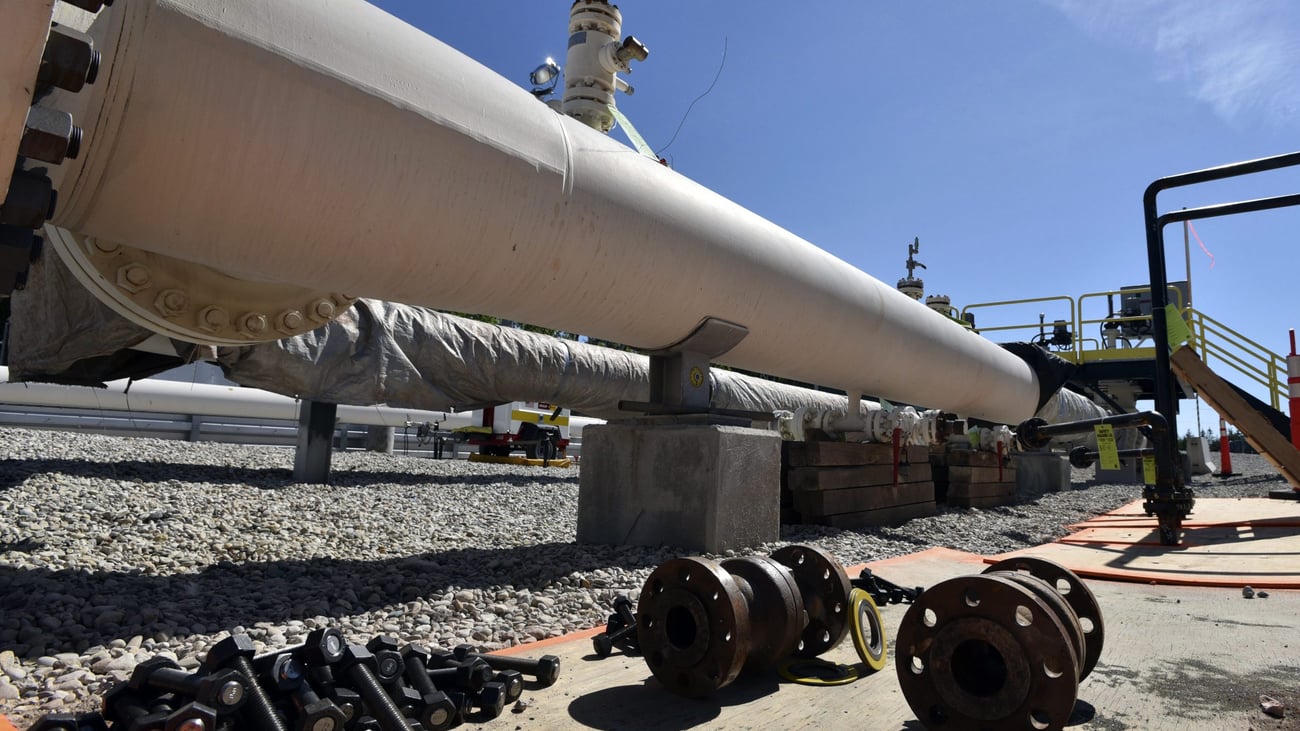
WASHINGTON (CN) — Siding against a Canadian energy company, the Supreme Court ruled Wednesday that a lawsuit threatening to shut down an oil pipeline did not belong in federal court.
The high court unanimously ruled that the company, Enbridge, had simply waited too long to remove a lawsuit by Michigan’s attorney general to federal court even though it successfully had a similar lawsuit by the governor removed in the meantime.
Supreme Court Justice Sonia Sotomayor, writing for the court’s opinion, said the 30-day deadline for a request to remove a case to federal court is mandatory under 28 U.S. Code Section 1446(b)(1) and is not subject to equitable tolling, which allows a court to lift certain timing requirements.
Michigan asked a state court to close Line 5, which carries crude oil and propane between the United States and Canada. But Enbridge Energy sought a venue change, culminating in a high court argument in February over the appropriate forum for the dispute.
In 2019, Michigan Attorney General Dana Nessel sued Enbridge, claiming the continued operation of the Straits Pipelines was a public nuisance and violated the state’s environmental protection laws.
Before a court could rule on the dispute, damage to the Straits Pipelines led to an emergency shutdown in 2020. A judge granted Michigan’s request for a temporary restraining order, prohibiting Enbridge from operating the pipeline until the incident had been investigated.
Complicating the case, Michigan Governor Gretchen Whitmer was also pursuing a complaint against Enbridge over violating the terms of an easement. Whitmer argued the agreement should be revoked on public trust grounds.
A lower court ruled Whitmer’s suit belonged in a federal court. In 2021, the governor dismissed her case, believing the attorney general’s case would resume in state court.
Enbridge said Nessel’s case should be moved to federal court, too. By that point, however, the company missed the 30-day removal deadline by over two years.
Under the doctrine known as equitable tolling, courts can pause or extend statute of limitations deadlines in extraordinary circumstances. A court ruled Enbridge’s case qualified for the extension, but the Sixth Circuit reversed on appeal.
At the Supreme Court, Enbridge tried to guide the justices to a simple ruling, holding that federal courts had authority to excuse the 30-day removal deadline.
Enbridge argued the 30-day removal deadline was not jurisdictional, it is presumptively subject to equitable tolling and nothing rebuts the presumption the deadline can be equitably tolled.
On the first point, Sotomayor noted there is no dispute, but even being a nonjurisdictional rule does not lift its mandatory status.
Looking at the deadline’s governing statute, Congress used strict and mandatory language and set out a specific set of exceptions to the 30-day requirement, the Barack Obama appointee wrote.
One such exception includes cases that at first appears unremovable, but later proceedings reveal it is or has become removable. There, the defendant has another 30 days to remove after whichever filing showed the case could be removed.
The exception is limited if the basis for removal is diversity of citizenship — meaning there is no common state citizenship between the parties — which cannot be removed more than a year after commencement unless the court finds a plaintiff acted in bad faith to prevent removal.
That “highly detailed scheme” matters because Congress laid out specific instances where the deadline could be extended and thus counts out other instances.
“Allowing equitable tolling of Section 1446(b)(1)’s deadline would undermine Congress’ manifest interest in resolving threshold removal questions early and conclusively,” Sotomayor wrote. “Under the rule the court adopts today, plaintiffs that sue in state court usually can be confident that, after Section 1446(b)(1)’s deadline has elapsed, the forum question has been put to rest and the case will proceed in the chosen court. Under the rule Enbridge favors, to the contrary, the possibility of a late removal would hang over a case, generating uncertainty and risking significant waste of resources in one forum before a possible belated removal to another.”
 Follow @Ryan_Knappy
Subscribe to our free newsletters
Our weekly newsletter Closing Arguments offers the latest about ongoing trials, major litigation and rulings in courthouses around the U.S. and the world, while the monthly Under the Lights dishes the legal dirt from Hollywood, sports, Big Tech and the arts.


