
 Search Articles


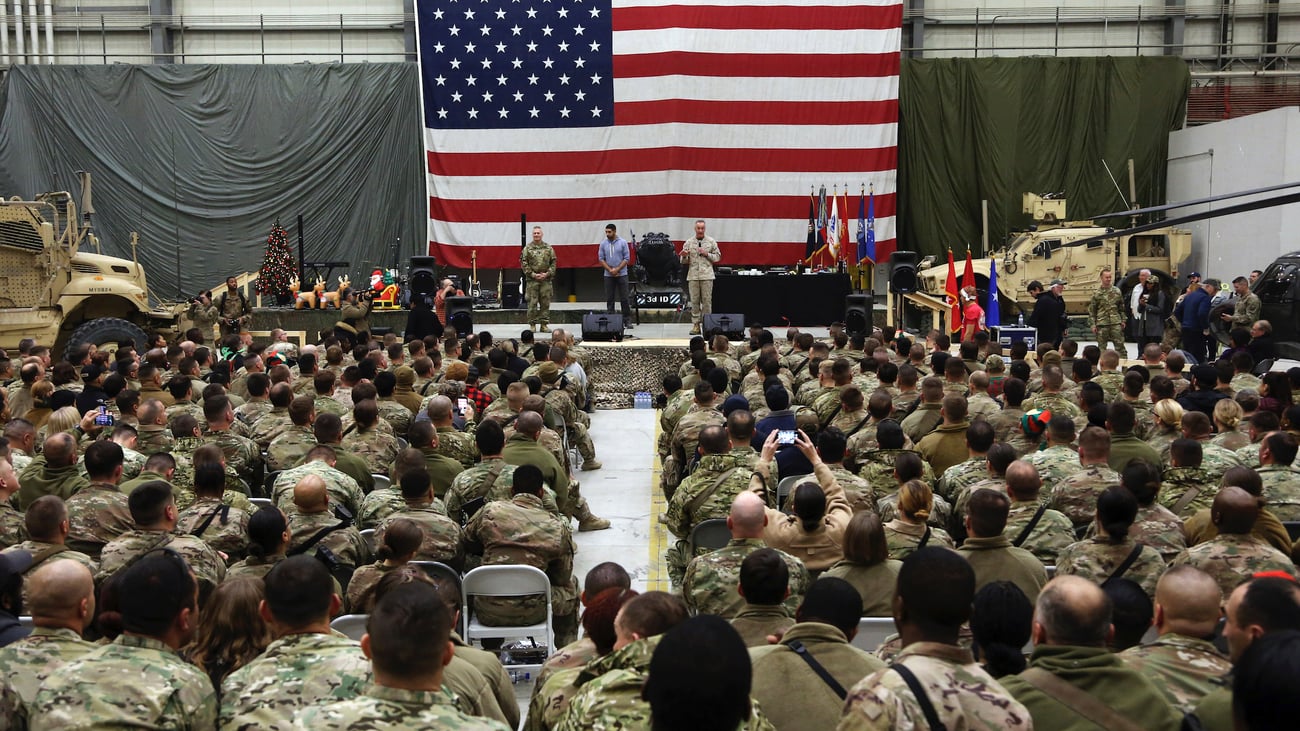
WASHINGTON (CN) — The Supreme Court ruled on Wednesday that a military contractor could face liability for an Afghan airbase bombing that killed three U.S. soldiers.
Former Army Specialist Winston Hencely was one of over a dozen U.S. soldiers seriously injured during a 2016 suicide bombing at Bagram Airfield just north of Kabul, Afghanistan. Nearly a decade later, Hencely pushed the Supreme Court to let him move forward with a lawsuit against a U.S. contractor, Fluor Corporation, who hired the assailant.
The federal government has sovereign immunity against lawsuits like Hencely’s through the combatant activities exception of the Federal Tort Claims Act. In Boyle v. United Technologies Corp, the Supreme Court ruled that the law also protected government contractors from state claims involving the unique federal interest of war.
But in the majority’s opinion, the justices held the Fourth Circuit erred in applying that precedent to Hencely’s state-law tort claims simply because the conduct arose in a wartime combat setting.
“Boyle accordingly protects a contractor only when the government directed the contractor to do the very thing challenged in the suit,” Justice Clarence Thomas wrote.
“Hencely, by contrast, sued Fluor for conduct that was not authorized by the military and was allegedly contrary to federal instructions,” the George H. W. Bush appointee added.
Justices Sonia Sotomayor, Elena Kagan, Neil Gorsuch, Amy Coney Barrett and Ketanji Brown Jackson joined the opinion.
The Fourth Circuit’s decision not only extended, but contradicted, Boyle, according to the justices.
“Boyle’s rationale justifies no such blanket preemption,” Thomas wrote.
He explained that Boyle addressed a “special circumstance” in which a Marine helicopter pilot drowned after a crash during a training exercise. The pilot’s father sued the manufacturer of the helicopter, claiming the escape hatch for the helicopter should have opened inward even though the federal procurement contract for the helicopter required that it open outward.
While in Hencely’s case, the government required Fluor to hire Afghan employees and to provide logistics for Bagram Airfield, including Ahmad Nayeb, a former Taliban member who carried out the attack.
But the government did not require Fluor to leave Nayeb unsupervised, allow him to walk alone for an hour after his shift, or permit him to obtain unauthorized tools with which he could build a bomb.
“Federal contractors do not automatically share the government’s immunity merely because they perform services forit,” Thomas wrote.
Chief Justice John Roberts, Samuel Alito and Brett Kavanaugh disagreed with this opinion.
In a dissenting opinion, Alito expressed concerns over state courts regulating military decisions and security arrangements on military bases in an active warzone.
“Giving a person with Nayeb’s background regular access to Bagram presented an obvious risk, but the decisionmakers apparently concluded that long-term foreign policy and defense objectives justified that danger,” the George W. Bush appointee wrote.
He added that in the years before the incident, Bagram Airfield had been repeatedly attacked by Taliban supporters, including a suicide bombing that killed six American servicemembers in December 2015.
But at the time, the government’s reason for adopting a policy known as “Afghan First,” which required contractors working on the base to maximize the employment of Afghans, was part of its goal to help the people of Afghanistan establish a stable democratic state and defeat extremists.
In the minority’s view, Hencely’s claims should be preempted because they intrude on the federal government’s exclusive power to make war and conduct combat operations under the Constitution.
Barred by sovereign immunity from suing the federal government, Hencely brought this diversity suit against Fluor and asserted tort claims under South Carolina law for the severe and permanent injuries he suffered as a result of the attack.
“Like all members of the military wounded in the service of our country, petitioner deserves a full measure of support from the American people, who owe him a debt that can never be fully repaid. But this state-law tort suit is not the way to give petitioner what he is due,” Alito wrote.
 Follow @Megwiththenews
Subscribe to our free newsletters
Our weekly newsletter Closing Arguments offers the latest about ongoing trials, major litigation and rulings in courthouses around the U.S. and the world, while the monthly Under the Lights dishes the legal dirt from Hollywood, sports, Big Tech and the arts.


