Search Articles


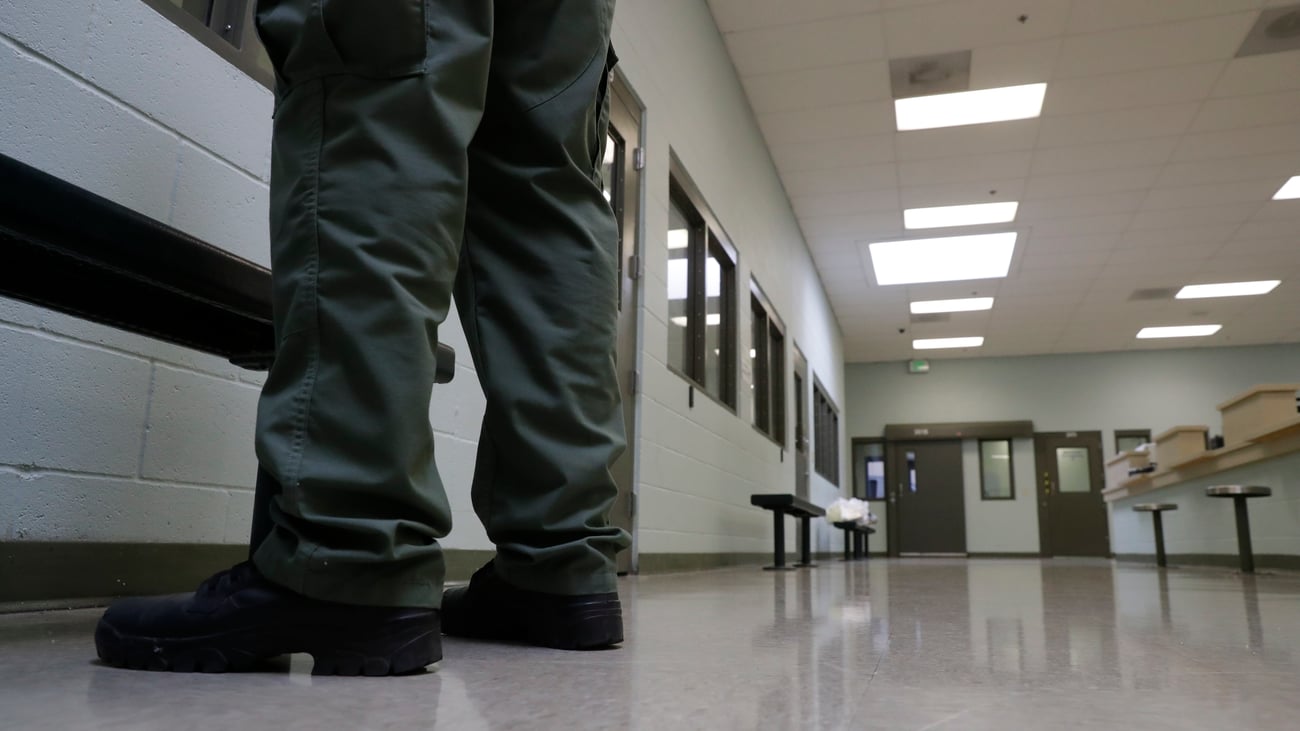
WASHINGTON (CN) — The Supreme Court on Monday took up an appeal from the Trump administration concerning the rights of green card holders stuck for months in immigration detention.
In a pair of cases involving two longtime residents with permanent legal status, the justices agreed to decide if immigrants subject to mandatory detention are entitled to release hearings after a prolonged period in custody. The government asked the court to resolve a constitutional question left over from a 2018 case known as Jennings v. Rodriguez.
“While the question in Jennings focused on ‘detention last[ing] six months,’ the underlying issue was the same: whether there is a point at which Section 1226(c) detention becomes ‘unreasonably prolonged’ under the due process clause,” the government wrote. “The court should therefore take this opportunity to resolve the constitutional issue that it reserved eight terms ago, which has since become the subject of a circuit split.”
Keisy G.M. and Carol Williams Black were detained by U.S. Immigration and Customs Enforcement for 21 and seven months, respectively, under a provision of the Immigration and Nationality Act allowing certain noncitizens with criminal background to be detained during removal proceedings.
Both men petitioned for individualized hearings to assess whether they posed a flight risk or danger such that they could not be released from custody.
The government’s case asked whether the men were entitled to such a hearing after their detention became “unreasonably prolonged,” and, if so, what burden the government needs to meet to justify their continued detention.
Attorneys for G.M. and Black cautioned the court against reviewing the government’s “extreme theory” that detention without a bond hearing does not implicate any fundamental rights. And they said their clients’ cases no longer presented live issues to be adjudicated.
G.M. was released from detention in 2022, and Black voluntarily left the country last year.
“It would be passing strange for this court to entertain the government’s novel legal theory in a context where the government itself has previously described the stakes as purely academic,” the attorneys wrote in response to the government’s petition.
The justices granted two additional certiorari petitions involving criminal defendants’ rights. In Kian v. Florida, the court will review whether a Florida chiropractor was denied his Sixth Amendment rights when he was convicted of practicing with a suspended license by a six-person jury.
And in Guerrero v. Johnson, the justices will consider federal inmates’ ability to challenge their capital sentence through a habeas petition.
All three appeals will be argued and decided during the high court’s next term beginning in the fall.
 Follow @KelseyReichmann
 Follow @kelseyreichmann.bsky.social
Subscribe to our free newsletters
Our weekly newsletter Closing Arguments offers the latest about ongoing trials, major litigation and rulings in courthouses around the U.S. and the world, while the monthly Under the Lights dishes the legal dirt from Hollywood, sports, Big Tech and the arts.
Additional Reads
 UK court upholds terrorism ban on pro-Palestinian group June 15, 2026