Search Articles


OMAHA, Neb. (CN) — A group of therapists told the Eighth Circuit on Thursday that 11th-hour maneuvers by Kansas City and Jackson County to address their ban on conversion therapy for minors in light of a recent U.S. Supreme Court decision fall woefully short.
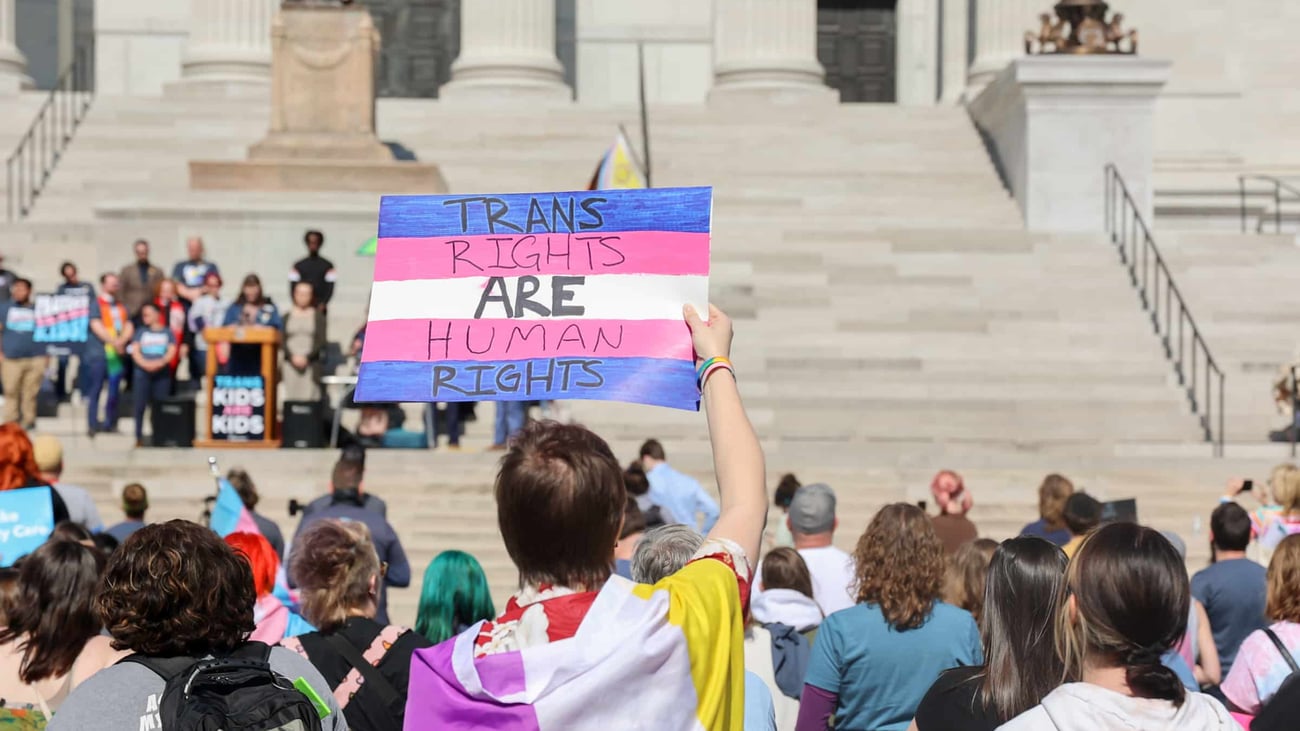
On March 31, the Supreme Court ruled 8-1 in Chiles v. Salazar that a similar ban in Colorado on conversion therapy for minors violates the First Amendment. Conversion therapy is a controversial practice attempting to change an individual’s sexual orientation, gender identity or expression to align with heterosexual and cisgender norms.
Counselors Wyatt Bury and Pamela Eisenreich filed a federal lawsuit in February 2025 against Kansas City and Jackson County, claiming laws passed by each entity violate their free speech. The city and county have vowed to address the high court’s decision with amendments to their ordinances, but plaintiffs’ attorney Bryan D. Neihart said their actions have no substance.
“We do not know when the amendment to the ordinances will pass and who might be affected, and we do not know what the final language of the amendment to those ordinances might be,” said Neihart, of the Alliance Defending Freedom based in Scottsdale, Arizona. “By contrast, what we do know is that the city and county have not committed to the final language of any amendments to the counseling ordinances. We know that the counseling ordinances are still in effect and still in place.”
Neihart noted that neither Kansas City nor Jackson County did anything to address the Chiles decision for five weeks after it was rendered.
Defense attorney Tara Michelle Kelly said addressing the decision for her clients requires time and the case should be remanded back to the federal court.
“The city and the county should be allowed to develop new evidence,” Kelly said. “Should these conversion therapy bans continue? I think that the city and county should be allowed to develop additional evidence that conversion therapy is a harmful practice that could involve the testimony of expert witnesses.”
The plaintiffs claim the laws do not allow them to speak freely to clients who voluntarily seek to align their identity with their sex or wish to avoid unwanted same-sex attractions through voluntary conversations.
U.S. District Judge Roseann A. Ketchmark, a Barack Obama appointee, dismissed the lawsuit for failure to state a claim, prompting the appeal.
While both sides agreed the case should be sent back to the federal court in light of the Chiles decision, Neihart asked the appeals court to revive the claims dismissed by Ketchmark. The majority of the arguments were spent on the public accommodation claim in the lawsuit.
U.S. Circuit Judges Steven M. Colloton, a George W. Bush appointee, asked Neihart if he was seeking an injunction on the public accommodation claim that says his clients may deny services on account of race, religion, sexual orientation or gender identity.
“The injunction that we’re asking for is an injunction to prevent the city from compelling them to express messages in counseling that support same-sex marriage or that would support identity contrary to someone’s sex,” Neihart said.
Kelly pushed back on that claim.
“Appellants argue that they are somehow prohibited by this code provision from publishing statements explaining their religious beliefs on identity, marriage or sexuality, but none of that is prohibited by the language of [the provision],” Kelly said. “Instead that code provision prohibits statements that indicate certain patronage is unwelcome based on protected characteristics, much as a lunch counter is prohibited from displaying statements saying ‘whites only.’”
Plaintiffs claim in their brief that roughly 90% of minors with gender dysphoria will naturally grow comfortable in their bodies.
“Worse, the ordinances risk serious harm by requiring counselors to encourage minors to transition, leading to a conveyor belt of lifelong, irreversible medical interventions,” the counselors state. “The city and county get the First Amendment and harm analysis exactly backwards.”
Defendants, in their brief, argue the bans focus on conduct and not speech.
“Appellants mischaracterize the issue by contending that conversion therapy is like speech providing material support to terrorism and should be immune from regulation,” the defendants stated. “The counseling ordinances do not prevent Appellants from speaking on the value of conversion therapy, their beliefs about sexual orientation, gender identity, sexual behavior, or any other topic — whether controversial or commonplace — either in therapy or in the public square … Medical treatment is what is being regulated here.”
U.S. Circuit Judge Bobby E. Shepherd, a George W. Bush appointee, and U.S. Circuit Judge Jonathan A. Kobes, a Donald Trump appointee, rounded out the three-judge panel. There is no timetable for a decision.
 Follow @joeharris_stl
Subscribe to our free newsletters
Our weekly newsletter Closing Arguments offers the latest about ongoing trials, major litigation and rulings in courthouses around the U.S. and the world, while the monthly Under the Lights dishes the legal dirt from Hollywood, sports, Big Tech and the arts.