Search Articles


WASHINGTON (CN) — The executive director of the Kennedy Center testified on Wednesday that he recommends the nation’s premier cultural center begin a two-year, $250 million renovation project to address significant structural integrity concerns.
Matthew Floca, who has served as chief operating officer since March 24 after former acting director Richard Grenell left, took the stand in an ongoing lawsuit brought by the National Trust for Historic Preservation to block the planned renovations over concerns President Donald Trump will fully demolish the building.
U.S. District Judge Christopher Cooper ordered Floca to testify at Wednesday’s hearing as part of his review on what role the court has in the proposed renovation after the Kennedy Center Board of Trustees approved the plan at a March 16 meeting led by Trump, the chairman of the board.
The renovations would begin on July 6, funded by last summer’s so-called “Big Beautiful Bill.”
Floca, who has an extensive background in construction management around Washington, testified that the renovations were meant to address damage to the roof, electrical systems and columns caused by decades of substantial water intrusion from storms and the Potomac river.
He described the current situation as a “unique opportunity,” with the congressional funding and the current administration, to address the structural issues without risking patrons’ health or extending the project through a phased renovation.
The electrical vaults, located underneath the center’s reflecting pool, have sustained so much damage that they are at risk of shorting out, which could cause a fire or an explosion, Floca said. The issue has persisted for so long that stalactites had formed in the vaults, he added.
Further, drainage systems installed in the center layers of the center’s iconic overhanging terrace had failed over several years, resulting in several dangerous sections of the roof, each 22,000 pounds, at risk of collapse.
According to Floca, the water damage extended to the performance side of the center.
“As far back as anyone can remember, stagehands have referred to their office as ‘the swamp,’" Floca said.
Earlier this month, Floca invited the press and members of Congress to tour the center to highlight the water damage and need for repairs.
Abbe Lowell, representing the National Trust from Lowell Associates, repeatedly asked Floca how the court could rely on his testimony when the president has made conflicting public statements suggesting a complete demolition.
He highlighted the fact that the White House East Wing was suddenly demolished after Trump first indicated his proposed ballroom would be built near the wing rather than replace it.
“The gravity of this situation is not lost on me,” Floca said.
He testified there were no plans among leadership to demolish the building, before adding that he could not control the president’s statements or his intentions.
Lowell pressed Floca on some of Trump’s proposals that suggest the renovation will make more material changes to the center, which Congress created as a living memorial to former President John F. Kennedy, in addition to completed changes like repainting the gold columns to white and placing the president’s name before Kennedy’s.
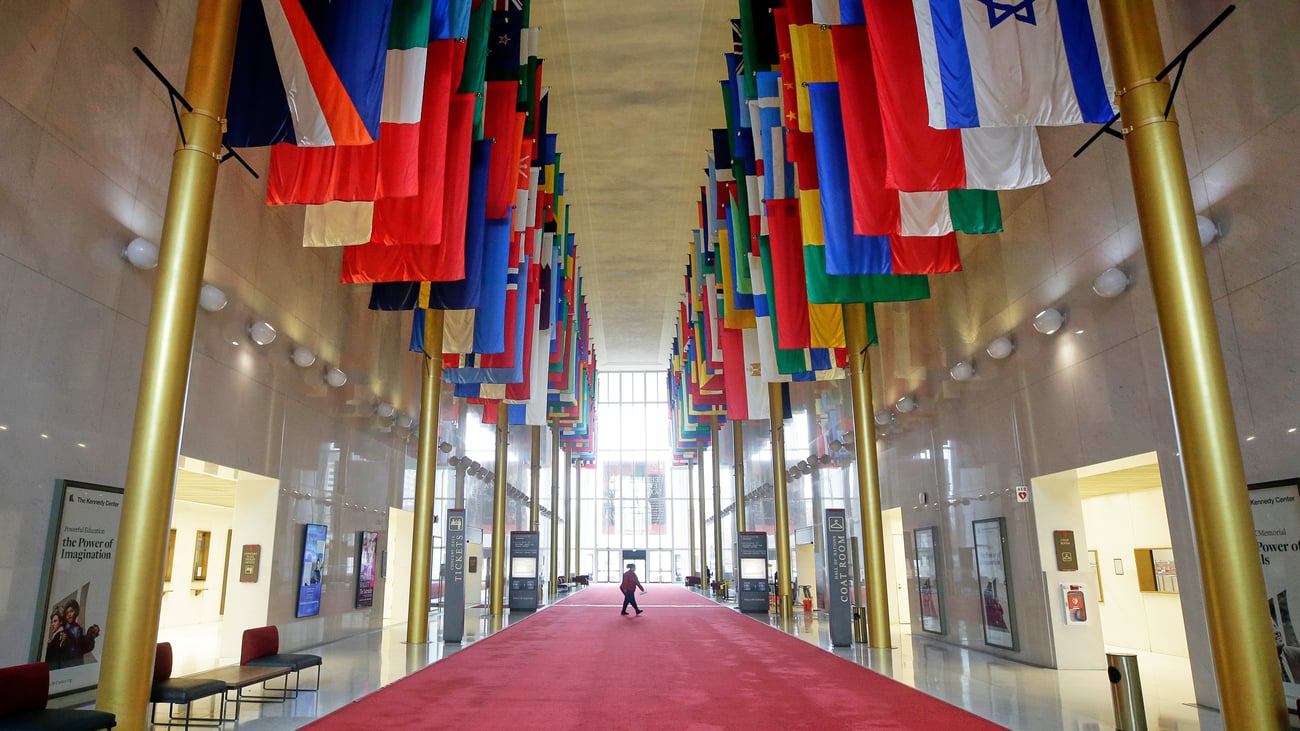
The potential changes include: changing the weeping willow trees meant to symbolize the nation’s grief to cherry or maple trees, the white Carrara marble gifted by Italy to a different style of marble and changing the red carpet inside the Hall of States and Nations to black and gold.
Floca said any renovations would honor the original center’s symbolism, suggesting weeping cherry trees could be planted instead, but no decisions had been made regarding structural materials or internal designs.
Wednesday’s hearing was the second of two back-to-back hearings on two preliminary injunction motions seeking to temporarily halt the renovation project. Cooper, a Barack Obama appointee, heard arguments Tuesday in an identical lawsuit brought by Ohio Representative Joyce Beatty, an ex oficio member of the board.
Thaddeus Heuer, representing the National Trust from Foley Hoag, urged Cooper to issue an injunction barring the demolition of the Kennedy Center and require the renovation plans be submitted to the National Capital Planning Commission and the Commission of Fine Arts for review.
That would allow the government to adhere to statutory requirements under the National Historic Preservation Act and the National Environmental Policy Act, Heuer said, and cause little harm to the government as it has maintained it would not completely demolish the building.
Heuer noted Congress is meant to have a say in any major closure at the Kennedy Center, just like it did regarding long-term closures at the Smithsonian Castle and the Air and Space Museum that involved less expansive, internal renovations.
Principal Deputy Assistant Attorney General Yaakov Roth pointed to Floca’s testimony about the “unique opportunity” to address the center’s structural issues comprehensively as vital to continue providing a stage for the performing arts well into the future.
Roth argued the project does not need approval by the advisory boards, as Congress singled out the Kennedy Center as an independent body, like the National Gallery of Art.
Cooper did not seem convinced.
“But then the Kennedy Center is treated differently than literally every other federal public museum in Washington — how could that be what Congress intended?” Cooper asked.
The judge ordered the parties to submit two simultaneous briefs in response to Wednesday’s testimony within the next two weeks and indicated he would issue a ruling soon after.
 Follow @Ryan_Knappy
Subscribe to our free newsletters
Our weekly newsletter Closing Arguments offers the latest about ongoing trials, major litigation and rulings in courthouses around the U.S. and the world, while the monthly Under the Lights dishes the legal dirt from Hollywood, sports, Big Tech and the arts.