
 Search Articles


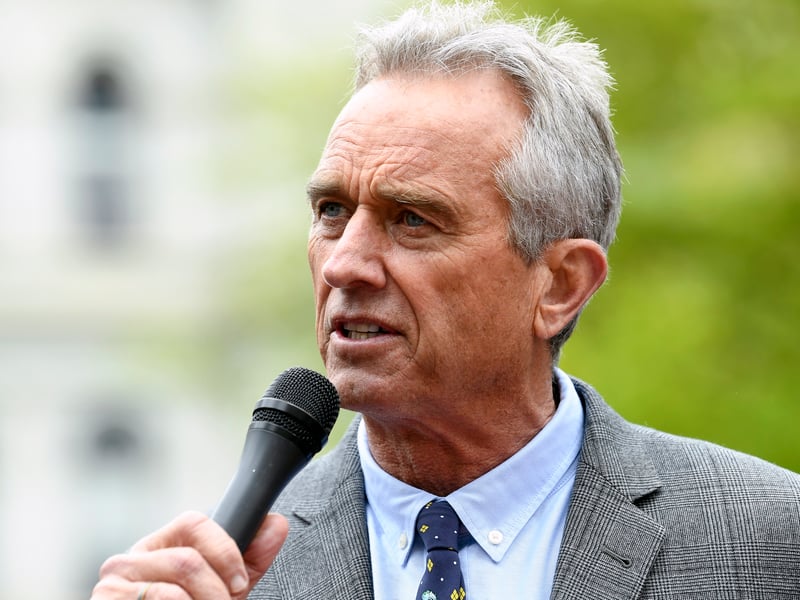
SAN FRANCISCO (CN) — A Ninth Circuit panel ruled Monday that a federal court was right to deny Robert F. Kennedy Jr.’s request for a preliminary injunction against Google after it took down two of his YouTube videos for violating the site’s medical misinformation policy.
Kennedy says the removals violated his First Amendment rights because Google was a “state actor,” claiming in his 2023 suit that the Biden administration was intimately involved with the decision to remove the videos, in which Kennedy questioned the efficacy of the Covid-19 vaccine and pandemic-era lockdowns.
He claims YouTube, which is owned by Google, took the videos down at the request of the Biden administration and sought an order barring YouTube from removing his videos while he remained in the presidential race.
But the erstwhile independent candidate didn’t rebut Google’s claim that it simply exercised editorial discretion in removing the videos, and he failed to identify any communications from a federal official to Google concerning Kennedy, the appellate judges found.
“As Kennedy has not shown that Google acted as a state actor in removing his videos, his invocation of First Amendment rights is misplaced,” the three-judge panel wrote in an unsigned four-page order.
The panel consisted of U.S. Circuit Judge Consuelo Callahan, a George W. Bush appointee; U.S. Circuit Judge Gabriel Sanchez, a Joe Biden appointee; and U.S District Judge John Kronstadt, a Barack Obama appointee who was sitting by designation.
The judges affirmed a San Francisco federal judge’s denial of Kennedy’s injunction request, finding he was unlikely to succeed because Google is a private entity — and even if it wasn’t, inaccurate speech about medical issues is not protected speech.
Kennedy, who ended his campaign in most states last week, sought to prevent YouTube from removing the videos as long as he stayed in the presidential race.
“This is an injunction that would promote speech, promote speech in a forum that is freely accessible to millions, in fact, billions of people worldwide, a place where many Americans go to debate the issues of the day to learn about the issues that they’re going to vote upon,” Kennedy’s attorney Scott Street said at a hearing in May.
Counsel for Kennedy did not return requests for comment on Monday’s ruling. Google’s attorneys did not respond to requests for comment. A message left for Google’s press office was not returned before the deadline.
It is not clear what effect, if any, the ruling will have since Kennedy is no longer seeking the presidency.
Google isn’t the only tech giant to draw Kennedy’s ire; he sued Meta and its CEO Mark Zuckerberg in May because Meta removed one of Kennedy’s advertisements because of vaccine misinformation. A motion to dismiss hearing in that matter will be heard on Wednesday in San Francisco federal court.
Subscribe to our free newsletters
Our weekly newsletter Closing Arguments offers the latest about ongoing trials, major litigation and rulings in courthouses around the U.S. and the world, while the monthly Under the Lights dishes the legal dirt from Hollywood, sports, Big Tech and the arts.