
 Search Articles


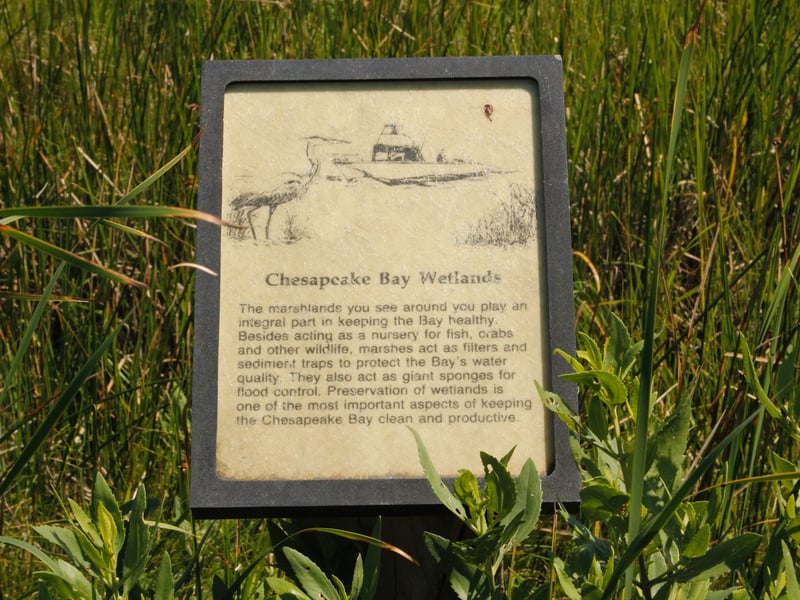
WASHINGTON (CN) — Federal grant freezes and proposed cuts to the Environmental Protection Agency’s impact on the Chesapeake Bay worry lawmakers and environmental organizations.
“The Chesapeake Bay supports communities big and small through tourism and other economic development opportunities. Cutting off funding undermines our ability to invest in improving the health of the bay and in expanding the public’s access to our treasured resource,” Maryland Congressman Steny Hoyer said in a statement to Courthouse News. “The administration’s actions threaten the Chesapeake — Maryland’s beating heart — while doing nothing to make life more affordable for anyone.”
A memo from President Donald Trump on Feb. 26 indicated his desire to cut 65% of the EPA’s budget. On January 27, Trump and his Department of Government Efficiency froze grant projects, including those aimed at preserving and restoring the bay. While some grants have been restored thanks to several court rulings, many projects remain in limbo.
EPA administrator Lee Zeldin told reporters at Politico in a statement that he’s uncovered $20 billion in fraudulent funds. The $20 billion concerns the Greenhouse Gas Reduction Fund, a Joe Biden-era policy that gave nonprofits billions of dollars in grant funding.
Environmental organizations and Democratic lawmakers claim the Republican administration’s impact on the bay will be disastrous. Federal agencies are the largest funders for bay-related work, which is carried out through grants and contracts.
“Cuts to federal programs risk destroying more than 40 years of collaborative federal/state efforts to restore the Chesapeake Bay — a national treasure,” Chesapeake Bay Foundation president and CEO Hilary Harp Falk said in a news release. “If what’s happening here is any indication, the rest of our nation’s waters are in jeopardy."
Theresa Cullen, the executive director of the Alice Ferguson Foundation, said her environmental educational organization on the Potomac River relies largely on federal grants. The organization provides students with opportunities to learn about stewardship and ecology.
“As a nonprofit, basically a third of our grant support is under scrutiny or questionable,” said Cullen, who indicated the organization has to cut two positions. “We’re not sure how we’re going to move forward.”
Cullen said the loss of a local archeologist position halted a 7-year project to create a new water system for potable water at Piscataway Park, a National Park Service protected area.
According to the partially federally funded Bay Journal, grant freezes include efforts to plant streamside forest buffers, restore wetlands, improve trout streams, build oyster reefs, reduce runoff from farms and developed lands and promote environmental education.
Past grants have paid for constructing oyster reefs, which provide food and habitats for other animals, act as natural filters and serve as barriers to storms and tides.
Maryland Congresswoman Sarah Elfreth served as the chair of the Chesapeake Bay Commission as a state senator.
“The Chesapeake Bay, generally, is hugely important to our cultural identity, to our economy and it’s a really important policy area for me,” the first-term Democrat said.
Elfreth will co-chair the relaunched bipartisan Chesapeake Bay Watershed Task Force. She noted that the cuts won’t only impact Democrats.
“Appreciating that any cuts will affect red and blue districts alike is really an important note,” Elfreth said. “I have not spoken directly with my Republican colleagues on, for instance, the president’s claim of cutting 65% of EPA just the other day. But I have to believe that their districts are going to be impacted like mine.”
Elfreth said the federal government is the best resource to address Chesapeake issues.
“Air and water don’t respect arbitrary political boundaries that we have in the states,” Elfreth said. “It’s not a situation where we can just rely on a state-by-state policy or strategy because it is a regional and a national thing. Thus, the federal government has such a huge role to play.”
The bay is the country’s largest estuary, covering 64,000 square miles and, in 2022, providing an estimated $107.2 billion annually in economic benefits to the region. It is home to more than 18 million people and 3,600 species of plants and animals. The bay’s watershed includes parts of Virginia, Maryland, Delaware, West Virginia, Pennsylvania, New York and the District of Columbia.
Virginia Delegate Paul Krizek, a House of Delegate’s Chesapeake subcommittee member, said the commonwealth’s environmental goals are predicated on federal investment.
“Any backsliding is going to be super detrimental to the future of our environment,” Krizek said. “I’m frightened for the future, honestly.”
Virginia State Senator Mamie Locke, whose region of Hampton touches the bay, said state and federal Republicans’ silence on the matter concerns her but doesn’t surprise her. Virginia’s Republican Governor Glenn Youngkin has prioritized the bay in his State of the Commonwealth addresses.
“If the Chesapeake Bay is indeed a priority for you, Governor Youngkin And my Republican colleagues, then why do you remain silent in the face of these draconian cuts that are being made to the EPA, knowing that it is going to have serious implications for the Watershed Act,” Locke said.
Krizek said cuts to the Department of Agriculture, National Oceanic and Atmospheric Administration and the U.S. Fish and Wildlife Service will also harm the bay.
“Losing the federal workforce is going to hurt the bay cleanup,” according to the Democratic lawmaker, whose father was a federal employee. “You’re losing decades of expertise and knowledge that you cannot replace."
In 2014, the governors of the watershed states joined the chair of the Chesapeake Bay Commission and the administrator of the EPA in signing the fourth iteration of the Chesapeake Bay Watershed Agreement. The agreement contains ten goals, including lowering nutrient and sediment pollution, removing toxic contaminants and sustaining the bay’s many fisheries many of which are supposed to be met in 2025.
“Any cuts to the EPA certainly would undermine them meeting those goals,” Locke said. “What it essentially says to the environmental community is that those goals are basically null and void and that they won’t be able to meet those goals any longer, and that citizens are no longer protected from the hazards of pollution to the bay.”
The first Trump Administration tried unsuccessfully to eliminate the EPA’s Chesapeake Bay Program in 2017.
Republican lawmakers, including Youngkin and Virginia representatives Rob Wittman and Jen Kiggans, did not respond to requests for comment.
“The Chesapeake Bay is not a waste,” Harp Falk, the Chesapeake Bay Foundation president, said. “Losing decades of progress, undermining science, destroying an effective federal/state partnership, and jeopardizing our future—that’s not just a waste, it’s a tragedy.”
Subscribe to our free newsletters
Our weekly newsletter Closing Arguments offers the latest about ongoing trials, major litigation and rulings in courthouses around the U.S. and the world, while the monthly Under the Lights dishes the legal dirt from Hollywood, sports, Big Tech and the arts.