Search Articles


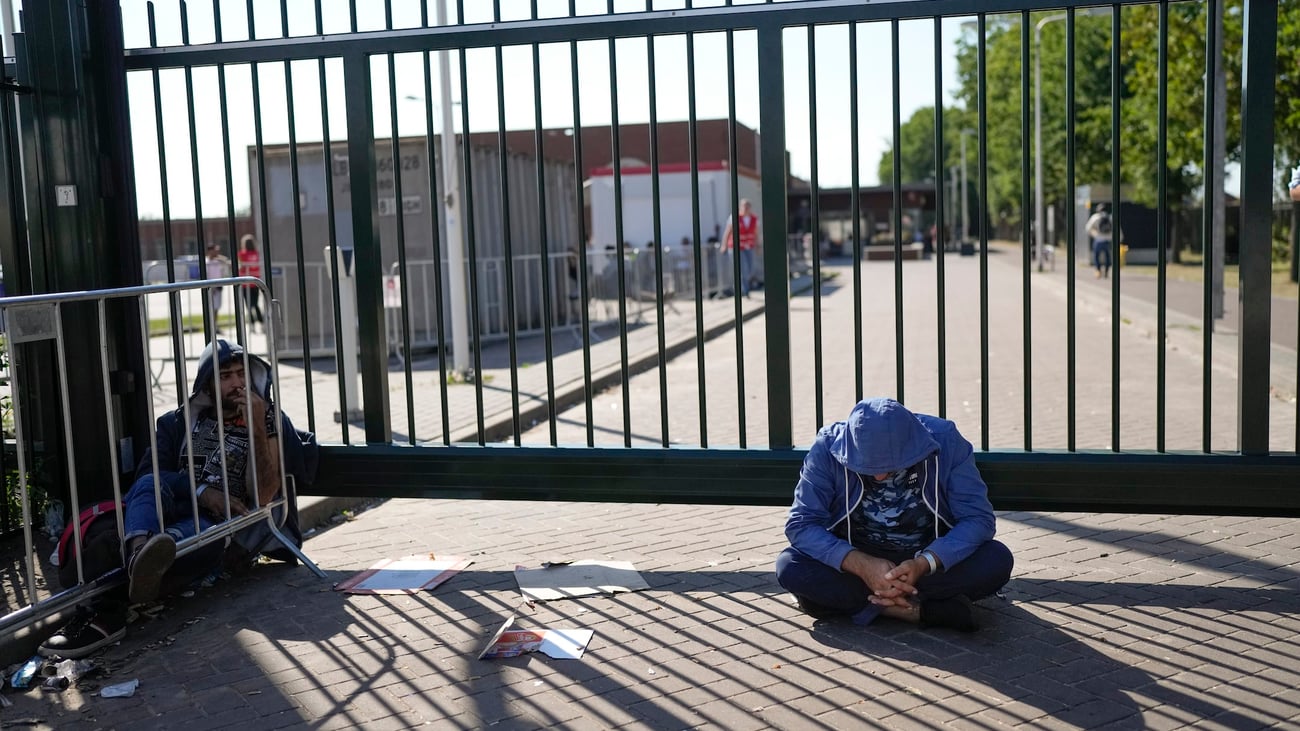
(CN) — After months on the streets with nowhere to go, a group of four asylum-seekers in Belgium took their fight to Europe’s human rights court on Thursday with a simple question: What happens when a government ignores its own laws?
They were asking for something basic: A place to sleep already promised by the law. When national court orders granting that right went nowhere, they turned to the European Court of Human Rights, arguing the state had failed to protect their dignity in violation of the convention underpinning the court.
Some had applied for asylum in Belgium and were left without any reception place despite being registered, while others spent months on the streets even after authorities had formally recognized their right to accommodation. M.V., as he is identified in the court documents, was without housing from August to Dec. 12, 2022, despite repeated rulings in his favor.
The judges agreed, spelling out in a ruling initially issued in French what the state’s failure looked like: “The Belgian authorities must be held responsible for the conditions in which the applicants found themselves for months, including during the winter, living on the street, without resources, without access to sanitary facilities, with no means of meeting their basic needs and in constant fear for their safety,” finding that amounted to “degrading treatment demonstrating a lack of respect for their dignity.”
There was little ambiguity. Both national and European rules required Belgium to house asylum-seekers, and courts had already ordered the government to do so. Still, nothing happened for months, a gap the judges said crossed from delay into a violation of basic rights.
Even with the system under strain, the timeline didn’t hold. The judges said, “the time taken by the Belgian authorities to execute the judicial decisions concerning the applicants and aimed at protecting human dignity cannot be regarded as reasonable,” underscoring how far reality had drifted from what the law required.
The ruling also zeroed in on something just as serious: Belgium wasn’t following its own courts. In an earlier case, Camara v. Belgiumin 2023, judges had already said ignoring domestic rulings violates the right to a fair trial. Here, they went further, finding the real-world impact of Belgium’s inaction crossed into degrading treatment.
Belgium said its reception system was stretched to the limit, citing “a shortage of qualified staff, saturation of the housing market, a massive arrival of beneficiaries of temporary protection due to the Russo-Ukrainian conflict, pressure on local authorities reluctant to open new reception centers or expand existing ones and operational difficulties linked to managing reception centers.”
The court didn’t dismiss those pressures but drew a firm line when the Strasbourg-based rights court issued urgent orders to house the applicants. As the judges stressed, “compliance with an interim measure also forms part of respect for the authority and independence of the court,” making clear those orders are not optional.
For years, Belgium has struggled with overcrowded reception centers, leaving thousands without housing. Since 2021, the shortage has hit single adult men the hardest. They are often treated as lower priority than families and vulnerable applicants when places run out, effectively pushing them out of the system. Hundreds have been left sleeping rough around Brussels’ Petit-Château registration center despite court orders requiring the state to provide shelter.
That gap between legal entitlement and reality has fueled a wave of litigation, with Belgian courts repeatedly ordering the state to act, often without result.
Ruben Wissing, a senior researcher at the Migration Law Research Group at Ghent University, said the case is part of a steady stream of rulings finding Belgium in breach of its duty to provide reception.
“On top of this violation, the Belgian state has systematically and explicitly refused to implement these decisions,” he said. Wissing added the standoff is now in the open as authorities continue to deny shelter even to those legally entitled to it, despite internal pressure from more than 400 Fedasil staff to comply with the law.
For lawyers representing the applicants, the ruling marks a turning point. Laura Adriaensens, one of the applicant’s counsel, called it “a very important judgment,” saying it makes clear the Belgian state cannot shift its responsibilities onto NGOs or civil society. She said the ruling strengthens the position of thousands of asylum-seekers in similar situations and could expose the state to liability in many more cases.
“We hope that the authorities take this signal seriously and treat the court’s strong condemnation as a wake-up call,” she added, stressing that court orders must be followed in practice, not ignored.
Another lawyer, Cécile Taymans, said the reality on the ground has yet to change, noting that many asylum-seekers remain without housing in breach of both Belgian and international law. She said the ruling should serve as a direct reminder to the government of its obligations to provide shelter.
The Belgian government, for its part, said the situation dates back to 2022 under a previous administration, with Asylum and Migration Minister Anneleen Van Bossuyt adding reforms have since ensured sufficient reception places for those eligible.
Beyond the individual case, the judgment has also drawn broader scrutiny. Başak Yavçan, head of research at the Migration Policy Group, said it exposes a gap between what EU asylum rules promise and what happens on the ground. “This assumption, in practice, does not hold,” she said, pointing to sharp differences in reception conditions and access across countries.
She added the problem is not just capacity but policy choices, warning that cutting reception standards or treating them as “pull factors” can backfire, driving more irregular migration and weakening protections across Europe.
Alexis Deswaef, a lawyer and president of the International Federation for Human Rights, framed the ruling in sharper terms, calling it another blow to Belgium and a reminder that governments must follow the law, especially human rights, which “take precedence … over migration policy.”
“To be condemned as a state for the degrading treatment of people, for depriving them of effective access to a court and for failing to comply with court decisions,” he said, “this is the ultimate disgrace for a democratic state.”
He also warned the judgment could trigger political backlash, with some officials treating the European Convention on Human Rights as an obstacle, but he pushed back sharply.
“No, it is a safeguard against the authoritarian drift of our European governments,” he said, calling the court a last line of protection for the most vulnerable.
The court also ordered Belgium to pay compensation for the harm suffered, awarding between roughly 5,000 euros (about $5,800) and 12,000 euros (about $14,000) to each applicant depending on their circumstances.
Legally, the judgment is binding but not yet final. Either side has three months to seek referral to the Grand Chamber, though such requests are rarely granted. Absent that, attention now turns to whether — and how — Belgium brings its practices in line with the ruling.
Courthouse News reporter Eunseo Hong is based in the Netherlands.
Subscribe to our free newsletters
Our weekly newsletter Closing Arguments offers the latest about ongoing trials, major litigation and rulings in courthouses around the U.S. and the world, while the monthly Under the Lights dishes the legal dirt from Hollywood, sports, Big Tech and the arts.