
 Search Articles


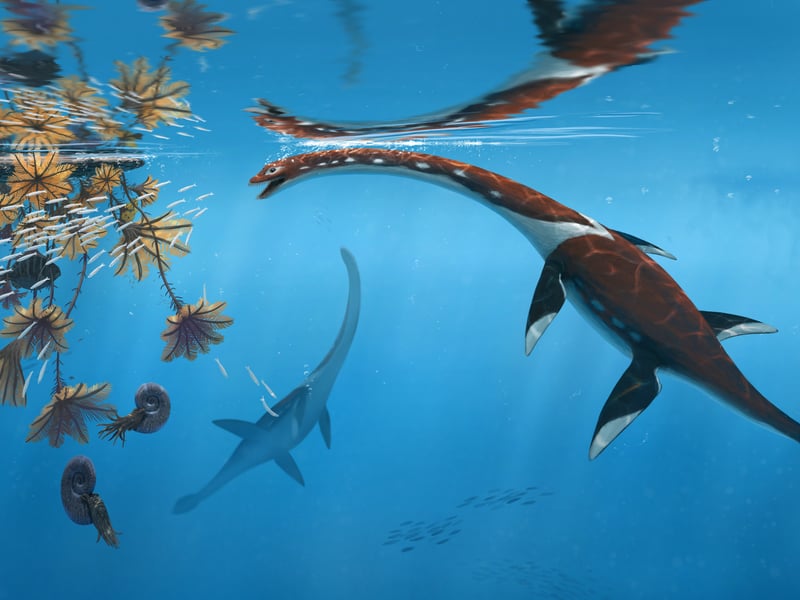
(CN) — A fossil pulled from a German quarry nearly 50 years ago has just been identified as a brand-new species of ancient marine reptile, and it’s the oldest of its kind ever found in the region.
Researchers say the fossil, which is an almost complete skeleton of a long-necked marine reptile, was first dug up in 1978 from a quarry in Holzmaden. It wasn’t until now that scientists realized it belonged to an entirely new species.
Named Plesionectes longicollum , which translates to “long-necked near-swimmer,” the animal is part of the plesiosauroids, a group of ancient marine reptiles known for their small heads and long, flexible necks.
These creatures swam the oceans during the age of dinosaurs and were part of the larger group that includes the more familiar Loch Ness Monster-type body shape.
“This specimen has been in collections for decades, but previous studies never fully explored its distinctive anatomy,” said Sven Sachs of the Naturkunde-Museum Bielefeld, the lead author of the study, in a press release. “Our detailed examination revealed an unusual combination of skeletal features that clearly distinguish it from all previously known plesiosaurs.”
The findings, published in the journal PeerJ Life & Environment, suggest the Posidonia Shale held more marine reptile diversity than scientists once thought.
Holzmaden’s Posidonia Shale is already famous among paleontologists for its fossil finds, including ichthyosaurs, ammonites, and previously five other plesiosaur species representing all three major plesiosaur lineages.
This new species is now the oldest known plesiosaur from the Holzmaden region. Researchers say its features are unique enough to justify naming a brand-new genus and species.
“The early Toarcian period when this animal lived was marked by significant environmental changes, including a major oceanic anoxic event that affected marine life worldwide,” said Daniel Madzia, paleontologist and co-author of the study, in a press release. “This discovery adds another piece to the puzzle of marine ecosystem evolution during a critical time in Earth’s history.”
The fossil, preserved with soft tissue impressions, is now held at the Stuttgart State Museum of Natural History, catalogued as specimen SMNS 51945.
“This discovery really highlights the importance of going back and taking a second look at fossils that have been sitting in museum drawers,” Sachs said.
Subscribe to our free newsletters
Our weekly newsletter Closing Arguments offers the latest about ongoing trials, major litigation and rulings in courthouses around the U.S. and the world, while the monthly Under the Lights dishes the legal dirt from Hollywood, sports, Big Tech and the arts.